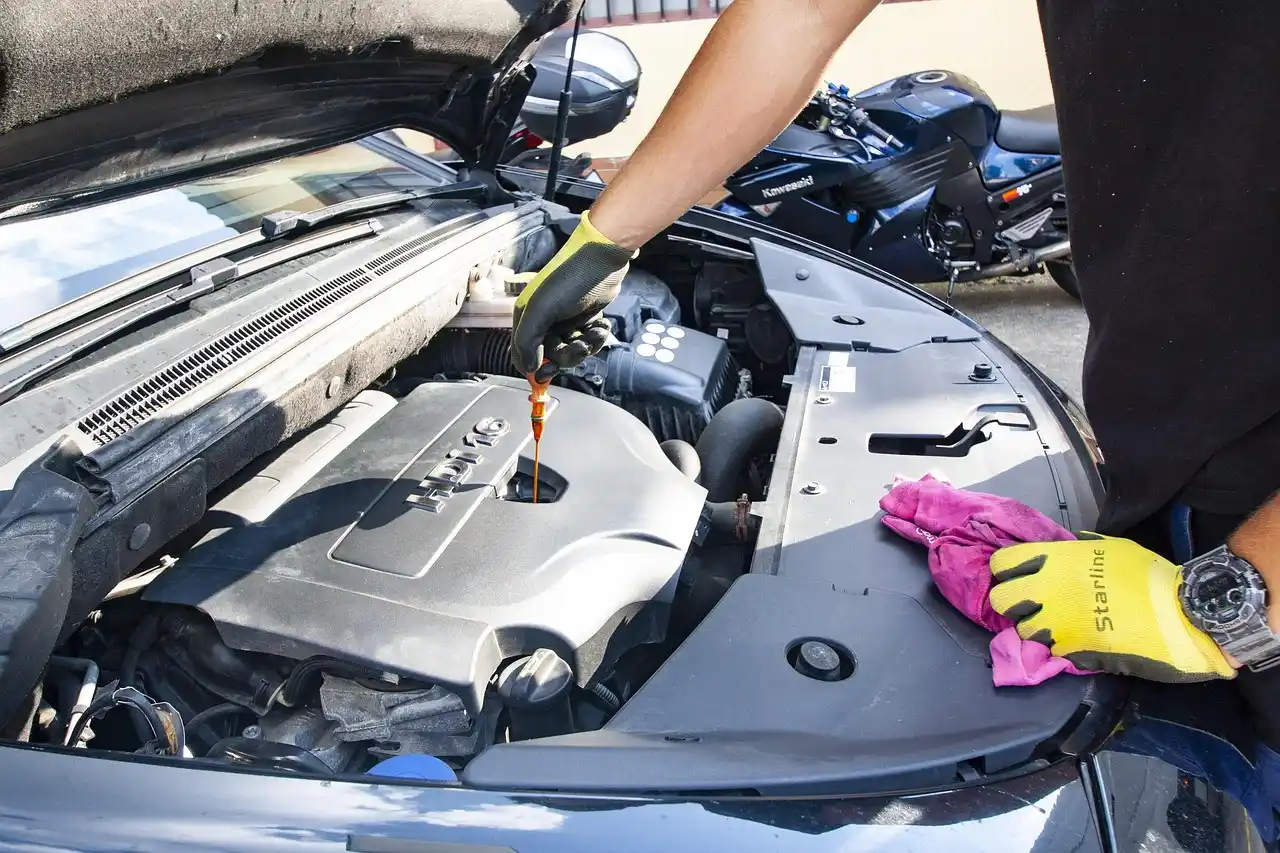
How to Get a Pre Purchase Inspection When Buying From a Dealer
Ask the dealer for written permission to take the car to an independent mechanic, book the inspection within 24 hours, and walk away if they refuse or limit you to their own shop. Skip that step and you can miss prior crash repairs, neglected maintenance, or a repair bill that wipes out your savings. This guide shows the exact request script, how to schedule the inspection without losing bargaining power, and which dealer answers are acceptable or deal-breakers.
Can you get a pre-purchase inspection from a dealer?
Yes, often you can, but it has to be negotiated. A dealer sale differs from a private sale because the seller controls the lot, the keys, and the paperwork, and may have already done reconditioning. That means you need permission, timing, and a clear plan before the car leaves the premises.
A pre-purchase inspection, or PPI, is an independent physical examination by a qualified professional before you buy. It is separate from a state safety or emissions inspection. The point is to get a written report on mechanical, safety, structural, and cosmetic condition before you sign.
Franchise dealers and independent dealers can handle requests differently. A branded store may have more formal release rules and service paperwork. An independent lot may be more flexible, but it may also be more protective of its cars and less willing to let a buyer leave the lot.
Dealer lot rules matter because access affects the inspection. Some stores allow a buyer to take the car to an outside shop. Others allow only a mobile mechanic on site. Some require a staff member to drive the car to the shop. Those limits change what can be checked and how useful the report will be.
Which inspection option works best?
An independent repair shop is usually the best choice when the dealer will allow the car to leave the lot. It is not tied to the seller, and it usually gives you lift access, a road test, and scan tool use. A mobile mechanic is useful when shop access is hard, but it is often more expensive and limited without a lift.
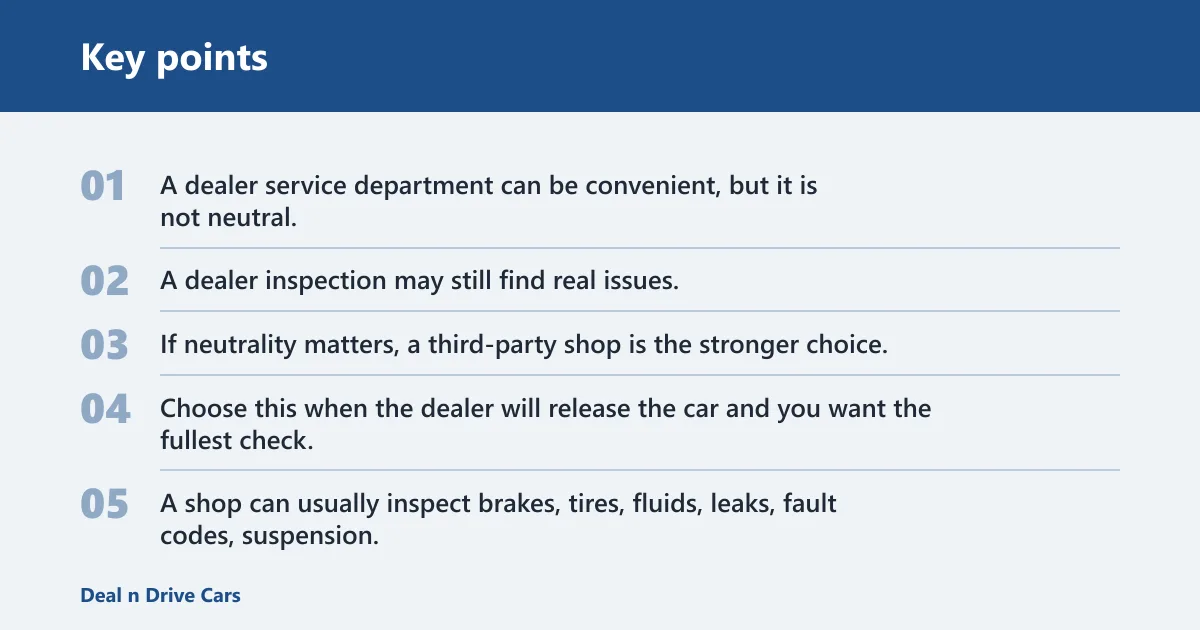
A dealer service department can be convenient, but it is not neutral. A dealer inspection may still find real issues, yet it can create a conflict when the same business that is selling the car is also judging it. If neutrality matters, a third-party shop is the stronger choice.
Independent repair shop
Choose this when the dealer will release the car and you want the fullest check. A shop can usually inspect brakes, tires, fluids, leaks, fault codes, suspension, steering, and underbody condition. Lift access also helps spot rust, frame rail damage, exhaust problems, and signs of flood or collision repair.
Mobile mechanic at the lot
A mobile mechanic can inspect the car at the dealership lot, which helps when the dealer will not permit off-site travel. That option is convenient, but it can be limited without a lift and may cost more than a shop visit. It works best for a quick screen, not a deep underbody review.
Dealer service department
Use this only if you understand the trade-off. A dealer’s own service department may be helpful when a warranty question is central, but it is not an independent opinion. If the same store is selling the car, the inspection is less useful for deciding whether the asking price is fair or whether the vehicle has hidden problems.
Quick comparison: shop vs mobile vs dealer service
| Option | Best for | Main limitation |
|---|---|---|
| Independent repair shop | Full PPI, lift access, road test, scan tool, underbody checks | Requires dealer permission to move the car |
| Mobile mechanic | On-lot screening when the car cannot leave | No lift, limited underbody access, often higher cost |
| Dealer service department | Brand-specific questions or warranty-related checks | Not independent because the seller is also the inspector |
Dealer inspection request framework
This framework keeps the request simple and concrete. It also protects your leverage. Do not start with a debate about defects. Start with a short ask, confirm the logistics, and only then talk numbers. That keeps the inspection separate from price pressure.
1-minute call script
Text-only call script:
You: “Hi, I’m interested in the [year, make, model, VIN if available]. Before I move forward, I need permission for a pre-purchase inspection by an independent mechanic.”
Dealer: “Where would it go?”
You: “To [shop name], or I can have a mobile inspector meet it on your lot. Which option do you allow?”
Dealer: “Do you want to put down a deposit?”
You: “Not yet. First I need the out-the-door price, the fee sheet, the VIN confirmed, and written permission for the inspection.”
Dealer: “How soon?”
You: “Within 24 hours if possible. If that works, please send the permission by email or text and I’ll schedule it right away.”
Email/text version: “Please confirm in writing that I may arrange a pre-purchase inspection for the [year, make, model, VIN] at an independent shop or with a mobile mechanic on site. Also send the out-the-door price, all dealer fees, the VIN, and any warranty details before I schedule.”
Yes no decision tree for dealer replies
| Dealer reply | What it means | Best next step |
|---|---|---|
| Yes | The dealer allows an independent inspection with no major limits. | Book it within 24 hours, confirm the exact vehicle and paperwork, and get written permission. |
| Yes, but on their terms | The dealer allows an inspection only with conditions, such as a specific time window, a staff driver, or a short route. | Accept only if the limits still allow a meaningful inspection; otherwise treat it as a problem. |
| No | The dealer refuses an independent inspection or blocks off-site review without a valid reason. | Walk away unless the vehicle is cheap enough to buy without needing confidence in its condition, which is rare. |
Yes / Yes-but / no rules
Yes: The dealer allows an independent shop or mobile mechanic, confirms the VIN, gives the out-the-door price, and puts the permission in writing. Accept this when the inspector can still do a road test, scan, and meaningful underbody check.
Yes, but: The dealer allows inspection only if a staff driver is present, only at a mobile-only visit, or only during a narrow time window. Accept it only if the limits still allow a real diagnosis. Example: staff-driver allowed can work if the shop still gets the car on a lift; mobile-only is weaker but may be usable for a screening check.
No: The dealer says no written permission, no off-site inspection, no road test, no lift access, or requires a deposit before the inspection path is clear. Those are deal-breakers because they prevent a meaningful check. If the answer is no to independent access, walk away.
Mini checklist before you book
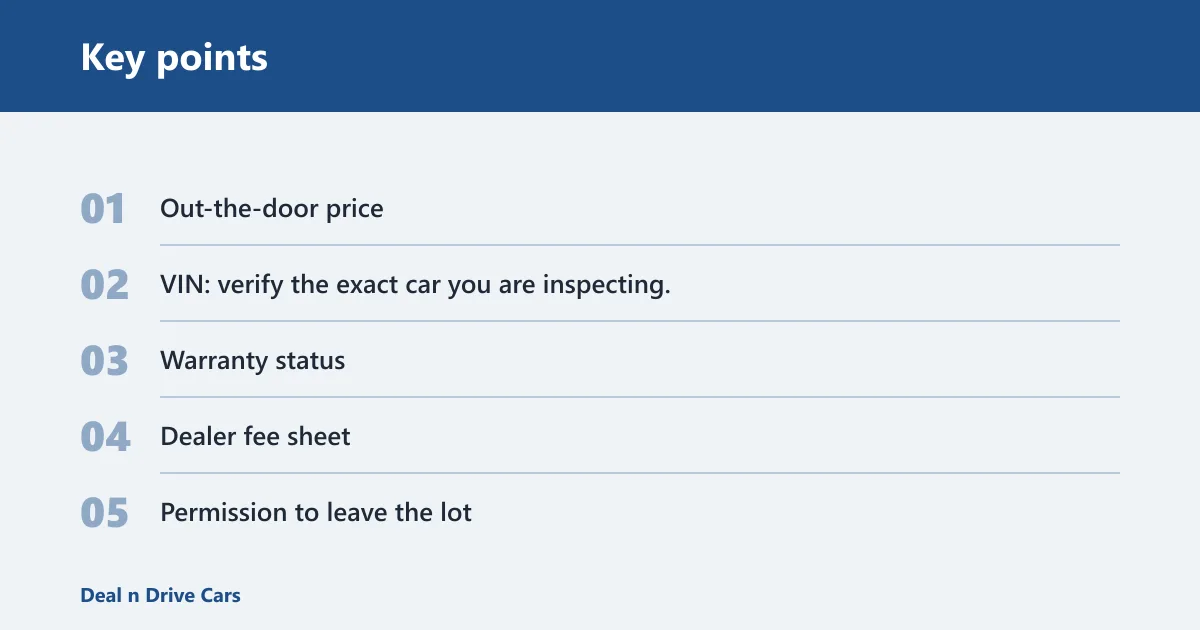
- Out-the-door price: confirm the total, not just the advertised price.
- VIN: verify the exact car you are inspecting.
- Warranty status: ask what coverage is left, if any, and what exclusions apply.
- Dealer fee sheet: get every fee in writing before you commit.
- Permission to leave the lot: confirm whether the car can go to an outside shop or only stay on site.
What should you ask before you schedule?
Before you schedule anything, confirm the full price, the exact vehicle, the warranty status, and whether the car may leave the lot. Those details decide how the inspection will happen and whether the dealer is actually giving you meaningful access or only a narrow, dealer-controlled check.
Out-the-door price and dealer fees
Ask for the out-the-door price in writing. That number should include tax, title, registration, and dealer fees. If the dealer will not provide it, you do not yet have a usable offer. A buyer needs the real total before deciding whether the inspection is worth the time and cost. The FTC’s buyer guidance stresses getting the price, fees, and financing details before you agree to anything. FTC dealer-buying guidance
VIN and warranty status
Verify the VIN so the inspection matches the exact car on the lot. Then ask whether any factory or dealer warranty remains, and what it covers. That matters because some vehicles are sold with limited coverage, while others are sold as-is. The answer can change both risk and negotiating room. If you are comparing listing language with warranty language, see used-car warranty terms and as-is used car sale rules.
Say the target is a compact SUV with roughly 62,000 miles and a dealer warranty that covers only the engine for about 30 days. That is not enough to skip the inspection. It only means you should be even more careful about leaks, scans, brakes, and past repairs.
Permission to leave the lot
Ask directly whether the car can leave the lot for an inspection or whether the dealer requires a mobile mechanic on site. If the answer is yes, get the permission in writing and book quickly. If the answer is no, you need to decide whether an on-site inspection still gives you enough information to move forward.
What should the inspection include?
A dealer-car inspection should cover the same core areas you would want on any used car, with extra attention to what a lot can hide. Common checks include brakes, tires, fluids, leaks, warning lights, steering, suspension, and signs of prior collision or flood damage. Basic checks are not a substitute for a PPI.
Mechanical and safety checks
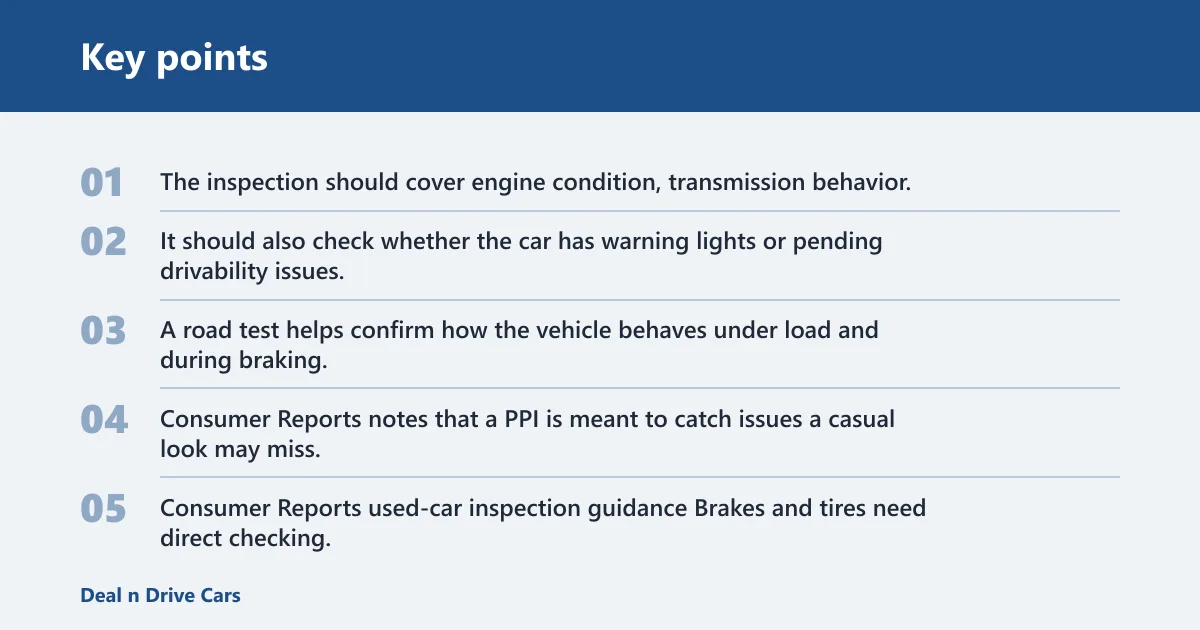
The inspection should cover engine condition, transmission behavior, cooling system condition, steering, suspension, lights, belts, hoses, and visible leaks. It should also check whether the car has warning lights or pending drivability issues. A road test helps confirm how the vehicle behaves under load and during braking. Consumer Reports notes that a PPI is meant to catch issues a casual look may miss, especially on used vehicles with hidden wear or repair history. Consumer Reports used-car inspection guidance
Brakes, tires, and wear patterns
Brakes and tires need direct checking. Ask for pad thickness, rotor condition, tread depth, and uneven wear patterns. Uneven wear can point to alignment problems, worn suspension parts, or prior impact damage. A tire with one shoulder worn down more than the other is not a small detail.
Scan tool and road test
A diagnostic scan tool matters on modern cars and EVs because it can read stored fault codes and may detect recently cleared codes. A car can look clean on the dash and still carry a fault history. The scan should be paired with a road test so the mechanic can spot symptoms that a parked car will not show. Consumer Reports and AAA both emphasize that diagnostic scans can reveal trouble codes and intermittent issues that may not trigger a visible warning light. AAA vehicle inspection guidance
Lift inspection for rust, leaks, and body clues
A lift inspection is the best path for underbody checks. It gives access to frame rails, rust, leaks, exhaust issues, and collision or flood clues. That access is usually available at a shop, not during a typical mobile visit. If the car has underbody splash shields or fresh undercoating, ask for a closer look. State buyer guides and DMV consumer materials commonly recommend looking under the vehicle because rust, leaks, and structural damage are often easiest to spot from below. state DMV buyer guide
Suppose a midsize sedan looks clean on the lot, but the scanner finds a recently cleared transmission code and the lift inspection shows wet residue around the transmission pan. That combination is far more useful than a short drive around the block. It can explain why a cheap deal may not be cheap at all.
What if the dealer says no?
A hard refusal is the clearest warning sign. A conditional yes is more nuanced, but it still needs scrutiny. The key is to separate a normal scheduling limit from a restriction that removes the value of the inspection. If the dealer blocks independent review, you lose the best protection a buyer can get.
Hard refusal
If the dealer says no to an independent inspection, treat that as a major warning. A dealer or private seller who refuses inspection is telling you something about risk, access, or both. If the answer is no without a clear, temporary reason, the safest move is to walk away.
Yes, but on their terms
Some dealers allow an inspection only if you use their chosen shop, their driver, or a very short time window. That is not the same as a free independent inspection. If the conditions prevent a lift check, a road test, or a full scan, the result may be too limited to trust.
When to walk away
Walk away if the dealer will not allow an independent mechanic, will not confirm the VIN, will not provide the fee sheet, or will not let you verify the real out-the-door price. Walk away also when the inspection limits are so tight that the mechanic cannot do the checks that matter most.
Should you use the dealer’s service department for the inspection?
Usually no, unless there is a narrow reason tied to warranty work or factory coverage. The dealer’s own service department can be useful for records and repairs, but it is not a neutral substitute for an independent inspection. The seller should not also be the final judge of the car’s condition.
Dealer service can miss the buyer’s main question: is this car worth buying at this price, from this seller, right now? A third-party shop is better at answering that. It is also better for a car with uncertain past repairs, fresh detailing, or signs that reconditioning may have concealed issues.
Frequently asked questions
Can I get a pre-purchase inspection on a dealer car?
Usually yes, but you need the dealer’s permission and a clear plan. Ask for written approval to take the car to an independent mechanic or to have a mobile inspector meet the vehicle at the lot. If the dealer refuses, that is generally a warning sign rather than a minor inconvenience.
Will a dealer let me take a used car to my mechanic before buying?
Many will, but not all. Franchise stores and independent dealers can have different release rules, insurance concerns, and paperwork steps. If the car cannot leave the lot, ask whether a mobile mechanic can inspect it there. A conditional yes is only useful if the mechanic can still do a proper check.
Who pays for a pre-purchase inspection at a dealership?
Most of the time, the buyer pays for the inspection. Typical inspections cost $140 to $300, and a mobile mechanic may cost more when coming to the lot. Consumer Reports and AAA both note that inspection pricing varies by market and scope, while dealer and shop buyer guides commonly warn that a more complete check can cost more when lift access and road testing are included. Consumer Reports inspection cost and scope
What should I ask the dealer before scheduling an inspection?
Confirm the out-the-door price, VIN, warranty status, dealer fee sheet, and whether the car can leave the lot. Those five items tell you whether the inspection can be meaningful and whether the car on offer is the exact car you are considering. Get the answers in writing if possible.
What if the dealer refuses an independent inspection?
Take the refusal seriously. A dealer or seller who blocks independent review makes it harder to verify mechanical, safety, structural, and cosmetic condition. Unless there is a narrow scheduling issue that can be fixed quickly, the better move is to walk away and keep shopping.
Should I use the dealer’s own service department for the inspection?
Not as your main check. It can help with brand-specific questions, but it is not independent. If you want a neutral opinion, choose an independent repair shop or, when travel is difficult, a mobile mechanic. A vehicle history report and a dealer service note do not replace that outside look.
What should a dealer-car inspection include?
It should include a physical check of the mechanical, safety, structural, and cosmetic condition, plus a road test and scan tool reading. Brakes, tires, leaks, rust, frame rails, exhaust, and warning lights should all be covered. The report should also note anything that does not match the seller’s description. NICB also recommends VIN-based checks for theft and title issues, but those records do not show the car’s full condition. NICB VINCheck
How much does a pre-purchase inspection cost on a dealer car?
For a dealer car, the inspection cost is usually in the same range as any other used vehicle: $140 to $300. A mobile inspection can cost more because the mechanic comes to the lot. The real question is not only price, but whether the setup lets the inspector do a full job. State buyer guides commonly recommend treating the PPI as a small expense compared with the cost of hidden damage or major repairs.
What can vehicle history reports show and what can’t they show?
Vehicle history reports are useful, but they are not a substitute for a physical inspection. They can help flag title brands, odometer issues, theft records, some accident reports, and past registration or ownership events. They usually cannot show the full scope of mechanical wear, unreported damage, poor repairs, or what a car currently looks like underneath. That is why buyers should pair history checks with a PPI. FTC used-car dealer guidance
A clean report does not mean the car is clean. It only means the database did not show a red flag. A salvage or theft entry may appear, but many maintenance problems, flood clues, frame repairs, and diagnostic faults never make it into the report. If the dealer pushes the report as a substitute for inspection, that is not enough.