When to do a pre purchase inspection before buying a car
Book the pre-purchase inspection after you have the VIN and asking price, but before any deposit or contract, and make the deal conditional on the mechanic’s report. Pay too early, and you lose room to walk away or renegotiate if the car needs costly repairs. This guide shows the exact point to schedule it for private sales and dealer listings, plus when to stop the deal.
When should you book a pre purchase inspection?
Book it after a short listing review and a test drive, but before you hand over a deposit, sign a contract, or arrange pickup. That timing keeps the PPI where it belongs, after you have enough information to shortlist the car, and before any commitment weakens your bargaining position.
The safest checkpoint in the buying timeline
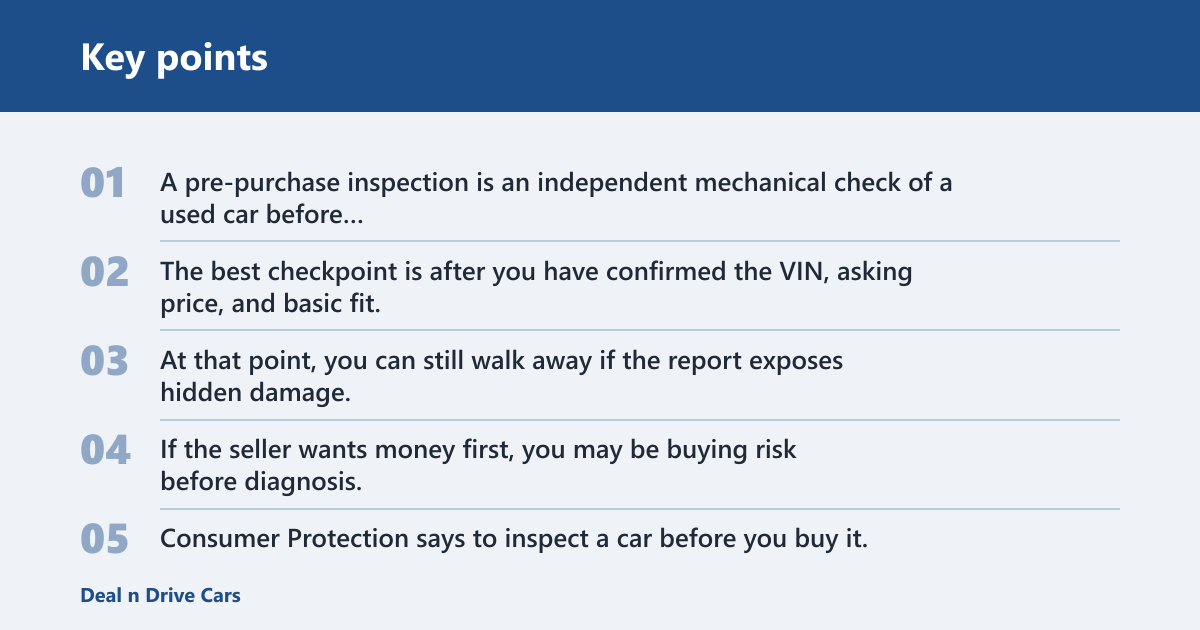
A pre-purchase inspection is an independent mechanical check of a used car before purchase. The best checkpoint is after you have confirmed the VIN, asking price, and basic fit, then completed a test drive. At that point, you can still walk away if the report exposes hidden damage, worn safety items, or signs of poor maintenance.
Used cars may not come with warranties. That makes timing matter more. If the seller wants money first, you may be buying risk before diagnosis. Consumer Protection says to inspect a car before you buy it, and that advice is especially useful when the car is sold “as is, where is.”
How the inspection timing changes by buying stage
| Buying stage | Best action | Why it matters |
|---|---|---|
| First listing review | Run the VIN, review photos, and screen for obvious mismatches | Helps you avoid booking a PPI on a poor fit |
| After the test drive | Book the PPI immediately if the car still looks promising | Test-drive findings and mechanic findings complement each other |
| Before deposit | Do not pay yet; use the inspection report first | Keeps your position strong if repairs are needed |
| Before contract signing | Make signing conditional on a clean report or agreed repairs | Stops you from being locked in too early |
| Before pickup or shipping | For out-of-state cars, complete the PPI before transport payment if possible | Reduces the chance of receiving a car with a costly surprise |
Suppose a sedan looks clean online, but the test drive reveals a steering wheel shimmy at highway speed. That is the moment to book the inspection, not later. If you wait until after a deposit, the seller may be less willing to renegotiate or let you leave.
Should i do a pre purchase inspection?
Yes, if you are buying a used car and want a clearer view of mechanical condition than photos, a history report, or a seller’s word can give you. A PPI can identify hidden issues, support a walk-away decision, and help you avoid paying for repairs the seller never mentioned.
A vehicle history report checks prior damage and title records. It does not replace a mechanical inspection. PPSR or a money owing check can help protect you from buying a vehicle with security interests attached. Those checks are useful, but they are different from a hands-on look at brakes, suspension, and transmission behavior.
What a PPI usually covers
- Visible body and interior condition
- Under-hood condition and fluid leaks
- Brake wear and braking feel
- Suspension noise, looseness, or uneven behavior
- Transmission operation on the road
- Test-drive findings such as pulls, vibrations, or warning lights
A test drive can reveal issues with suspension, braking, tires, transmission, and more. A trusted mechanic may also inspect major systems and, in some cases, perform a test drive as part of the PPI. Most mechanics can conduct a PPI, and a dealership service center may also do one.
Should i get a pre purchase inspection?
You should get one when the car is expensive enough that a surprise repair would hurt your budget, or when the seller’s answers are vague and the history report leaves gaps. A PPI is usually paid by the buyer, and it often costs roughly a few hundred dollars.
The decision gets stronger when the listing is “as is, where is,” when the car has no warranty, or when the seller is asking for a quick commitment. If the seller refuses inspection, that is a red flag. Not every refusal means the car is bad, but it does mean you are being asked to buy with less information than you should have.
When the answer should be no
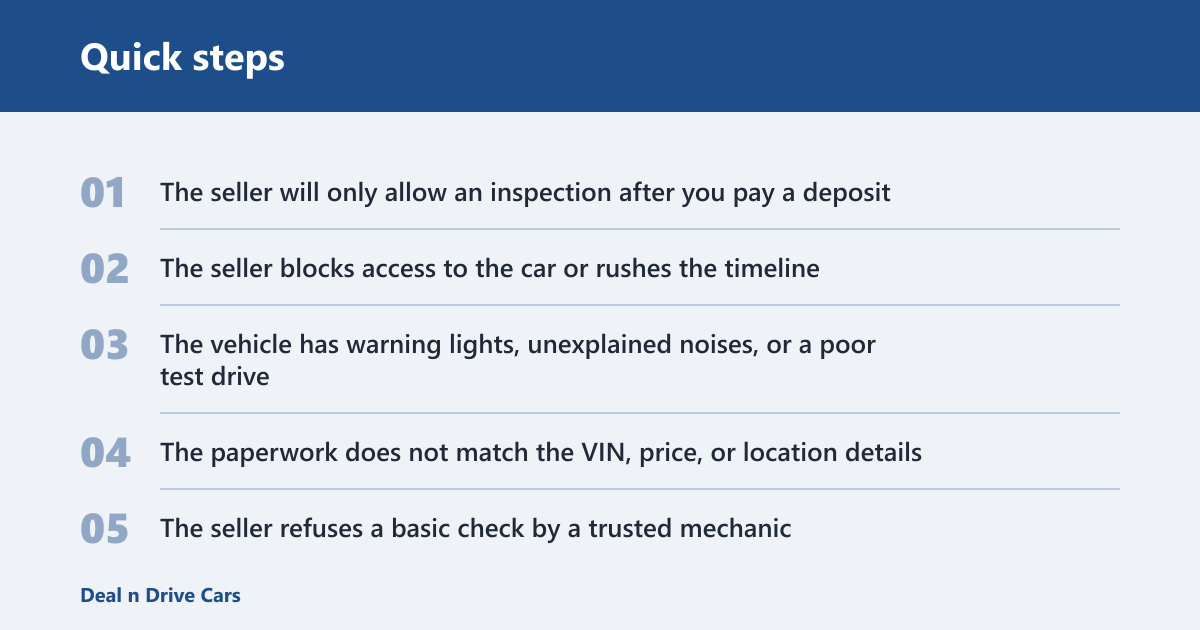
- The seller will only allow an inspection after you pay a deposit
- The seller blocks access to the car or rushes the timeline
- The vehicle has warning lights, unexplained noises, or a poor test drive
- The paperwork does not match the VIN, price, or location details
- The seller refuses a basic check by a trusted mechanic
A common first-timer mistake is treating a clean-looking listing as enough. A shiny paint finish can hide bodywork, and a short drive around the block can miss brake fade, transmission slip, or suspension clunks that show up under load.
How to get a pre purchase inspection before buying a car
Start by asking for the VIN, the exact location of the car, and permission to have it inspected by an independent mechanic before any money changes hands. Then book the inspection in advance, because trusted mechanics and dealership service centers often need an appointment. Make the purchase conditional on the report.
A practical same-day workflow for fast-moving listings
- Review the listing and confirm the VIN, mileage, and asking price.
- Run a vehicle history report and a PPSR or money owing check.
- Complete the test drive and write down any noises, lights, or handling issues.
- Call a trusted mechanic or dealership service center and ask for the earliest inspection slot.
- Tell the seller you will decide after the PPI, not before.
- Pay only if the report is acceptable and the paperwork is complete.
For out-of-state purchases, the same rule applies: inspect before payment or shipping whenever possible. If the car must be shipped, use the inspection result to decide whether the trip is worth the risk. Do not let transport timing force you into a rushed purchase.
How long does a pre purchase inspection take
A PPI often takes long enough for a shop to check the car thoroughly, road test it if needed, and report back on major systems. The exact time varies by vehicle and inspection depth, so you should book in advance and ask the shop how long they need before the seller expects a decision.
What changes the timeline
Complex vehicles, obvious faults, or a used EV battery state of health test can extend the process. A used EV should have a battery state of health test, because battery condition matters more than a quick visual scan. If the seller wants an immediate answer, schedule early or move on.
Dealership service centers may be useful when you are buying from a dealer, especially if the vehicle is brand-compatible and the inspection must happen at the dealership. That still does not remove the need to act before deposit or signature.
What does a pre purchase inspection include
A PPI commonly includes a visual condition check, under-hood inspection, and road-test findings from an independent inspector. It should also cover major systems such as brakes, suspension, steering, tires, and transmission behavior. The goal is simple: find hidden defects before you pay for the car.
Common findings a mechanic may flag
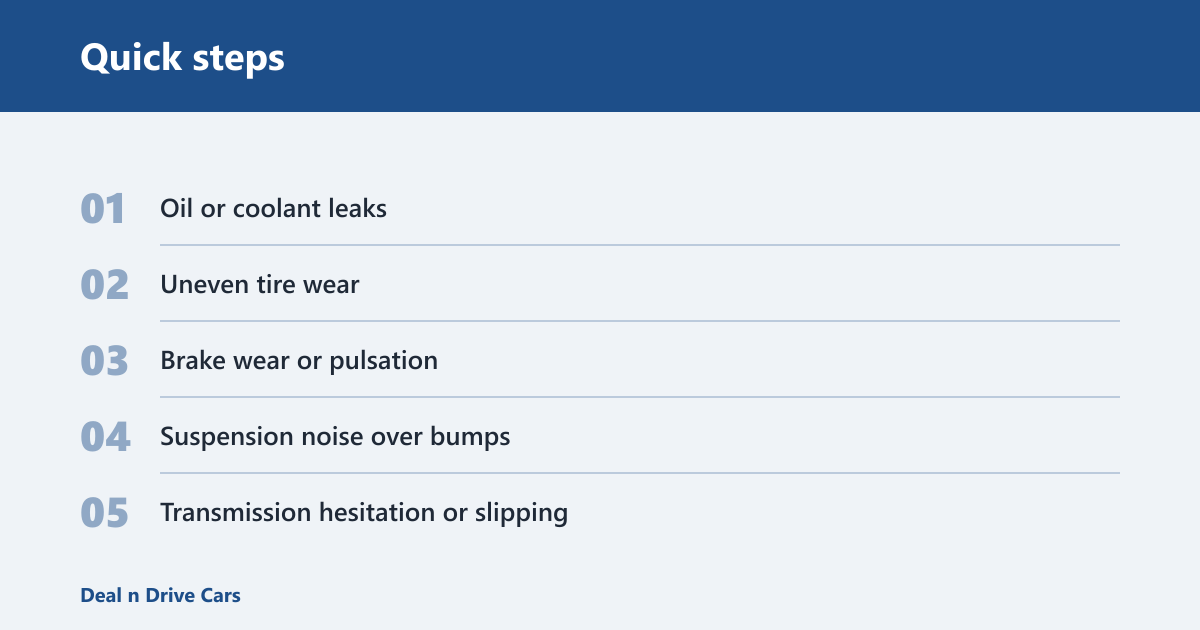
- Oil or coolant leaks
- Uneven tire wear
- Brake wear or pulsation
- Suspension noise over bumps
- Transmission hesitation or slipping
- Evidence of prior collision repair
That inspection should be read together with the vehicle history report. The report may show prior damage, title problems, or mileage inconsistencies. The PPI checks the actual car. One does not replace the other.
How to arrange a pre purchase inspection with a private seller
With a private seller, ask for the VIN, get permission to inspect before any commitment, and book a trusted mechanic in advance. Private sales are often final or “as-is,” so the safest time to inspect is before you agree to buy, before you pay a deposit, and before you travel a long distance to collect the car.
Private-sale timing and access
Choose a local shop or mobile inspector if the seller is flexible about location. If the car is parked at the seller’s home, ask whether the inspection can happen at the shop or whether the mechanic can meet the car on site. Either way, the seller should understand that no deposit is due until the report is reviewed.
If the seller refuses access, treat that as a stop sign. A seller refusing inspection is a red flag. For a private sale, that risk is even higher because there is often no warranty to fall back on.
How to get a pre purchase inspection when buying from a dealer
When buying from a dealer, ask whether the inspection can be done at the dealership service center or at a brand-compatible workshop before you sign anything. Dealers may allow this, but appointment timing matters. You should also review the Consumer Information Notice, because it shows what the dealer disclosed about the car and related pricing information.
Dealer paperwork and timing
Use the Consumer Information Notice together with the vehicle history report and the PPSR or money owing check. The notice tells you what the dealer said in writing; the PPI tells you what the car actually shows. If the dealer pushes a deposit before inspection, keep the purchase conditional or step back.
Say your dealer listing looks tidy, but the test drive shows a delayed downshift and a dashboard warning that comes and goes. That is not the time to sign first and ask questions later. Get the inspection done, then decide whether the car fits your risk tolerance.
What to do if the seller wants a deposit first
Do not treat a deposit as harmless. It can weaken your position because you have already committed money before the mechanic has diagnosed the car. If the seller wants a deposit before inspection, ask whether the deposit is fully refundable if the PPI finds a serious fault. If the answer is no, walking away is often the safer move.
Do not proceed if access is refused
- If the seller refuses an independent inspection, stop the deal
- If the seller demands payment before diagnosis, stop the deal
- If the seller will only allow inspection after pickup, stop the deal
- If the paperwork and VIN do not match, stop the deal
That rule is strict because it protects your buying position. Once money changes hands, the conversation changes. Before that point, you still have real room to ask for repairs, renegotiate the price, or walk away entirely.
Purchase-timeline decision checklist
Use this checklist to place the PPI at the right point in the deal. The aim is to avoid paying before diagnosis, keep your options open, and tie the inspection to other checks such as the history report, PPSR, and finance approval.
| Stage | Do this | Decision |
|---|---|---|
| First listing review | Check VIN, photos, price, and ad details; run a history report if the car still looks plausible | Shortlist or reject |
| After test drive | Book the PPI with a trusted mechanic or service center | Proceed only if the drive felt acceptable |
| Before deposit | Wait for the inspection report and confirm PPSR or money owing status | Do not pay yet |
| Before contract signing | Make sure all disclosed issues, repairs, and finance terms are clear | Sign only if comfortable |
| Before pickup | For remote purchases, confirm the PPI and paperwork before arranging transport or collection | Proceed or cancel |
| Do not proceed if access is refused | Walk away if the seller blocks inspection or demands payment first | Stop the deal |
Frequently asked questions
when to do pre purchase inspection
Do it after the first review and test drive, but before any deposit, contract signing, or pickup. That is the safest timing because you have enough information to shortlist the car, yet you still have room to walk away if the inspection reveals costly problems.
should i do a pre purchase inspection
Yes, if you are buying a used car and want an independent view of its condition. A PPI can identify hidden issues, support a walk-away decision, and reduce the chance of buying a vehicle that needs repairs the seller did not disclose.
should i get a pre purchase inspection
Get one when the car is expensive, sold without warranty, or offered “as is, where is.” A seller refusing inspection is a red flag. The small cost of a PPI is easier to justify when it may save you from major repair bills later.
how to get a pre purchase inspection before buying a car
Confirm the VIN, ask for inspection access, and book an independent mechanic or dealership service center before you commit any money. Pair the PPI with a vehicle history report, a PPSR or money owing check, and the test drive so you are not relying on one source alone.
how long does a pre purchase inspection take
It depends on the vehicle, the shop, and whether extra checks are needed. Ask the inspector for the expected timing before you book, especially for fast-moving listings. If the seller wants an instant answer, schedule early or pass on the car.
what does a pre purchase inspection include
It usually includes visible condition checks, under-hood inspection, brake and suspension review, transmission behavior, and a road test where possible. For a used EV, ask for a battery state of health test as well. The goal is to find problems before purchase, not after.