Customer and salesperson beside a used sedan at a dealership lot before a test drive.

Can You Test Drive a Car Without Buying It? Key Rules

Yes, usually you can test drive a car without buying it if the seller allows it and you meet ID, insurance, or license rules. Skip those rules and you can lose time, lose the car, or face liability if something goes wrong. Here is how dealership drives, private-party drives, insurance checks, and extended-drive programs work before you go.

Can you test drive a car without buying it?

Yes. A normal test drive does not create a purchase obligation. The catch is simple: the seller must allow it, and the seller can set terms for timing, route, licensing, and proof of coverage. If you are still deciding, say that plainly and keep the drive short, direct, and respectful.

When a test drive turns into a no-go

A deal may stop if you arrive without a valid license, cannot show insurance when asked, or refuse basic conditions such as a ride-along with a private seller. Some dealers also block drives until a specific car is on site or a sales consultant is free.

A common first-timer mistake is treating the test drive like a casual borrow. That can slow everything down. If you want to compare two cars, schedule them back-to-back so the differences stay fresh, which is a point Consumer Reports makes directly.

Can you test drive a car at a dealership without buying it?

Yes. Dealer policy can allow a test drive even if you do not plan to buy that day, and you do not have to promise a purchase before the keys come out. Dealers still control access, so appointment timing, stock status, and paperwork can decide whether the drive happens.

How dealer policy usually works

Dealers often want to confirm the car is in stock before you arrive. They may also ask for a driver’s license, proof of insurance, and sometimes a sales consultant to ride along. That is policy, not a universal law, so rules can vary from one store to another.

Be direct. Say you are comparing vehicles and want a short drive before you decide. If you are not ready, do not lead with a promise you cannot keep. That keeps the visit honest and reduces pressure.

What a dealer may ask for before the keys

  • A valid driver’s license
  • Proof of insurance, if the store requires it
  • A scheduled appointment or confirmation that the car is on site
  • A route limit or staff ride-along

Can you test drive a car from a private seller without buying it?

Yes, but only if the private seller agrees. Private-party test drives depend on consent, comfort level, and trust, so the seller may want to ride along, keep your ID, or avoid letting you drive alone. That is normal etiquette, not a sign of bad faith.

Why private-seller consent matters

A private seller is not running a public test-drive desk. They are protecting their car, their plate situation, and their own safety. If the seller says no to a solo drive, that is their right. If they want to stay in the car, accept it or move on.

How to ask for the drive without wasting anyone’s time

Say you are seriously evaluating the car and would like a short route that includes normal traffic, a stop, and a highway stretch if possible. Bring your license and, if asked, your insurance card. Keep the talk on the drive, not on price talks before you have even seen the car move.

What do insurance, license, and state rules usually require?

Most sellers care first about a valid driver’s license and proof that you are who you say you are. Insurance proof may also be required, especially by dealerships. State rules can affect plates, title status, and who is allowed to operate the car, so local requirements matter as much as store policy.
Quick steps: Can you test drive a car without buying it?
Yes. A normal test drive does not create a purchase obligation. The catch is simple: the seller must allow it, and the seller can set terms for timing, route, licensing, and proof of coverage. If you are still deciding, say that plainly and keep the drive short, direct, and respectful.

When a test drive turns into a no-go
A deal may stop if you arrive without a valid license, cannot show insurance when asked, or refuse basic conditions such as a ride-along with a private seller. Some dealers also block drives until a specific car is on site or a sales consultant is free.
A common first-timer mistake is treating the test drive like a casual borrow. That can slow everything down. If you want to compare two cars, schedule them back-to-back so the differences stay fresh, which is a point Consumer Reports makes directly.

Can you test drive a car at a dealership without buying it?
Yes. Dealer policy can allow a test drive even if you do not plan to buy that day, and you do not have to promise a purchase before the keys come out. Dealers still control access, so appointment timing, stock status, and paperwork can decide whether the drive happens.

How dealer policy usually works
Dealers often want to confirm the car is in stock before you arrive. They may also ask for a driver’s license, proof of insurance, and sometimes a sales consultant to ride along. That is policy, not a universal law, so rules can vary from one store to another.
Be direct. Say you are comparing vehicles and want a short drive before you decide. If you are not ready, do not lead with a promise you cannot keep. That keeps the visit honest and reduces pressure.

What a dealer may ask for before the keys

  A valid driver’s license
  Proof of insurance, if the store requires it
  A scheduled appointment or confirmation that the car is on site
  A route limit or staff ride-along


Can you test drive a car from a private seller without buying it?
Yes, but only if the private seller agrees. Private-party test drives depend on consent, comfort level, and trust, so the seller may want to ride along, keep your ID, or avoid letting you drive alone. That is normal etiquette, not a sign of bad faith.

Why private-seller consent matters
A private seller is not running a public test-drive desk. They are protecting their car, their plate situation, and their own safety. If the seller says no to a solo drive, that is their right. If they want to stay in the car, accept it or move on.

How to ask for the drive without wasting anyone's time
Say you are seriously evaluating the car and would like a short route that includes normal traffic, a stop, and a highway stretch if possible. Bring your license and, if asked, your insurance card. Keep the talk on the drive, not on price talks before you have even seen the car move.

What do insurance, license, and state rules usually require?

Driver’s license and proof of identity

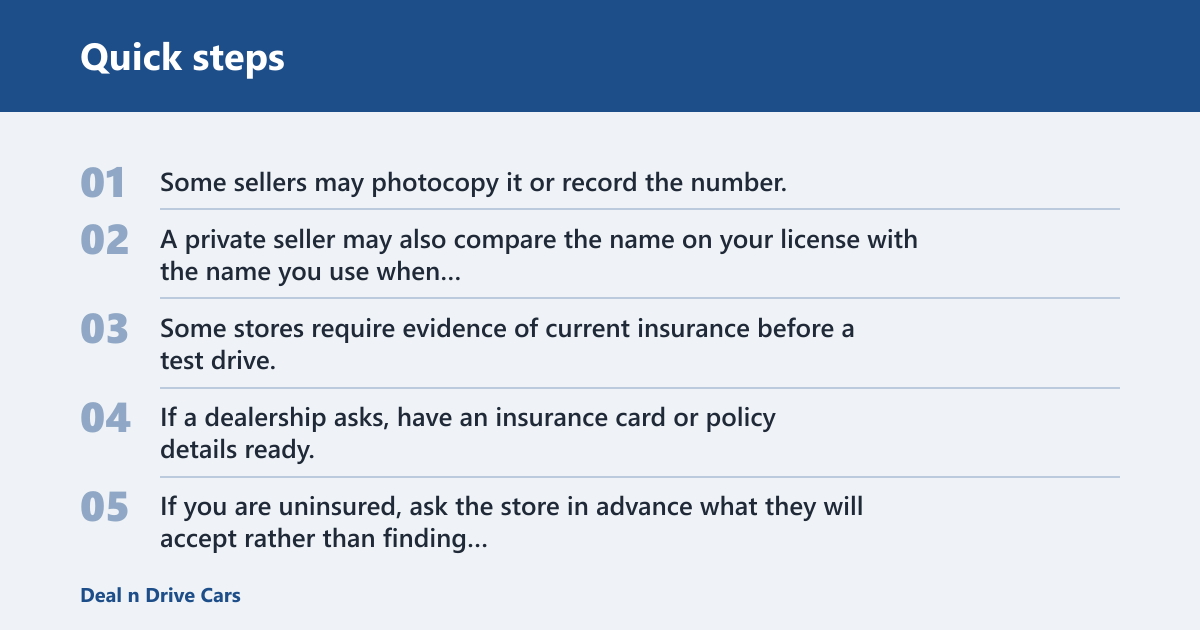
Expect to show a current driver’s license. Some sellers may photocopy it or record the number. A private seller may also compare the name on your license with the name you use when arranging the appointment. That is ordinary caution.

When insurance proof may be required

Some stores require evidence of current insurance before a test drive. Others do not. If a dealership asks, have an insurance card or policy details ready. If you are uninsured, ask the store in advance what they will accept rather than finding out at the desk.

Why plate and title details can matter

Insurance and registration issues can change the rules on who can drive and whether a car can leave the lot. Temporary plates, dealer plates, expired registration, or title problems can all affect the drive. If a seller seems unsure, ask before the engine starts.

What should you expect from longer test-drive programs?

Some brands and stores offer extended drive programs, but the details vary by program. They are not automatic. Home-delivery trials can also exist, with separate return rules, mileage limits, and approval steps that you should confirm before you leave.

24-hour, overnight, and weekend drives

Extended access lets you check parking, commute fit, family use, and neighborhood driving at more than one time of day. Still, each program sets its own terms. Ask how far you can drive, whether tolls or fuel are included, and what happens if you return the car late.

Home-delivery and return rules

Some programs bring the car to your home for a scheduled drive. Others require a return to the store or a designated pickup spot. Confirm the handoff time, who signs for the vehicle, and whether another driver can share the appointment.

What to confirm before leaving the lot

  1. How long the drive is allowed to last
  2. Whether the car may leave the city or county
  3. Whether you need insurance in your own name
  4. Where and how the vehicle must be returned
  5. Who holds the keys and paperwork

Permission matrix: dealer vs. private seller vs. extended drive

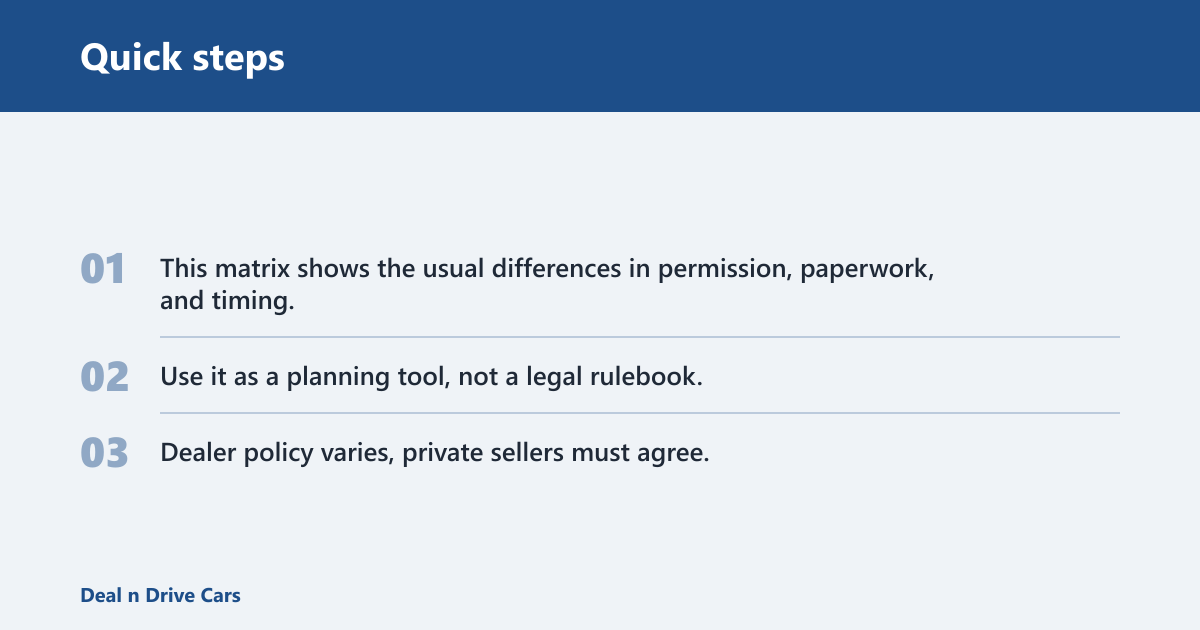
This matrix shows the usual differences in permission, paperwork, and timing. Use it as a planning tool, not a legal rulebook. Dealer policy varies, private sellers must agree, and extended drives depend on the program’s terms.
Quick steps: Can you test drive a car without buying it?
Yes. A normal test drive does not create a purchase obligation. The catch is simple: the seller must allow it, and the seller can set terms for timing, route, licensing, and proof of coverage. If you are still deciding, say that plainly and keep the drive short, direct, and respectful.

When a test drive turns into a no-go
A deal may stop if you arrive without a valid license, cannot show insurance when asked, or refuse basic conditions such as a ride-along with a private seller. Some dealers also block drives until a specific car is on site or a sales consultant is free.
A common first-timer mistake is treating the test drive like a casual borrow. That can slow everything down. If you want to compare two cars, schedule them back-to-back so the differences stay fresh, which is a point Consumer Reports makes directly.

Can you test drive a car at a dealership without buying it?
Yes. Dealer policy can allow a test drive even if you do not plan to buy that day, and you do not have to promise a purchase before the keys come out. Dealers still control access, so appointment timing, stock status, and paperwork can decide whether the drive happens.

How dealer policy usually works
Dealers often want to confirm the car is in stock before you arrive. They may also ask for a driver’s license, proof of insurance, and sometimes a sales consultant to ride along. That is policy, not a universal law, so rules can vary from one store to another.
Be direct. Say you are comparing vehicles and want a short drive before you decide. If you are not ready, do not lead with a promise you cannot keep. That keeps the visit honest and reduces pressure.

What a dealer may ask for before the keys

  A valid driver’s license
  Proof of insurance, if the store requires it
  A scheduled appointment or confirmation that the car is on site
  A route limit or staff ride-along


Can you test drive a car from a private seller without buying it?
Yes, but only if the private seller agrees. Private-party test drives depend on consent, comfort level, and trust, so the seller may want to ride along, keep your ID, or avoid letting you drive alone. That is normal etiquette, not a sign of bad faith.

Why private-seller consent matters
A private seller is not running a public test-drive desk. They are protecting their car, their plate situation, and their own safety. If the seller says no to a solo drive, that is their right. If they want to stay in the car, accept it or move on.

How to ask for the drive without wasting anyone's time
Say you are seriously evaluating the car and would like a short route that includes normal traffic, a stop, and a highway stretch if possible. Bring your license and, if asked, your insurance card. Keep the talk on the drive, not on price talks before you have even seen the car move.

What do insurance, license, and state rules usually require?
Most sellers care first about a valid driver’s license and proof that you are who you say you are. Insurance proof may also be required, especially by dealerships. State rules can affect plates, title status, and who is allowed to operate the car, so local requirements matter as much as store policy.


Driver's license and proof of identity
Expect to show a current driver’s license. Some sellers may photocopy it or record the number. A private seller may also compare the name on your license with the name you use when arranging the appointment. That is ordinary caution.

When insurance proof may be required
Some stores require evidence of current insurance before a test drive. Others do not. If a dealership asks, have an insurance card or policy details ready. If you are uninsured, ask the store in advance what they will accept rather than finding out at the desk.

Why plate and title details can matter
Insurance and registration issues can change the rules on who can drive and whether a car can leave the lot. Temporary plates, dealer plates, expired registration, or title problems can all affect the drive. If a seller seems unsure, ask before the engine starts.

What should you expect from longer test-drive programs?
Some brands and stores offer extended drive programs, but the details vary by program. They are not automatic. Home-delivery trials can also exist, with separate return rules, mileage limits, and approval steps that you should confirm before you leave.

24-hour, overnight, and weekend drives
Extended access lets you check parking, commute fit, family use, and neighborhood driving at more than one time of day. Still, each program sets its own terms. Ask how far you can drive, whether tolls or fuel are included, and what happens if you return the car late.

Home-delivery and return rules
Some programs bring the car to your home for a scheduled drive. Others require a return to the store or a designated pickup spot. Confirm the handoff time, who signs for the vehicle, and whether another driver can share the appointment.

What to confirm before leaving the lot

  How long the drive is allowed to last
  Whether the car may leave the city or county
  Whether you need insurance in your own name
  Where and how the vehicle must be returned
  Who holds the keys and paperwork


Permission matrix: dealer vs. private seller vs. extended drive
Situation Who can test drive Documents usually needed Typical drive length What to say if you are not ready to buy
Dealership standard drive Qualified shoppers approved by the store Driver’s license, sometimes insurance card Often short; Consumer Reports says you may only get a short window, with at least 30 minutes a practical target when possible “I am comparing a few cars and want to evaluate this one first.”
Private seller drive Only with the seller’s consent Driver’s license, sometimes ID held by seller, sometimes proof of insurance Usually brief and route-limited “I am still deciding, so I would like a short drive before discussing price.”
24-hour, overnight, or weekend program Approved shoppers under a store or brand program License, insurance, program agreement, return details 24 hours, overnight, or weekend if the program allows it “I am not committing today, but I would like to use the program terms to evaluate the car.”

What should you check on the test drive?

Use the drive to check fit, controls, tech, safety systems, cargo room, and how the car behaves on real roads. Consumer Reports recommends at least 30 minutes when possible, with city and highway driving, plus rougher surfaces such as speed bumps or a rutted parking lot. (consumerreports.org)
Quick steps: Can you test drive a car without buying it?
Yes. A normal test drive does not create a purchase obligation. The catch is simple: the seller must allow it, and the seller can set terms for timing, route, licensing, and proof of coverage. If you are still deciding, say that plainly and keep the drive short, direct, and respectful.

When a test drive turns into a no-go
A deal may stop if you arrive without a valid license, cannot show insurance when asked, or refuse basic conditions such as a ride-along with a private seller. Some dealers also block drives until a specific car is on site or a sales consultant is free.
A common first-timer mistake is treating the test drive like a casual borrow. That can slow everything down. If you want to compare two cars, schedule them back-to-back so the differences stay fresh, which is a point Consumer Reports makes directly.

Can you test drive a car at a dealership without buying it?
Yes. Dealer policy can allow a test drive even if you do not plan to buy that day, and you do not have to promise a purchase before the keys come out. Dealers still control access, so appointment timing, stock status, and paperwork can decide whether the drive happens.

How dealer policy usually works
Dealers often want to confirm the car is in stock before you arrive. They may also ask for a driver’s license, proof of insurance, and sometimes a sales consultant to ride along. That is policy, not a universal law, so rules can vary from one store to another.
Be direct. Say you are comparing vehicles and want a short drive before you decide. If you are not ready, do not lead with a promise you cannot keep. That keeps the visit honest and reduces pressure.

What a dealer may ask for before the keys

  A valid driver’s license
  Proof of insurance, if the store requires it
  A scheduled appointment or confirmation that the car is on site
  A route limit or staff ride-along


Can you test drive a car from a private seller without buying it?
Yes, but only if the private seller agrees. Private-party test drives depend on consent, comfort level, and trust, so the seller may want to ride along, keep your ID, or avoid letting you drive alone. That is normal etiquette, not a sign of bad faith.

Why private-seller consent matters
A private seller is not running a public test-drive desk. They are protecting their car, their plate situation, and their own safety. If the seller says no to a solo drive, that is their right. If they want to stay in the car, accept it or move on.

How to ask for the drive without wasting anyone's time
Say you are seriously evaluating the car and would like a short route that includes normal traffic, a stop, and a highway stretch if possible. Bring your license and, if asked, your insurance card. Keep the talk on the drive, not on price talks before you have even seen the car move.

What do insurance, license, and state rules usually require?
Most sellers care first about a valid driver’s license and proof that you are who you say you are. Insurance proof may also be required, especially by dealerships. State rules can affect plates, title status, and who is allowed to operate the car, so local requirements matter as much as store policy.


Driver's license and proof of identity
Expect to show a current driver’s license. Some sellers may photocopy it or record the number. A private seller may also compare the name on your license with the name you use when arranging the appointment. That is ordinary caution.

When insurance proof may be required
Some stores require evidence of current insurance before a test drive. Others do not. If a dealership asks, have an insurance card or policy details ready. If you are uninsured, ask the store in advance what they will accept rather than finding out at the desk.

Why plate and title details can matter
Insurance and registration issues can change the rules on who can drive and whether a car can leave the lot. Temporary plates, dealer plates, expired registration, or title problems can all affect the drive. If a seller seems unsure, ask before the engine starts.

What should you expect from longer test-drive programs?
Some brands and stores offer extended drive programs, but the details vary by program. They are not automatic. Home-delivery trials can also exist, with separate return rules, mileage limits, and approval steps that you should confirm before you leave.

24-hour, overnight, and weekend drives
Extended access lets you check parking, commute fit, family use, and neighborhood driving at more than one time of day. Still, each program sets its own terms. Ask how far you can drive, whether tolls or fuel are included, and what happens if you return the car late.

Home-delivery and return rules
Some programs bring the car to your home for a scheduled drive. Others require a return to the store or a designated pickup spot. Confirm the handoff time, who signs for the vehicle, and whether another driver can share the appointment.

What to confirm before leaving the lot

  How long the drive is allowed to last
  Whether the car may leave the city or county
  Whether you need insurance in your own name
  Where and how the vehicle must be returned
  Who holds the keys and paperwork


Permission matrix: dealer vs. private seller vs. extended drive
This matrix shows the usual differences in permission, paperwork, and timing. Use it as a planning tool, not a legal rulebook. Dealer policy varies, private sellers must agree, and extended drives depend on the program’s terms.


      Situation
      Who can test drive
      Documents usually needed
      Typical drive length
      What to say if you are not ready to buy


      Dealership standard drive
      Qualified shoppers approved by the store
      Driver’s license, sometimes insurance card
      Often short; Consumer Reports says you may only get a short window, with at least 30 minutes a practical target when possible
      “I am comparing a few cars and want to evaluate this one first.”
    
    
      Private seller drive
      Only with the seller’s consent
      Driver’s license, sometimes ID held by seller, sometimes proof of insurance
      Usually brief and route-limited
      “I am still deciding, so I would like a short drive before discussing price.”
    
    
      24-hour, overnight, or weekend program
      Approved shoppers under a store or brand program
      License, insurance, program agreement, return details
      24 hours, overnight, or weekend if the program allows it
      “I am not committing today, but I would like to use the program terms to evaluate the car.”


What should you check on the test drive?

Route planning: city streets, highway, bumps, and parking lots

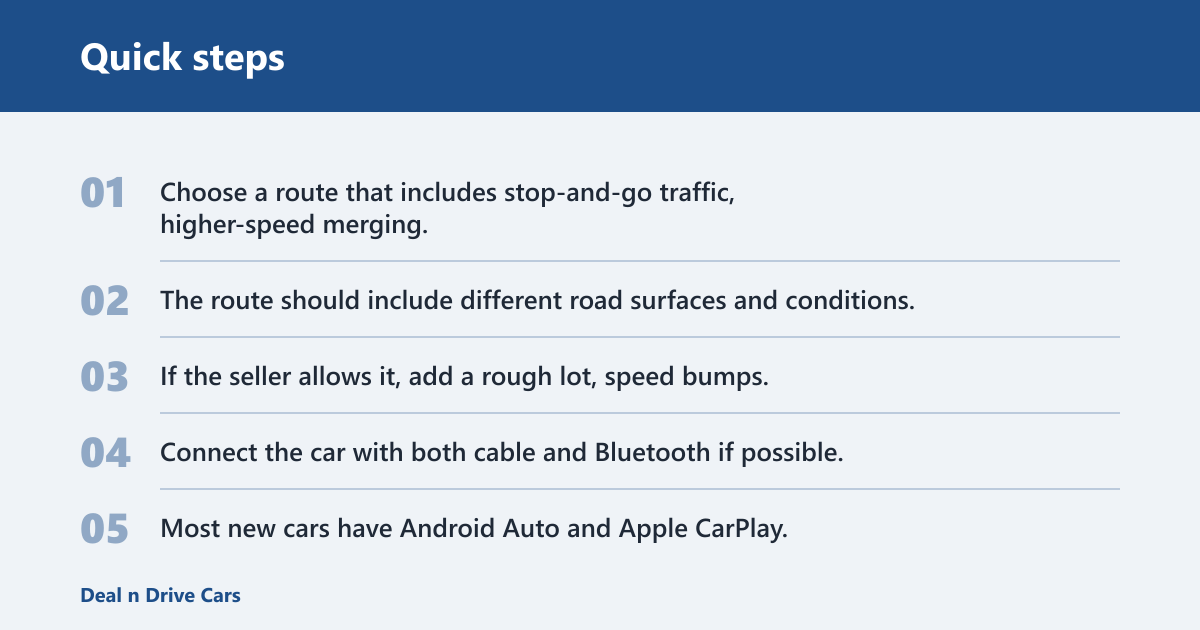
Choose a route that includes stop-and-go traffic, higher-speed merging, and uneven pavement. The route should include different road surfaces and conditions. If the seller allows it, add a rough lot, speed bumps, and a tighter turn or two so you can judge body control and visibility.

Phone pairing, CarPlay, Android Auto, and map display

Connect the car with both cable and Bluetooth if possible. Most new cars have Android Auto and Apple CarPlay, but menu behavior still differs by brand and trim. Check whether your phone pairs quickly, whether the map display is readable, and whether calls or music drop out.

Safety aids, seat fit, cargo space, and storage

Look for automatic emergency braking, blind spot warning, and rear cross traffic warning. Also test whether lane keeping assistance can be turned off independently. Adjust the seat, steering wheel, and mirrors, then check headroom and rear visibility. Open the glove box and center console. Fold the rear seats if cargo flexibility matters.

Picture a buyer who is 6 feet 2 inches tall and sits too high in a compact SUV. The windshield may still seem fine in the showroom, but on a real route the roofline, mirror placement, and rear view can become annoying. That is why fit matters before a decision.

Say your weekly routine includes two duffel bags, a stroller, and a narrow garage. The test drive should include a parking maneuver and a quick check of cargo opening height, seat fold-flat shape, and whether the door clears the wall when you open it at home. Practical fit is easy to miss in a static walkaround.

Bring a friend or observer

A friend can help you stay on the checklist, especially if the salesperson is chatty or the seller is rushing the visit. That extra set of eyes can spot awkward seating, noisy trim, or confusing controls while you stay focused on the drive itself.

can you test drive a car without buying it

Yes. In most cases, a test drive is allowed without a purchase, provided the seller accepts your request and you meet the basic ID, license, and sometimes insurance requirements. The key issue is permission, not intention to buy.

can you test drive a car at a dealership without buying it

Yes. Dealerships regularly allow shoppers to test drive cars without committing to a sale that day. The store may ask for an appointment, proof that the vehicle is in stock, and a valid driver’s license. Some dealers also require insurance before they hand over the keys.

can you test drive a car without insurance on it

Sometimes, but not always. Some dealerships and private sellers will insist on proof of insurance before the drive, while others may not. If you do not have coverage, ask the seller ahead of time what their policy is so you do not arrive unprepared.

should you test drive a car before buying it

Yes. A test drive is one of the few ways to check seat comfort, mirror placement, road noise, visibility, and how the controls feel in motion. It also lets you compare how the car handles city traffic, highway merging, and parking before you commit.

can you test drive a car from carvana before buying it

Some home-delivery or online-retail programs include trial periods or return windows, but the rules depend on the specific program and vehicle. Confirm the terms before accepting delivery, including mileage limits, return deadlines, and any paperwork you must sign first.

can you test drive a car with no intention of buying it

Yes, if the seller agrees. A test drive does not require a purchase promise, but it does require respect for the seller’s time. Be honest that you are comparing options, keep the route useful, and avoid pretending to be ready if you are not.

can you test drive a car for 24 hours

Sometimes, but only through a specific dealer or brand program. A full-day drive is not standard for every vehicle or store. You should confirm the paperwork, insurance expectations, mileage rules, and return time before you leave with the car.

can you drive a car without insurance when you first buy it

That depends on state law, lender rules, and how the car is titled and registered. Some buyers must show proof of insurance before registration or financing is finalized. Do not assume you can drive away uninsured; check local requirements and your lender’s conditions first.
Similar Posts