How Recent Should a Vehicle History Report Be Before You Buy?
For high-risk used-car deals, buy only with a same-day or immediately re-pulled vehicle history report; for ordinary purchases, a report from the last 7 days is a sensible freshness window. A stale report can miss a new title brand, accident entry, lien update, or salvage alert, and that can leave you paying more for a car with hidden problems. This guide explains when a report is current enough, which cars need a fresh pull before you pay, and the exact triggers for rerunning it.
Vehicle history report freshness rules

A vehicle history report gets less reliable as soon as new events can enter the record. Accident data may arrive late. Auction activity may show up later. Title brands can move across states after a delay. That is why the pull date matters as much as the content.
Use the report date as a risk check, not a comfort blanket. If the deal is simple and local, a short freshness window can work. If the purchase is expensive, remote, or tied to a salvage or rebuilt vehicle, pull the report again right before payment.
Same-day reports for high-risk deals
High-risk deals need the freshest report you can get. That means same-day or immediately re-pulled for higher-risk purchases such as salvage, rebuilt, flood, junk, auction, long-distance, or private-party deals where the seller has limited paperwork. CarBuyingTips recommends a current report before purchase, and that advice matters most where the vehicle has the highest chance of new data showing up late.
Use the report as one checkpoint, not the final word. A seller may provide a report that is out-dated, altered or fake. A seller can also show a clean report even after a recent accident. If the risk is high, do not rely on a printout that is already days old.
Short freshness windows for normal used-car buys
For an ordinary dealer purchase, a report from the last 7 days is a practical ceiling if nothing appears to have changed since the pull. That window is short enough to catch many late title updates or newly entered auction records while still being realistic for shoppers who need time to inspect the car.
Even then, rerun it after any delay. A day can matter if the car was just traded in, moved between lots, or recently sold at auction. The history report date is only useful when it still matches the car’s current paper trail.
When a report is too old to trust
A report dated months ago may miss later information, and that is enough to make it poor buying support. If the listing has been updated, the price changed, the seller added new photos, or the vehicle moved between states, treat the old report as stale until you pull a new one.
Picture a sedan listed with a clean report from three months earlier. The body still looks tidy, but the title may now carry a new brand or a mileage entry may have changed. The age of the report is the problem, even before you spot any physical clue.
What can change after the report date?
Several events can appear after a report is generated. Accident entries may show up later. Auction records can lag. Title brands can transfer across states. Odometer readings can be added after a sale. A report is a snapshot, not a live record.
Late accident and auction updates
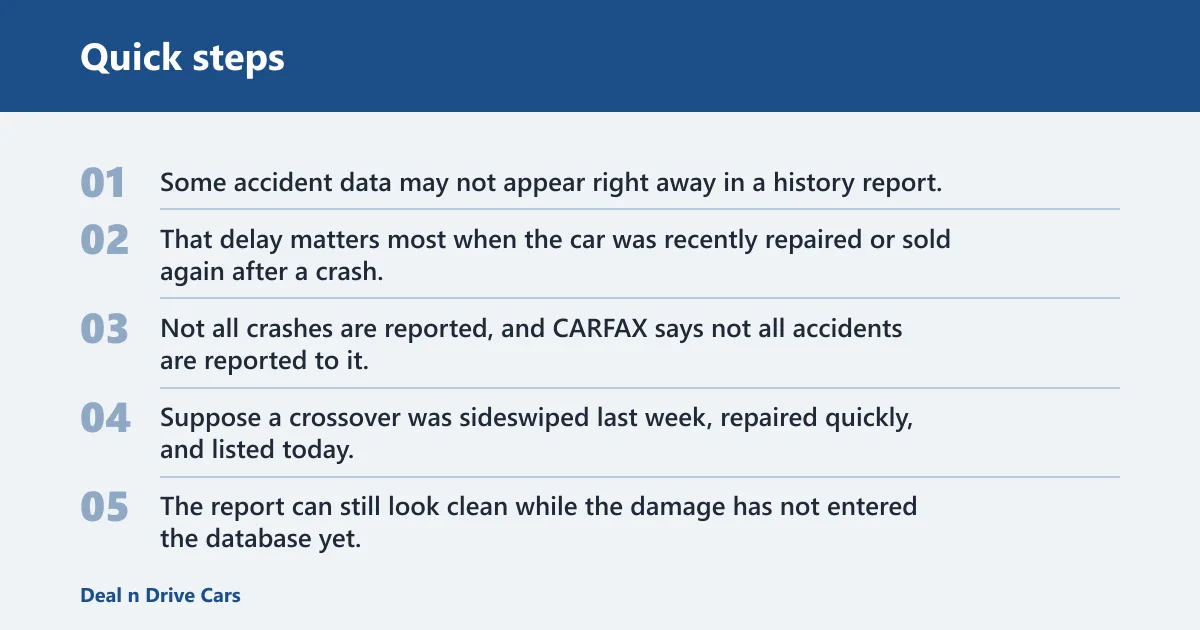
Some accident data may not appear right away in a history report. That delay matters most when the car was recently repaired or sold again after a crash. Not all crashes are reported, and CARFAX says not all accidents are reported to it.
Suppose a crossover was sideswiped last week, repaired quickly, and listed today. The report can still look clean while the damage has not entered the database yet.
Title brand changes and state transfers
Title brands such as salvage, rebuilt, flood, and junk can move state to state and may appear after delays. NMVTIS is a federal title-history data source used through providers, and it can show title clues, but not every event. That means a brand update may arrive later than the sale listing suggests.
Pay attention to state-to-state transfer issues. A vehicle can look normal in one state’s paperwork while a brand or prior title event is still working through another state’s records. If the report is old, that gap gets wider.
Odometer entries and reporting gaps
Odometer readings matter because rollback risk, inconsistent readings, and reporting gaps can all signal trouble. A report may show one reading at sale, another after service, and a third from a later title event. If the numbers do not move in a believable order, rerun the report and inspect the car more closely.
A report with missing mileage entries is not proof of fraud by itself. It does mean the paper trail is thin. When the vehicle is newer or the price is high, a fresh pull helps reduce the chance that you are reading a partial record.
VIN check before you trust the report
The report is only useful if it belongs to the exact car in front of you. The VIN is the 17-character identifier that ties the report to that vehicle, and it must match the physical car, the title, and the listing.
Confirm the 17-character VIN on the car
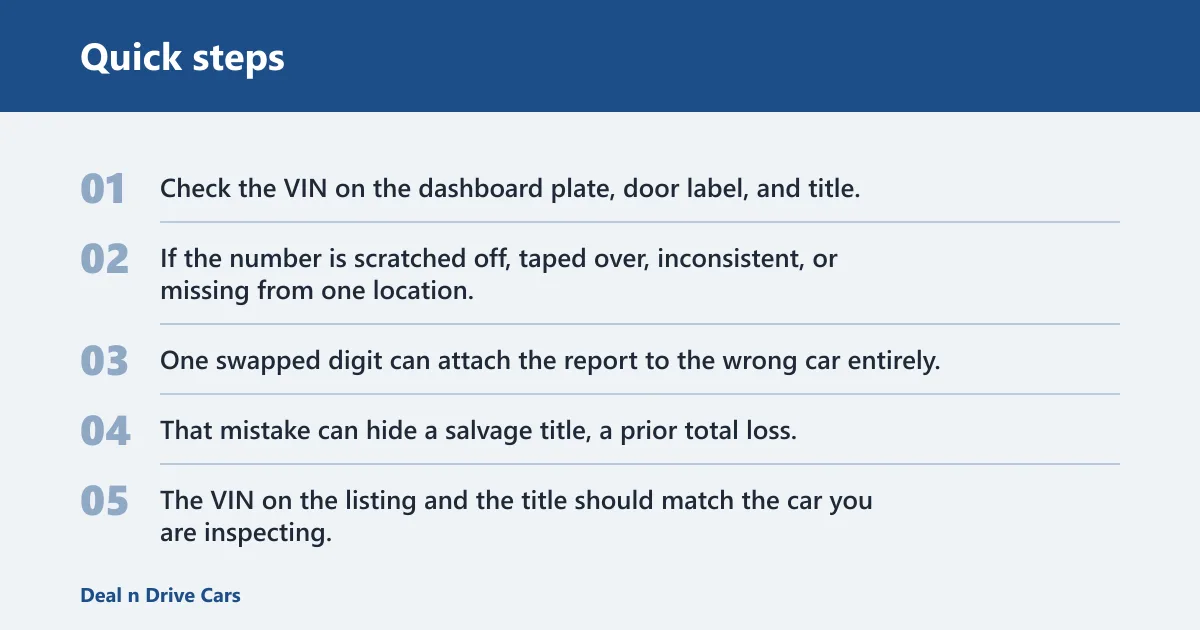
Check the VIN on the dashboard plate, door label, and title. All three should agree. If the number is scratched off, taped over, inconsistent, or missing from one location, stop and verify before you rely on the report.
Do not assume a near-match is good enough. One swapped digit can attach the report to the wrong car entirely. That mistake can hide a salvage title, a prior total loss, or a mileage inconsistency that belongs to another vehicle.
Match the VIN to the title and listing
The VIN on the listing and the title should match the car you are inspecting. If the seller sent a report for a different trim, color, or model year, ask for a fresh pull tied to the actual VIN. A seller-provided report can be outdated, tied to the wrong VIN, or altered.
Use the VIN to anchor everything else. If the report date is recent but the VIN is wrong, the report is still useless. Freshness does not fix a mismatch.
Watch for swapped or reused reports
Some sellers reuse a clean report from another car or from an earlier sale. That risk is higher in private-party deals and online listings where the report file arrives as a screenshot or PDF with no clear pull date. If the report does not clearly match the exact VIN, rerun it yourself.
Run your own history check before money changes hands. That step is more important than the seller’s copy because it gives you the current date and the correct vehicle.
How recent should a vehicle history report be?
Use the deal type to set the freshness rule. For a private-party sale, aim for same-day or immediately re-pulled before payment. For a dealer lot buy, a report within 7 days can be acceptable if nothing has changed, but a fresh pull before deposit is safer. For auction or salvage/rebuilt vehicles, treat the report as time-sensitive and rerun it right before purchase.
Private-party purchase timing
Private-party deals deserve the strictest rule because the seller may not refresh documents for you. Buy only with a same-day report if the car is high value, recently repaired, imported from another state, or presented as a quick sale. If the seller has waited days to update paperwork, pull your own report before you send a deposit.
Dealer lot timing
Dealer inventory can move quickly, and cars can be traded in, moved, or retitled between the first listing and your visit. A report from the last 7 days is a practical window for a normal dealer buy, but rerun it after a test drive, after a deposit, or if the sales sheet has changed.
Auction and salvage timing
Auction, salvage, and rebuilt vehicles need the shortest gap because late entries are common and the title picture can change fast. Use same-day or immediately re-pulled reports, then confirm every visible brand or prior damage clue with the title and inspection. Do not accept an older report just because the car looks tidy.
Vehicle history freshness checklist
Use this checklist before you commit to the car. It keeps report age tied to deal risk and tells you when to rerun the report. If any answer is shaky, pull a new report before payment.
| Report age | Deal risk | What can change in that window | Rerun the report? |
|---|---|---|---|
| Same day | High-risk: salvage, rebuilt, flood, auction, long-distance, or private-party | Recent accident entries, title brand updates, auction activity, odometer entries | Yes, after any delay, deposit, or new document |
| Within 7 days | Normal dealer lot purchase with a matched VIN and no new red flags | Title transfer updates, mileage additions, recall status changes outside the report | Yes, before payment if the deal drags on |
| 2 to 4 weeks | Lower confidence; only a starting point for shopping, not for payment | Late accident reporting, state-to-state brand changes, auction records | Yes, always before you pay |
| Months old | Too stale for purchase decisions | Nearly anything listed above, plus wrong-VIN risk if the seller reused it | Yes, immediately |
- Check the VIN on the car, title, and report.
- Confirm the report date is same-day for high-risk deals or within 7 days for normal buys.
- Rerun the report after any deposit, test drive, or long delay.
- Pull it again if the seller hands over new documents or changes the story.
- Stop and recheck if the car moves, the price drops hard, or a brand clue appears.
- Run the final report again right before payment.
What to check besides the report?
History data is only one screen. A report can help reveal title, accident, and odometer history, but no single report is complete or guaranteed. Add recall lookup, inspection, and title review before you buy. That combination catches more problems than any one database can.
Recall lookup
Open recalls should be checked separately because repair status changes and recall lookups are not the same as a history report. NHTSA offers a free VIN recall lookup. A recall that appears open today may be repaired later, so confirm the status near the time you buy.
That matters because recall availability is part of the decision. A car with an open recall can still be bought, but you should know whether the fix is available and whether the vehicle is safe to drive home as-is.
Independent inspection
An independent pre-purchase inspection can find physical damage and mechanical issues that databases miss. That matters when the car has a clean report but the body lines are uneven, the paint shades do not match, or a repair hides under the trim.
If the report is old but the car looks clean, inspection becomes even more important. The machine may have a current-looking record and a past that has not fully surfaced yet.
Title and seller document review
Compare the report with the title, seller story, and any repair invoices the seller offers. NMVTIS data is available through approved consumer access providers, but the report still depends on timely input. FAXVIN says its report includes title status and brands, recalls, accidents and damage history, but that scope does not remove the need to verify paperwork in person.
If the seller gives you a clean report, ask when it was pulled. If it is not current, treat it as background reading only. The safe move is to rerun the report yourself before payment.
Frequently asked questions
How recent should a vehicle history report be before I buy?
For high-risk deals, use a same-day or immediately re-pulled report. For an ordinary used-car purchase, a report from the last 7 days is a practical freshness window. If the deal stalls, the seller adds documents, or the car changes hands, rerun it before payment.
Is a vehicle history report from a few weeks ago still okay?
It can help you screen a car, but it is too old to trust as a final buy signal. A few weeks gives time for late accident entries, title updates, auction activity, or odometer records to show up. Pull a fresh report before you send money.
Should I run my own vehicle history report before buying?
Yes. Do not rely only on a seller-provided copy, because it may be outdated, altered or fake, or tied to the wrong VIN. Run your own report so you control the pull date and can match it to the exact car, title, and listing.
Can a seller give me an outdated or fake history report?
Yes. A seller may provide a report that is out-dated, altered or fake. The safest response is to verify the VIN on the car, then pull your own report close to the purchase. If the seller resists, that is a warning sign in itself.
What can change after a vehicle history report is pulled?
Accident records, auction activity, title brands, state-to-state transfers, and odometer entries can appear after the pull date. Some accident data may not appear right away in a history report. That is why freshness matters, especially when the car was recently repaired or moved.
What should I check if the report date is old but the car looks clean?
Rerun the report, confirm the VIN, check open recalls through a free VIN lookup, and book an independent pre-purchase inspection. A clean appearance can hide damage that databases have not caught yet. Do not let a neat exterior override a stale report.
Does accident data take time to show up on a vehicle history report?
Yes. Some accident data may not appear right away, and not all crashes are reported. A seller can show a clean report even after a recent accident. That is why you should not treat a clean report as proof that no damage has occurred.