How Do Accidents Affect a Used Car’s Depreciation?
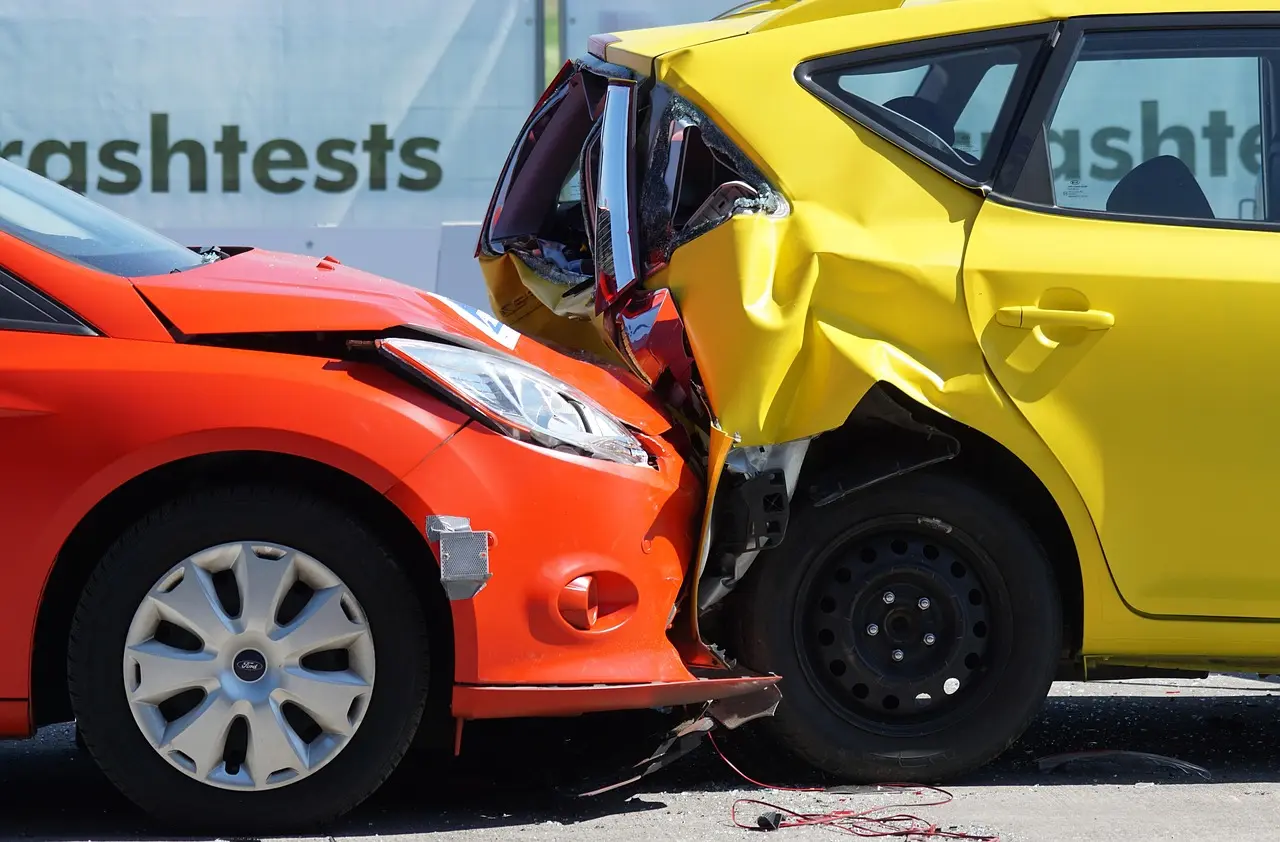
An accident can cut a used car’s value by about 5% to 30% or more, depending on damage severity, repair quality, title status, and market confidence; cosmetic damage tends to sit near the low end, while structural damage and branded titles sit higher on the loss curve. This is consistent with how insurers and valuation guides treat total-loss and repair history, where a car’s actual cash value, damage severity, and title brand all affect pricing and insurability (Cars.com, Kelley Blue Book, Consumer Reports). Skip the math and you can overpay, underprice your car, or miss hidden repair risk. This guide breaks down how damage type changes depreciation, how to judge the discount, and when an accident history is a fair deal versus a red flag.
Accident depreciation decision table
| Damage tier | Typical discount drivers | Paperwork to verify | Red-flag questions to ask | Likely discount range | Finance and insurance impact | Inspection priority | Buy or walk-away guidance |
|---|---|---|---|---|---|---|---|
| Cosmetic-only damage | Painted panel, bumper cover, minor dent, no airbag deployment, no frame damage, no rust under repaired areas | Repair invoice, parts list, photos before repair, vehicle history report, clear title | Were only exterior parts replaced? Was color match checked in daylight? Is there a warranty on the repair? | About 5% to 10% off clean-title market value, depending on documentation and visible finish quality | Usually little to no financing friction if title stays clean; insurance is generally normal unless the claim history is extensive (Consumer Reports) | Paint match, panel gaps, bumper fit, and evidence of overspray or overspray cleanup | Often buyable if the discount is real and repair docs are complete; walk if the seller cannot prove what was fixed |
| Moderate repairable damage | Suspension or lighting repair, panel replacement, alignment work, possible aftermarket parts, visible or hidden repair quality concerns | Detailed repair order, alignment printout, parts invoices, title history, inspection report | Were OEM parts used where fit matters? Do panel gaps look even? Was the steering wheel or suspension affected? | About 10% to 20% off clean-title market value, with the upper end more likely if parts were mixed or documentation is thin (Kelley Blue Book) | Some lenders still approve, but rate/advance may tighten; insurers may ask more questions if repaired safety systems were involved (NerdWallet) | Alignment, tire wear, lamp operation, steering-center position, and underbody inspection | Buy only if the discount reflects the work and a mechanic signs off on the repair quality |
| Structural damage | Frame or unibody repair, airbag deployment, structural straightening, corrosion risk, stronger buyer fear, lower lender confidence | Structural repair documentation, frame measurement report, airbag deployment records, post-repair inspection | Was the frame cut, pulled, or sectioned? Who verified alignment? Is there any rust, creasing, or uneven tire wear? | Often 20% to 30%+ off clean-title market value, especially if repairs were extensive or proof is incomplete (Consumer Reports, Cars.com) | Financing gets harder and rates can worsen; some insurers scrutinize coverage more closely because of safety and repair risk (Insurance Information Institute) | Frame rails, pillars, weld points, tire wear, airbag components, and scan codes | Buy only with strong documentation and a meaningful discount; otherwise walk away |
| Salvage or rebuilt history | Total-loss branding, harder financing, harder insurance, weaker resale demand, title-brand stigma | Salvage title, rebuilt title, state inspection paperwork, repair receipts, title-brand history | Was the car declared a total loss? Which state issued the rebuilt title? Will your insurer or lender accept it? | Commonly 30% to 50%+ below comparable clean-title cars, and sometimes more when financing or insurance options are limited (Autotrader, Kelley Blue Book) | Insurance can be limited, more expensive, or unavailable with some carriers; lending terms are often stricter (Insurance Information Institute) | Title chain, state inspection forms, flood signs, welds, corrosion, and safety-system scans | Usually walk unless the price is deeply discounted and the car has unusually strong documentation |
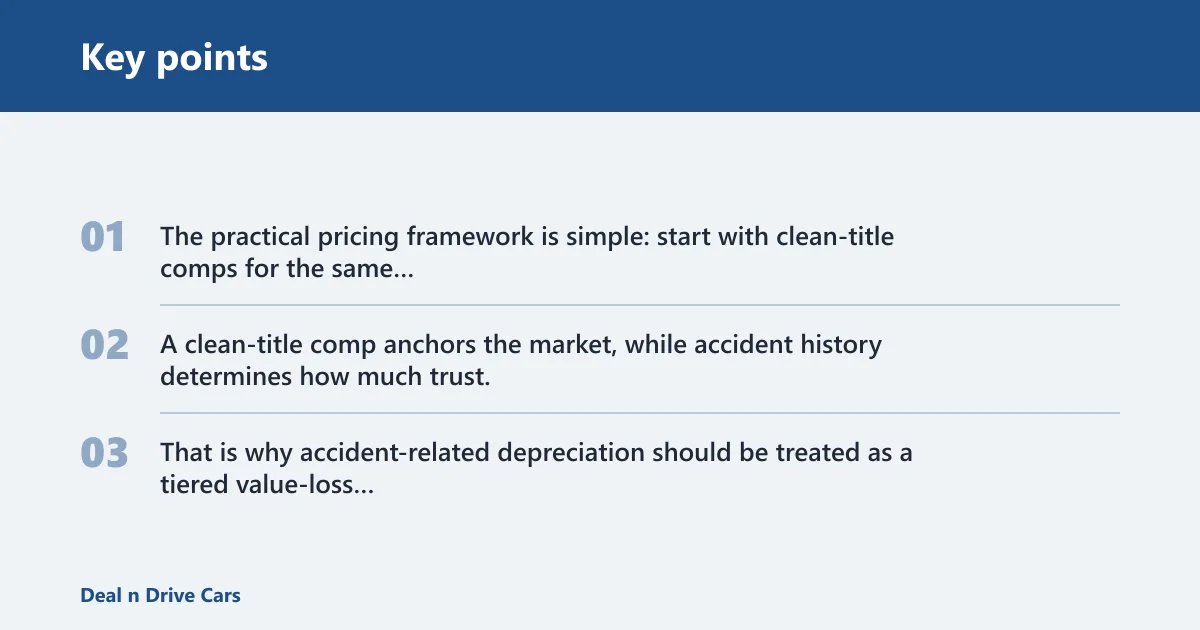
The practical pricing framework is simple: start with clean-title comps for the same year, trim, drivetrain, mileage band, and region, then subtract a tiered discount based on damage type, title status, repair quality, mileage, and documentation completeness. A clean-title comp anchors the market, while accident history determines how much trust, liquidity, and resale flexibility the car has lost. That is why accident-related depreciation should be treated as a tiered value-loss problem, not a single flat penalty.
How much does accident history cut value?
An accident history can reduce value a little or a lot, depending on what was damaged, how well it was repaired, and whether the title was branded. Cosmetic repairs may trim value modestly, while structural damage or salvage history can cut far more. Trade-in value usually falls faster than private-party value because dealers must leave room for reconditioning, risk, and resale profit, while private-party pricing can sometimes absorb a smaller hit if the documentation is strong (Trade-in value, accident-related depreciation).
Why severity matters more than the word accident
Vehicle history reports showing a major accident can reduce value, but the report alone does not tell the full story. Buyers care about damage size, airbag deployment, frame or structural damage, repair documents, and whether the car still tracks straight and wears tires evenly. Clean accident history retains higher value, which is why identical cars can price very differently. The same general market logic also shows up in broader depreciation data: a new car can lose more than 10% of its value in the first month, about 20% in the first year, and roughly 40% by year five on average (Kelley Blue Book depreciation, AAA).
Typical discount drivers buyers notice first
Buyers usually look for paint mismatch, panel gaps, odd tire wear, rust, and missing records before they drill into the title brand. A 5-year-old car with documented oil changes and service records retains more value, but those records do not erase collision history. They only make the loss easier to explain and sometimes easier to defend in a sale. The best way to price the car is to compare it to clean-title comps first, then apply a documented-condition adjustment for the accident tier and the quality of the repair file.
Picture a midsize sedan with a repaired rear bumper and a clean alignment sheet. That car may still sell close to market if the repair is documented and the paint matches. Now picture the same sedan with deployed side airbags and no parts invoices. The discount gets much deeper, fast.
Why trade-in value drops faster than private-party value
Dealers price risk into every offer. They inspect for hidden repair work, pay for reconditioning, and face a narrower buyer pool if the history report shows a crash. Private-party buyers may accept a stronger discount if the car is easy to inspect and the paperwork is complete, but they still expect compensation for accident-related depreciation. In practice, trade-in pricing reflects the worst-case reconditioning and resale scenario, while private-party pricing depends more on how convincingly the seller can prove that the repair quality is solid.
What damage lowers resale the most?
Airbag deployment, frame or structural damage, and corrosion around repaired areas are commonly reported to do the most harm to resale value. Cosmetic damage can be priced into the deal more easily. Once the accident touches the structure, occupant safety systems, or hidden sheet metal, buyers start discounting the car more aggressively.
Airbag deployment
Airbag deployment signals a stronger impact and raises questions about what else was damaged. It also pushes buyers to inspect the steering wheel, dash, seat modules, sensors, and seat belts. A car can still be repaired correctly after deployment, but the value loss is usually larger because the repair bill and perceived risk are both higher.
Frame or structural damage
Frame or unibody work hits value hard because it raises concern about long-term alignment, crash performance, and tire wear. Even a good repair can leave the car harder to resell than a similar car with only cosmetic damage. If the seller cannot produce measurement records, post-repair inspection results, or straight answers about where the damage occurred, assume the discount should be deeper.
Damage location and resale impact
Location matters because buyers read it as a clue to hidden risk. Front-end hits can raise concerns about cooling, sensors, suspension, and airbag involvement. Rear hits may seem lighter, but trunk-floor damage, rear body-panel work, or quarter-panel repairs can still be expensive and difficult to hide. Side impacts often trigger the most scrutiny because they can involve airbags, pillars, doors, and structural sections that affect crash protection and door alignment.
Rust, corrosion, and hidden repair issues
Rust near repaired panels, weld points, or underbody areas can turn a manageable accident into a bigger depreciation problem. Hidden repair issues matter too: uneven gaps, moisture in lamps, wind noise, or creeping paint failure all lower trust. Mileage inconsistency flags on a vehicle history report can make the problem worse because buyers may suspect broader documentation gaps.
How repairs change the discount
Repair quality can recover part of the value loss, but it rarely restores full market value. OEM versus aftermarket parts, fit quality, paint match, and written repair proof all affect the discount. Two cars with the same accident can price differently if one has clean documentation and the other looks repaired on the cheap.
OEM versus aftermarket parts
OEM parts often help value more when panel fit, safety systems, or lighting are involved. Aftermarket parts can be acceptable on low-risk cosmetic pieces, but buyers often discount them if fit or finish looks off. If a headlamp, bumper, or sensor bracket was replaced, the invoice should say what parts were used and why.
Paint match, panel gaps, and alignment
Paint match and body alignment are easy to inspect and hard to argue away. Uneven gaps, overspray, color shift, or a steering wheel that is off-center after a repair all suggest a weaker job. The market tends to price those flaws before it prices the story behind them.
Repair warranties and written invoices
Written invoices help because they verify what was repaired, who did the work, and whether any warranty applies. A warranty does not erase depreciation, but it supports confidence in the repair. The absence of invoices usually means the buyer should demand a bigger discount or walk away.
What paperwork should you verify?
Verify the vehicle history report, repair invoices, title status, and any post-repair inspection documents. Those records tell you whether the damage was cosmetic, mechanical, structural, or enough to trigger a branded title. They also help you compare wholesale, trade-in, and private-party value against the asking price.
- Check the vehicle history report for accident records, repair records, title brand notes, owner count, and mileage inconsistency flags.
- Ask for repair invoices that list parts, labor, and any alignment or structural work.
- Confirm whether OEM or aftermarket parts were used on visible or safety-related repairs.
- Review title status for salvage, rebuilt, flood, or other brand signals.
- Compare the asking price against similar clean-title cars before deciding whether the discount is fair.
Vehicle history report signals
A report can show accident entries, title brands, owner changes, and possible odometer issues. It can also reveal a pattern of repeated claims or gaps that deserve a closer look. If the report shows a major accident, the seller should be ready to explain the repair path and back it up with paperwork.
Trade-in, wholesale, and retail context
Wholesale pricing usually absorbs the biggest penalty because buyers there must account for repair risk and resale uncertainty. Trade-in sits higher than wholesale but lower than a private-party sale. Retail asks can still be fair if the repair is minor, documented, and priced below a similar clean-title example. That comparison is the key pricing anchor: clean-title retail comp first, then a condition-based discount for accident history, title status, and documentation quality.
Is a rebuilt title worth less?
Yes. A rebuilt title is usually worth less than a clean title because it follows a salvage declaration, which means the vehicle was previously deemed a total loss. The size of the hit depends on state rules, repair proof, and the buyer’s financing or insurance options, but the title brand itself keeps pressure on resale. State DMV and insurance rules matter because total-loss thresholds are not identical everywhere, and a vehicle may be branded salvage in one state under rules that differ from another state’s standards (Florida DMV salvage title guidance, New York DMV salvage vehicles).
How salvage titles trigger total loss status
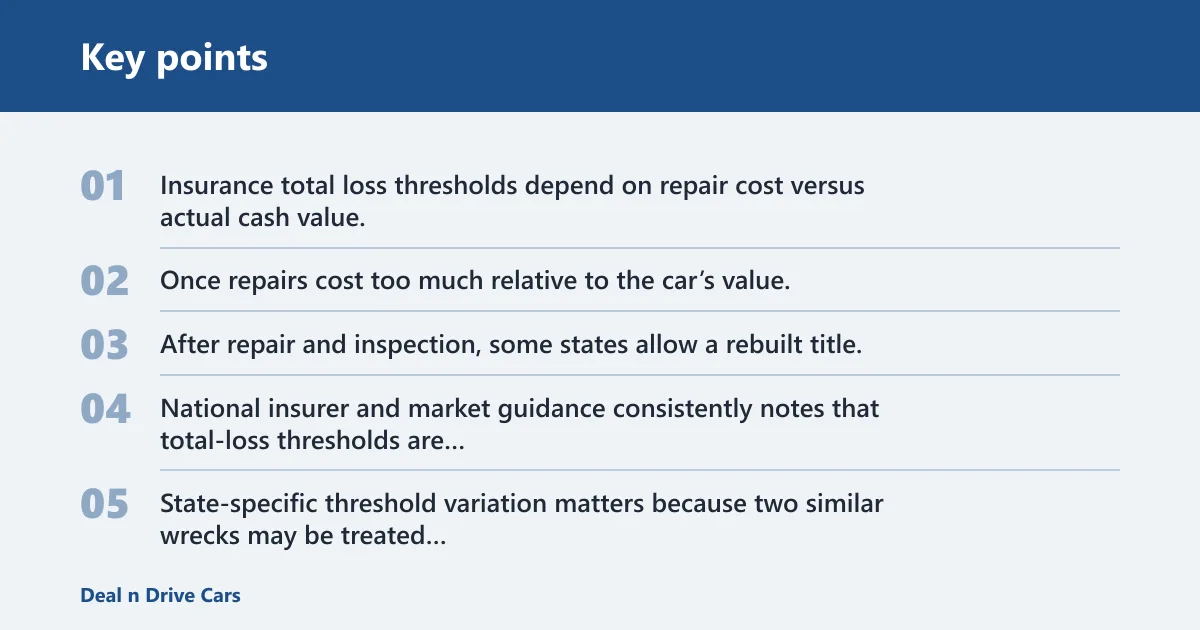
Insurance total loss thresholds depend on repair cost versus actual cash value, and the cutoff can vary by state. Once repairs cost too much relative to the car’s value, the insurer may declare it a total loss and issue a salvage title. After repair and inspection, some states allow a rebuilt title, but the branded history remains. National insurer and market guidance consistently notes that total-loss thresholds are state-specific and that title branding reduces resale even after repair (Insurance Information Institute salvage and rebuilt vehicles, NHTSA).
State rules for salvage and rebuilt titles
State-specific threshold variation matters because two similar wrecks may be treated differently depending on local law and inspection standards. That means a rebuilt car can be legal and roadworthy, yet still worth less because the market treats the title brand as a warning label. Buyers should verify which state issued the brand and whether the current inspection is valid. Some states also require specific salvage/rebuilt inspection steps before registration, which adds friction and can further narrow the buyer pool (Florida DMV salvage title guidance, New York DMV salvage vehicles).
Why financing and insurance can get harder
Some lenders avoid branded-title cars, and some insurers limit coverage or charge more. That affects resale value because it narrows the buyer pool. Even when the repair is solid, less financing access and more insurance friction usually mean a deeper discount. Major insurers and consumer resources note that salvage and rebuilt titles can bring stricter underwriting, fewer carrier options, or reduced coverage choices (Insurance Information Institute salvage and rebuilt vehicles).
Can service records offset depreciation?
Yes, but only partially. Clean maintenance records can support a higher price because they show routine care, lower neglect risk, and better long-term upkeep. They do not erase accident-related depreciation, especially if the damage was structural, the title is branded, or the repair quality is unclear.
What clean maintenance records can do
Service records help buyers separate accident damage from ordinary wear. A file of oil changes, brake service, tires, and scheduled maintenance can support confidence that the rest of the car was cared for. That matters more on a 5-year-old car because buyers often compare condition, mileage, and records side by side. A consistent record set can also help explain why a repaired car should sit nearer the high end of its damage tier instead of the low end.
What they cannot erase
Maintenance records do not change the fact that the car was damaged, repaired, and likely discounted by the market. They also do not fix airbag deployment, frame repair, or rust. If the accident history is severe, records can soften suspicion, but they rarely restore full value.
Suppose a compact SUV has 72,000 miles, a clean service file, and a documented front-bumper replacement after a parking-lot impact. That record set may keep the car near normal market pricing if the paint matches and the title stays clean. Swap that same repair for frame work and a rebuilt title, and the pricing moves into a different tier entirely.
Frequently asked questions
How much does a car depreciate after an accident?
A car can lose about 5% to 30% or more after an accident, with the amount depending on whether the damage was cosmetic, mechanical, or structural. Minor repairs with strong documentation sit near the low end. Frame damage, airbag deployment, or a branded title can push the loss much higher (Cars.com, Consumer Reports).
Does a minor accident lower a used car’s value?
Yes, usually a little. Even minor damage can lower value because buyers may worry about repair quality, hidden wear, or future resale trouble. If the damage stayed cosmetic, the car has a clean title, and the invoices are complete, the drop is often smaller than with mechanical or structural damage.
How much does a rebuilt title affect resale value?
A rebuilt title usually hurts resale value more than a simple accident record because it signals a prior total loss. The market discounts it for financing limits, insurance friction, and lingering repair questions. The exact hit depends on the car, the state, and the quality of the rebuild. Salvage and rebuilt vehicles often trade at a substantial discount versus comparable clean-title cars because of the title brand and the reduced buyer pool (Insurance Information Institute salvage and rebuilt vehicles, Kelley Blue Book).
Is it worth buying a used car with accident history?
It can be, if the discount matches the damage and the paperwork is solid. Cosmetic-only repairs, documented mechanical fixes, and clean post-repair inspections may be acceptable. Structural damage, missing records, or a salvage or rebuilt title call for a much closer look or a pass.
What factors make accident-related depreciation worse?
Airbag deployment, frame or structural damage, rust, poor repair quality, mileage inconsistency, and missing invoices all make depreciation worse. A weak title history also matters. The more the accident affects safety, alignment, or buyer confidence, the larger the value loss tends to be.
Can service records offset accident depreciation?
Service records can help, but they do not cancel the accident discount. They support value by showing maintenance discipline and reducing concerns about neglect. That helps most when the damage was minor and the repair paperwork is complete. They matter less when the title is branded or the damage was structural.