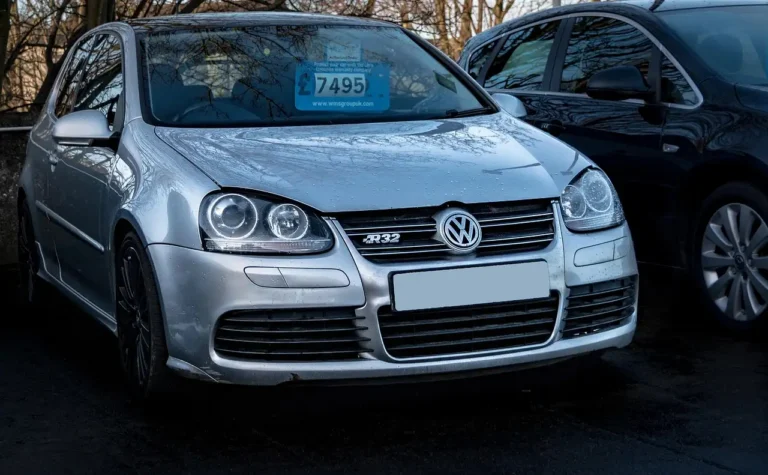
How Much Over Fair Price Is Too Much for a Used Car?
A premium of more than about 10% above fair market value is usually too much for a used car unless the price is offset by low miles, a rare trim, or a clean history; around 15% or more is often a walk-away. Pay too far above market and you can erase your budget, overpay in fees, and buy more risk than the car is worth. This guide shows how to combine market premium, dealer fees, and condition checks into one simple decision rule.
How to verify a fair used car price premium
Why 5%, 10%, and 11%+ matter
Use a simple premium threshold instead of a guess. A small markup can be fair when the car is cleaner, lower-mile, or better equipped than the comparable listings, but the premium has to match evidence you can verify. Once the gap climbs past 10%, the seller needs to prove why the car deserves extra money.
A suspiciously low price matters too. Used-car prices are often compared against similar listings within a narrow market range, and a price that sits far below that range can hide fees or missing disclosures. One cited example involved a Volkswagen priced $7,400 below market value with extra fees added, including a $1,365 reconditioning fee and a $900 dealer fee.
When a higher price can still make sense
Paying above market can be reasonable when the car has a clear advantage: lower mileage, stronger service records, a rare trim, or certified pre-owned status with warranty coverage. Pay for visible value, not sales talk. If the seller cannot back up the premium with paperwork, inspection access, and a clean history report, the markup is hard to justify.
📊 Consumer Reports notes the average used-car price is just over $27,000. Source: Consumerreports.
Fair price decision table
| Over fair price | Fee-adjusted out-the-door price | What justifies paying it | Extra checks required | Walk-away point |
|---|---|---|---|---|
| 0-5% | Advertised price plus taxes, documentation fee, title, registration, and any required dealer charges still keeps the car within your target budget. | Comparable listings are tighter than this, or the car has a clear edge in mileage, condition, equipment, or history. | Confirm the vehicle history report, compare at least several live listings, and verify the out-the-door total in writing. | Walk if fees turn the deal into a higher band, or if the car has damage, title issues, or missing records. |
| 6-10% | The true cost is only acceptable if the dealer fee stack stays small and the car still lands near your top budget after taxes and registration. | Lower mileage than similar cars, a cleaner body and interior, strong service history, or certified pre-owned coverage. | Get an independent pre-purchase inspection and compare the same trim, model year, and mileage against live ads in your market. | Walk if the premium is caused mainly by fees, weak paperwork, cosmetic damage, or seller pressure. |
| 11%+ | Usually too expensive once fees are added, because the real gap can become much larger than the sticker price suggests. | Only rare-spec or hard-to-find cars with strong proof of condition, clean history, and documented demand should get this kind of premium. | Require a history report, a mechanic inspection, a written fee breakdown, and a market comparison that shows why the car is scarce. | Walk unless the premium is explained by verified rarity, exceptional condition, and a fee structure that still leaves the deal sane. |
How to compare advertised price with out-the-door price
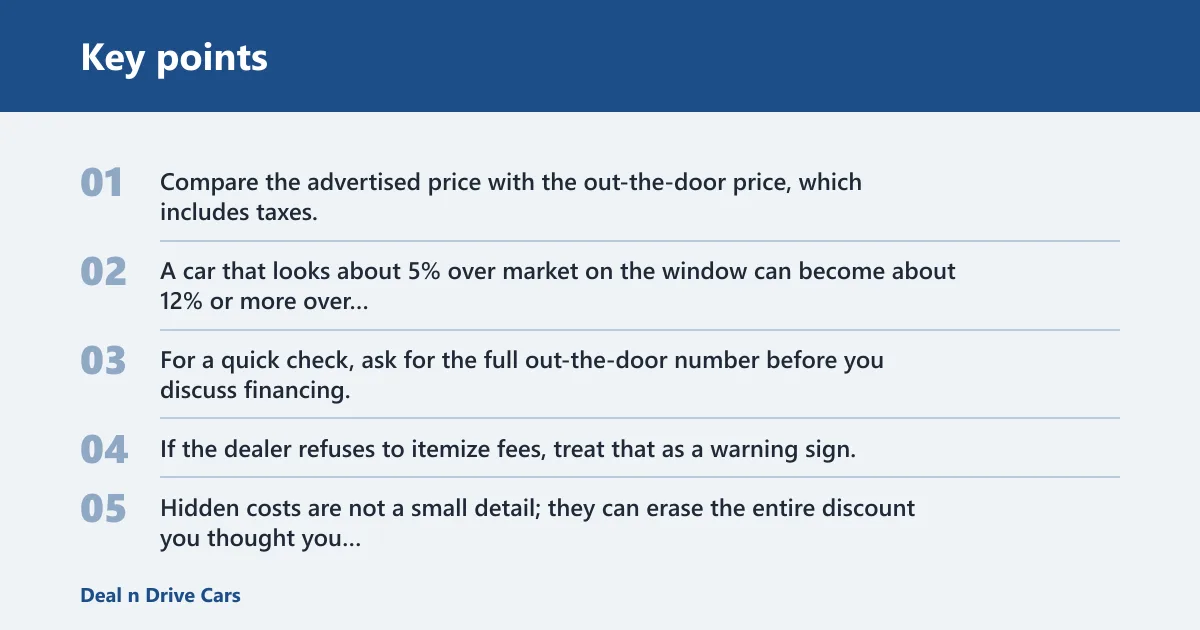
Do not judge the car by the sticker alone. Compare the advertised price with the out-the-door price, which includes taxes, documentation fee, registration, title work, reconditioning fees, and any add-ons the dealership tries to slip in. A car that looks about 5% over market on the window can become about 12% or more over market once those charges appear.
For a quick check, ask for the full out-the-door number before you discuss financing. If the dealer refuses to itemize fees, treat that as a warning sign. Hidden costs are not a small detail; they can erase the entire discount you thought you found.
What counts as fair market value?
Fair market value is the price similar cars are actually bringing in your market, not a single number from a calculator. Start with live listings for the same make, model, year, trim, drivetrain, and mileage band, then compare the asking price against the total out-the-door price. That is the only way to know whether the car is truly above market.
Compare similar listings in your market
Use nearby listings first, because used-car prices are often compared against similar cars within a narrow market range. Regional supply matters. A popular model with few local examples can cost more, while a car that is common in your area may sit below asking if sellers are competing on price.
Consumer Reports notes that the average used-car price is just over $27,000, but that figure is only a reference point. Your car’s fair value depends on trim, mileage, equipment, and condition. Car Finance 247 says value depends on make, model, age, mileage, condition, and market demand, and overpricing can make a car hard to sell.
Use live ads, not one valuation number
A valuation tool can help, but it should not be the only number you trust. Carmoola says its valuation tool uses live market data, and its valuation assumes the car is in good condition. Carmoola defines good condition as minor wear and no major dents. If the car has worse wear than that, the fair price should move down.
Suppose two same-year sedans appear in your area. One has 58,000 miles, a clean report, and normal wear. The other has 92,000 miles, faded paint, and a missing service stamp. They are not worth the same amount, even if the badge on the grille is identical.
Adjust for trim, mileage, and condition
Trim and equipment can justify a premium, but only when the market agrees. A higher trim with better safety features, a larger screen, or all-wheel drive may price above a base model. Still, the premium should be visible in live listings, not invented by the seller.
What fees can make a deal too expensive?
Dealer fees can turn a fair asking price into an overpriced deal. Documentation fees, reconditioning fees, and add-ons all matter because they change the real number you pay. If the dealer will not show the full out-the-door total, you cannot judge the car honestly.
Documentation fees and reconditioning fees
A documentation fee is not unusual, but a large one pushes the deal higher fast. A reconditioning fee is especially important when it is charged on top of a price that already looks near market. In the cited example, a car listed below market still carried a $1,365 reconditioning fee and a $900 dealer fee, which changed the deal materially.
If the dealer says the fee is non-negotiable, do not assume the car is still a bargain. Add the fee to the advertised price, then compare that total against similar cars elsewhere. The comparison has to be done on the same basis.
Add-ons that raise the real price
Add-ons can be harmless or pure padding. Paint protection, VIN etching, nitrogen tires, fabric packages, and other extras may be bundled into the deal without much value to you. If they are not something you asked for, treat them like any other cost that must be justified.
A cheap used car with high fees is still a bad deal if the added charges erase the savings. The right question is not “How low is the sticker?” It is “What do I pay after every required fee, and does that total still beat the market?”
How out-the-door pricing changes the verdict
Out-the-door pricing can move a car from acceptable to overpriced in one step. A 4% premium on the sticker may become about 9% after fees, or about 13% after taxes and add-ons. That is why the fee-adjusted total belongs in the decision table, not in a side note.
How do mileage, condition, and history change the limit?
Mileage, condition, and history can move your ceiling up or down, but they do not erase the need for a market comparison. High miles, weak maintenance records, accident damage, or title issues should lower what you pay. Strong evidence of care, cleaner condition, and lower mileage can support a modest premium.
Mileage: annual norms, high-mileage risk, and low-mileage premiums
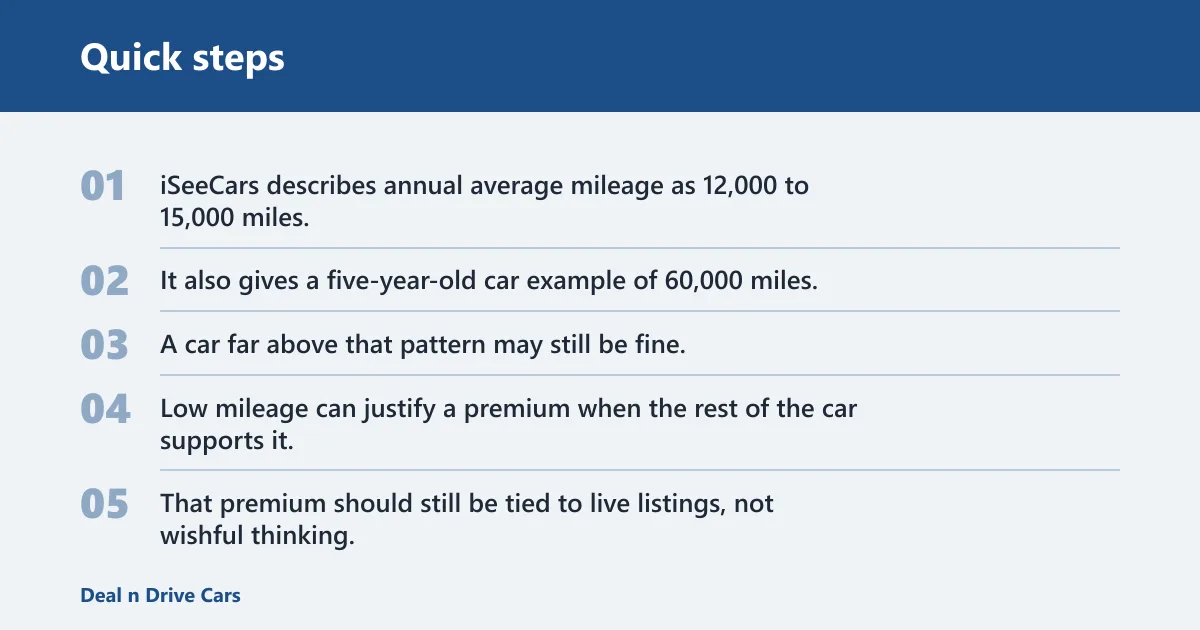
iSeeCars describes annual average mileage as 12,000 to 15,000 miles. It also gives a five-year-old car example of 60,000 miles. A car far above that pattern may still be fine, but the risk of wear and repair costs rises, so the max price should usually fall.
Low mileage can justify a premium when the rest of the car supports it. That premium should still be tied to live listings, not wishful thinking. A 30,000-mile example with weak records is not automatically a better buy than a 50,000-mile car with clear maintenance history and a cleaner inspection.
Condition: wear, damage, broken parts, and maintenance gaps
Condition matters because visible wear often points to hidden cost. Body damage, broken interior parts, rough tires, warning lights, and missing maintenance history all lower the car’s value. Carmoola’s “good condition” standard is minor wear and no major dents; anything worse deserves a lower offer.
Picture a compact SUV with 71,000 miles, a cracked taillight, and worn front brakes. The seller may call it “normal wear,” but the market usually does not. Those repair needs belong in your number before you make an offer.
Vehicle history report red flags
A vehicle history report can change the entire decision. Accident history, title issues, missing service records, and withheld paperwork all reduce trust. If the seller refuses to provide the report or explains away obvious gaps, treat that as a reason to walk unless the price is dramatically lower and the inspection clears the car.
The same source notes that cars with AEB and pedestrian detection are highly recommended if available, but driver-assist features do not cancel out bad history. A safer feature list does not make a damaged, poorly documented car worth more.
When is paying above market worth it?
Paying above market is worth considering only when the extra money buys something real: a cleaner car, stronger documentation, warranty coverage, or a spec that is hard to find in your area. If the premium comes from fees, weak disclosure, or pressure, it is not worth it. The seller should prove the value before you pay it.
Certified pre-owned and warranty context
Certified pre-owned cars can justify a higher price because they are often lower-mileage off-lease examples with inspection standards and warranty context. The premium still needs limits. You should compare the CPO price against similar non-CPO examples and decide whether the inspection, coverage, and condition are worth the difference.
Rare trims, strong demand, or limited supply
Market demand can move prices quickly. A popular model in short supply can command more than a slow-selling one, and a rare trim may have fewer direct comparables. Even then, the premium should be tied to actual market listings in your region. If the seller cannot point to similar cars selling for the same money, the markup is weak.
When an inspection and records back up the premium
Always pair a premium price with an independent pre-purchase inspection. A trusted mechanic can verify condition and reduce repair-cost risk. If the inspection finds fresh issues, missing service items, or signs of poor repair work, the premium should shrink or disappear.
An inspection matters most when the car is near the top of your budget. Spending more on the car leaves less room for surprise repairs, and Consumer Reports reports used-car loan interest rates at 11.43 percent. That means a bad price can hurt twice: once in the sale price and again in financing cost. (Consumerreports)
How to make the decision
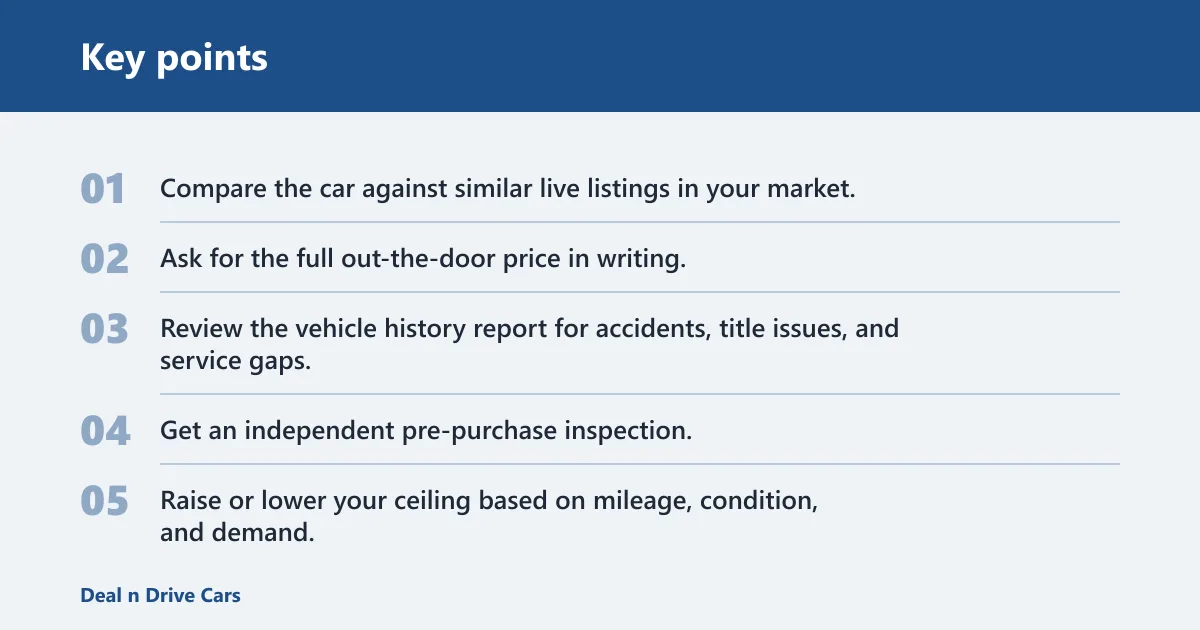
- Compare the car against similar live listings in your market.
- Ask for the full out-the-door price in writing.
- Review the vehicle history report for accidents, title issues, and service gaps.
- Get an independent pre-purchase inspection.
- Raise or lower your ceiling based on mileage, condition, and demand.
- Walk away if the premium is above 10% with no strong evidence, or if it reaches 15%.
Frequently asked questions
How far over fair market value is too much for a used car?
A premium of more than about 10% above fair market value is usually too much unless the car has low miles, a rare trim, or a very clean history. At 15% or more, the deal is generally a walk-away unless the evidence is unusually strong and the out-the-door price stays controlled.
What percentage over fair price is reasonable to negotiate?
A 0-5% premium can be reasonable when the car is cleaner or better equipped than the comparisons. Between 6% and 10%, you need stronger proof, such as lower mileage, better service records, or certified pre-owned coverage. Above that, your negotiating position should turn into a hard stop.
Should I walk away if the dealer adds thousands in fees?
Yes, if those fees are not clearly justified. Thousands in documentation, reconditioning, and add-on charges can erase the discount on a cheap-looking listing. Ask for the full out-the-door price first. If the seller will not itemize the charges, treat that as a strong warning sign.
How do I know if a used car listing is priced too high?
Compare it with similar live listings in your market, then add all dealer fees to the advertised price. If the car sits more than 10% above fair market value after that adjustment, it is usually overpriced unless there is clear proof of rarity, condition, or warranty value.
Does a vehicle history report change what is too much to pay?
Yes. A clean report supports a higher ceiling than one with accidents, title issues, missing service records, or hidden gaps. If the seller withholds the report, your ceiling should drop sharply. No premium is worth paying for a car whose history is unclear or incomplete.
How do mileage, condition, and accidents affect the max I should pay?
Higher mileage, heavier wear, and accident history all reduce what the car is worth. Low mileage can support a premium, but only if the car is clean and documented. Broken parts, body damage, and maintenance gaps should push your maximum offer down, not up.