How to Budget for Maintenance on a Used Salvage Car
Budget for a salvage or rebuilt-title car by covering normal maintenance, plus a repair reserve of 10% to 20% of the purchase price each year, and a larger emergency fund if the damage involved the engine, electronics, frame, or airbags. Skip that cushion, and one hidden repair can wipe out the cheap-buy advantage fast. This guide breaks the budget into baseline upkeep, title-related catch-up repairs, and a risk-based emergency fund.
What salvage and rebuilt titles mean
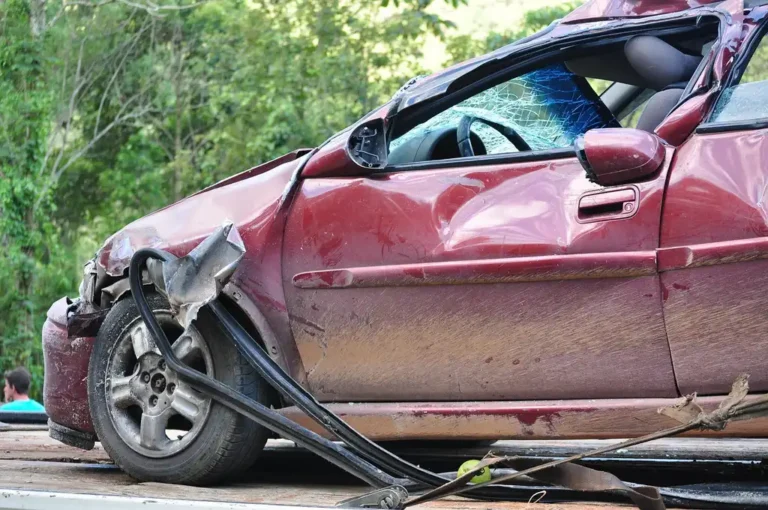
A salvage title means an insurer declared the vehicle a total loss, often after collision, flood, or serious crash damage. In many states, you cannot drive it until it is repaired and inspected. A rebuilt title is issued after that salvage vehicle is repaired and passes the required inspection.
The title brand matters because it changes more than resale price. It changes the odds that you will pay for hidden damage, repeat repairs, or insurance trouble later. That is why a branded-title car needs a different budget than a clean-title used car, even if the sticker price looks attractive.
Why title branding changes maintenance risk
Title branding tells you the car has already taken a major hit. Even after repairs, lingering issues can remain in suspension, alignment, airbags, wiring, seals, corrosion protection, and flood-damaged electronics. Treat the lower purchase price as one line item, not proof that the car is cheaper to own.
A rebuilt title vehicle may also face insurance limits, and buyers may need to shop multiple insurers to find workable coverage. That makes total ownership cost higher than maintenance alone.
How much should you budget first?
Start with three buckets: purchase-month catch-up repairs, 12-month routine maintenance, and a repair reserve. For most buyers, the first-year total should be higher than a comparable clean-title car because the title history raises the odds of deferred work and follow-on failures.
Purchase-month catch-up repairs
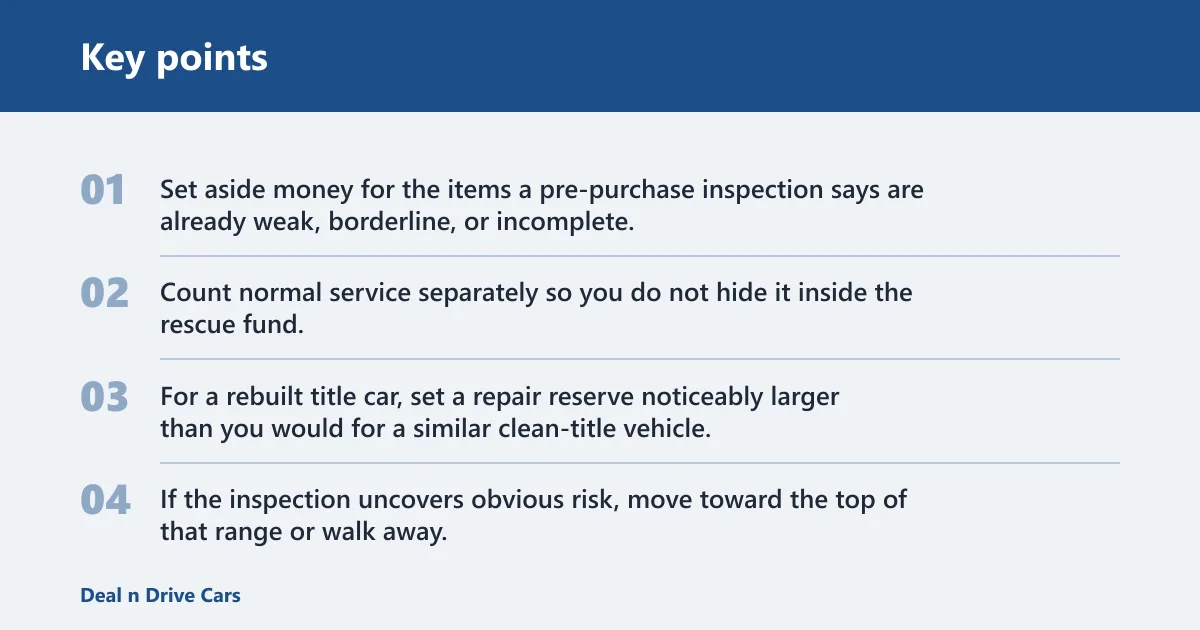
Set aside money for the items a pre-purchase inspection says are already weak, borderline, or incomplete. This is the “fix it now” fund, not the routine oil-change budget. For a salvage or rebuilt title car, that reserve should cover fluids, filters, worn tires, brake work, small leaks, battery age, and any repair that makes the car safe and legal to operate.
12-month routine maintenance
Count normal service separately so you do not hide it inside the rescue fund. That means oil changes, tire rotations, brake fluid service if due, coolant service when due, wiper blades, cabin and engine air filters, and other scheduled maintenance from the owner’s manual. Title branding does not remove these costs.
Repair reserve target
For a rebuilt title car, set a repair reserve noticeably larger than you would for a similar clean-title vehicle. A practical starting point is 10% to 20% of the purchase price each year, with the higher end for flood, airbag, frame, or electrical damage. If the inspection uncovers obvious risk, move toward the top of that range or walk away.
Maintenance budget worksheet

This worksheet turns risk into a number. Pull a vehicle history report and check title status, accident history, and service records, then use a pre-purchase inspection to test frame, alignment, airbags, wiring, seals, corrosion, and flood damage before you set the reserve.
| Budget item | Example amount | Notes |
|---|---|---|
| Purchase-month catch-up repairs | $800 | Immediate fixes found by inspection; use a higher figure if tires, brakes, or leaks need work. |
| Routine maintenance for 12 months | $600 | Oil changes, filters, rotations, and scheduled service. |
| Repair reserve | $1,500 | About 15% of a $10,000 purchase price; raise it for flood or frame damage. |
| Insurance buffer | $300 | Extra annual cost if branded-title coverage quotes come in higher than expected. |
| First-year total | $3,200 | Replace the example numbers with your own quote sheet and inspection findings. |
Damage-type risk multiplier
Use a multiplier to scale the reserve after the inspection. Collision damage gets a lower multiplier than flood damage because water can attack wiring, connectors, sensors, switches, and corrosion protection long after the repair date. A simple worksheet rule is below.
| Damage type | Reserve multiplier | Use when… |
|---|---|---|
| Minor collision salvage | 1.0x | The inspection shows repaired body damage with no frame, airbag, or electrical concerns. |
| Major collision salvage | 1.25x | Frame, suspension, or airbag history is present, even if repaired. |
| Flood salvage | 1.5x to 2.0x | Any water intrusion, wet interior, corrosion, or electrical fault history appears in the report or inspection. |
| Theft recovery or mixed damage | 1.1x to 1.3x | Parts, wiring, locks, modules, or steering components may need follow-up repair. |
Multiply your base repair reserve by the multiplier, then add the result to routine maintenance and insurance. If the number feels too large for the car’s value, the deal is weak even if the purchase price is low.
Go/no-go threshold
Use a simple rule: if the projected first-year repairs plus reserve exceed about 50% of the vehicle’s current market value, treat that as a no-go unless the seller cuts the price sharply and the inspection is clean. If they exceed about 30% to 40% of value, the car needs a strong price discount and a clear paper trail.
-
Collect the title history.
Pull a vehicle history report and verify whether the car is salvage, rebuilt, or branded in another way. Check accident severity, service entries, and any flood or airbag notes before you estimate costs. -
Inspect high-risk systems.
Have a trusted mechanic check frame condition, alignment, airbags, wiring, seals, corrosion, and flood evidence. A pre-purchase inspection should change your reserve number if it finds uneven tire wear, moisture, rust, or warning lights. -
Price the catch-up work.
Ask for written estimates on anything the car needs right away. Separate safety repairs from routine maintenance so you do not blur one-time fixes with recurring service. -
Apply the risk multiplier.
Use the damage-type multiplier that matches the history report and inspection findings. Flood and electrical problems should push the reserve higher than a comparable collision-only car. -
Compare to vehicle value.
Add catch-up repairs, routine maintenance, repair reserve, and insurance buffer. If the total pushes near or beyond half of the car’s value, walk away unless the price is low enough to offset the risk.
Say your inspection finds a rebuilt sedan with a repaired front clip, no frame issue, and two worn tires. That is a different budget from a flood vehicle with moisture in the connectors and random warning lights. The first may need tires and alignment money; the second may need a much larger electrical reserve.
Which repairs drive the first-year budget?
The biggest first-year costs usually come from systems tied to the original loss. Suspension, alignment, airbags, electrical modules, weather seals, rust, and flood-related faults can create a large bill even after the car is “fixed.” Those are the items that most often turn a cheap buy into an expensive one.
Suspension and alignment
Collision damage often shows up here first. Bent control arms, worn bushings, mismatched tire wear, and steering pull can mean the car needs alignments or part replacement soon after purchase. If the tires wear unevenly during a test drive, budget for more than an alignment alone.
Airbags and safety systems
Airbag deployment is a major cost flag. Replaced modules, sensors, pretensioners, and steering-wheel components can be expensive, and a poor repair can leave warning lights on or safety systems disabled. Make sure the inspection confirms the system is complete and functional.
Electrical, seals, and corrosion
Flood and water damage often create delayed problems. Connectors corrode, switches fail, door and trunk seals leak, and electrical faults can appear months later. That is why flood salvage should carry the largest maintenance buffer and the highest skepticism.
How does damage type change the budget?
Collision, flood, and theft-recovery cars do not carry the same maintenance risk. Collision damage often puts the budget into body structure, suspension, steering, and airbags. Flood damage shifts the budget toward electrical systems, corrosion, and seals, which can keep failing after the car is back on the road.
Collision salvage
For collision salvage, look closely at frame geometry, wheel alignment, and airbag history. If those systems pass inspection and the car drives straight, your reserve can stay closer to the low end of the range. Still budget for suspension and tire wear, because minor misalignment can chew through rubber quickly.
Flood salvage
Flood salvage deserves the largest emergency fund. Water can hide inside modules, harnesses, seat wiring, and undercarriage metal, then create failures later. A clean-looking interior does not erase corrosion risk, and the budget should reflect that long tail of uncertainty.
Theft recovery and mixed damage
Theft recovery can be cheaper to maintain than flood salvage, but it may still need locks, key modules, steering parts, or wiring repair. Mixed damage is the hardest category to price, so use the higher reserve if the report shows more than one type of loss.
Picture a crossover with a rebuilt title after flood exposure and a working engine. The engine may not be the issue; the hidden cost may come from intermittent window switches, a damp connector, or a sensor that fails after several wet-dry cycles. That is why the reserve belongs in the budget before purchase, not after the first warning light.
How insurance changes the total budget
Insurance is part of ownership cost, not a side issue. Coverage options for branded titles may be limited, and buyers may need to shop around with multiple insurers for rebuilt salvage vehicles. If the only available policy is much more expensive, the car may fail the budget test even when maintenance looks manageable.
Coverage limits on branded titles
Some insurers are less likely to cover rebuilt vehicles because of lingering issues. Others may write a policy but limit coverage types or value protection. Ask for quotes before you buy, because the premium can change the real cost of ownership by a meaningful amount.
Shopping multiple insurers
Get more than one quote and compare liability, collision, comprehensive, and any title-brand restrictions. If one insurer will not write the car at all, that is a warning sign about the total budget, not just the paperwork. A cheap car that is hard to insure may not be cheap at all.
When should you walk away?
Walk away when the repair estimate, first-year maintenance, insurance cost, and reserve get too close to the vehicle’s value. If the total owner cost is large enough that a clean-title alternative would make more sense, the branded-title discount is not doing enough work. The lower sale price should buy risk, not create a trap.
Hidden issues can create major financial burdens after purchase, so the decision should be conservative. If the inspection shows frame damage, repeated electrical faults, or flood corrosion, the maintenance budget should rise sharply. If the seller cannot explain the repairs clearly, that is another reason to leave.
Signs the budget is no longer rational
- The first-year repair reserve alone is above 20% of the purchase price.
- Insurance quotes are far higher than expected or coverage is restricted.
- The inspection finds frame, airbag, or flood damage with no clear repair proof.
- Projected repairs and reserve exceed 50% of the vehicle’s value.
Frequently asked questions
How much extra should I budget for maintenance on a rebuilt title car?
Plan on more than the routine service a clean-title car would need. A practical target is a repair reserve of 10% to 20% of the purchase price each year, with the higher end for flood, airbag, frame, or electrical damage. Add routine maintenance and insurance on top of that.
What maintenance costs are common after buying a salvage title used car?
Common early costs include tires, brakes, alignment, fluids, filters, battery replacement, and any overdue safety repair found during inspection. Collision cars often need suspension or steering work. Flood cars often need electrical diagnosis, seals, and corrosion-related fixes that may appear after purchase.
Should I set aside a larger repair fund for a rebuilt title vehicle?
Yes. A rebuilt title vehicle should carry a larger repair reserve than a comparable clean-title car because lingering issues are more likely. If the damage involved the engine bay, electronics, frame, or airbags, move to the upper end of your reserve range and recheck the purchase math.
How do I estimate first-year maintenance on a salvage title car?
Start with routine service from the owner’s manual, then add purchase-month catch-up repairs based on the inspection. Next, apply a damage-type multiplier to the reserve, higher for flood, lower for a minor collision. Finally, include insurance quotes so your first-year number reflects the whole cost.
What hidden costs come with a rebuilt title car?
Hidden costs often come from repeated alignment work, airbag components, electrical faults, corrosion, leaking seals, and insurance premiums. The title brand can also lower resale value and make financing harder. Those costs matter because they can erase the savings from the lower purchase price.
Can I insure a salvage or rebuilt title car affordably?
Sometimes, but you may need to shop several insurers. Coverage can be limited, and some companies are less willing to insure rebuilt vehicles because of lingering issues. Get quotes before buying, then fold the premium into your ownership budget so the car is judged on total cost, not sticker price alone.