What Is a Maintenance Budget for a Used Car?
Budget $75 to $150 a month for routine maintenance on most used cars, and consider an additional monthly reserve for older or higher-mileage models. Skip that buffer and small jobs pile up fast, while one worn part can turn into a much larger repair. This guide separates routine service, wear items, and surprise repairs so you can build a monthly and yearly number for a specific car.
What a used-car maintenance budget covers
A used-car maintenance budget should split into three buckets: routine maintenance, wear items, and unexpected repairs. Routine maintenance keeps the car on schedule. Wear items are parts that age out on a predictable timeline. Unexpected repairs are the problems that do not fit the service calendar.
That split matters because one number can hide where the money goes. An oil change is not the same as a brake job, and neither one is the same as a failed sensor or leaking seal.
Routine maintenance
This bucket covers regular servicing meant to prevent breakdowns. It includes oil changes, fluid checks, tire rotations, filter changes, and similar items listed in the owner’s manual.
Wear items
Wear items are parts with a predictable life span. Tires, brake pads, and windshield wiper blades are the clearest examples. Fund them before they reach the end of their life.
Unexpected repairs
This bucket is for problems that are not routine: a failing alternator, a coolant leak, a sensor issue, or a transmission concern. A repair reserve keeps those costs from colliding with your monthly bills.
How much should you budget per month?
Start with AAA’s mileage-based estimate of 11 cents per mile for maintenance and repairs. At 15,000 miles a year, that works out to about $1,650 per year or about $137.50 per month. That is a starting point, not a ceiling.
If you drive less than 15,000 miles, your base number can be lower. If the car is older, missing records, or already overdue, budget higher. A used car with a clean history can sit near the benchmark. A neglected one should not.
Turn annual miles into a yearly total
The math is simple. A simple rule of thumb is to multiply expected annual miles by 0.11. Then divide by 12 to get a monthly baseline. That gives you a usable number before you account for service intervals and known wear items.
Convert that total into a monthly number
For example, 12,000 miles a year at 11 cents per mile gives a base annual budget of about $1,320, or around $110 per month. At 20,000 miles a year, this rule works out to about $2,200 annually, or around $183 per month.
Used-car budget worksheet
Use this worksheet as a text-only starting point. Keep the routine line separate from the wear-item fund and the repair reserve. That separation makes the number easier to adjust when the car has more miles or thin service records.
| Budget line | What it covers | How to size it |
|---|---|---|
| Routine service line | Oil changes, tire rotations, filter changes, basic inspections | Start with 11 cents per mile, then check the owner’s manual for overdue items |
| Wear-item sinking fund | Tires, brake pads, wiper blades, other age-based parts | Set aside money for parts that will need replacement on a schedule, even if they are not failing yet |
| Repair reserve line | Unexpected mechanical or electrical repairs | Use prior-year repair costs if you have them, or add a larger buffer for older cars and missing records |
Fill-in formula: annual miles × 0.11 = starting annual maintenance-and-repair budget. Then split that number into routine service, wear items, and repair reserve based on the car’s age, mileage, and service history.
How to fill the worksheet
- Write down expected annual mileage.
- Multiply that number by 0.11.
- Check the owner’s manual for items due now or soon.
- Add a wear-item fund for tires, brakes, and wiper blades.
- Add a separate repair reserve if the car is older, higher-mileage, or missing records.
What routine maintenance costs look like
Routine service is where many used-car budgets go wrong. The prices are often manageable on their own, but they repeat. A budget should reflect both the cost and the interval, not only the price of one visit.
Oil changes, filters, and inspections
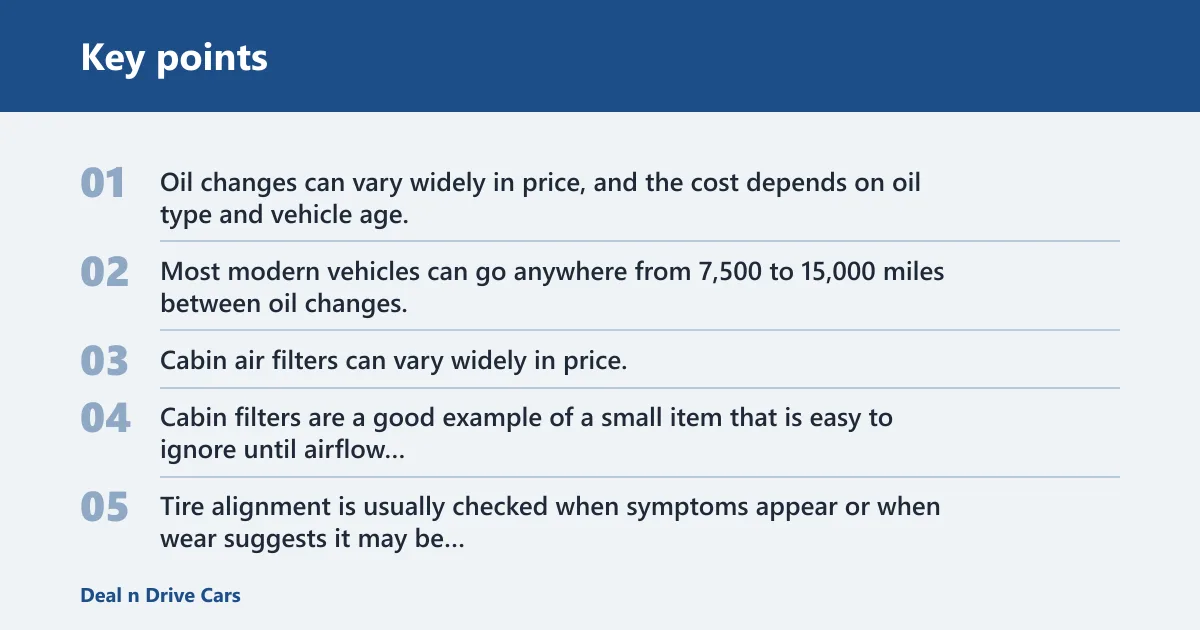
Oil changes can vary widely in price, and the cost depends on oil type and vehicle age. Most modern vehicles can go anywhere from 7,500 to 15,000 miles between oil changes, so the service interval matters as much as the price.
Cabin air filters can vary widely in price, and they are generally recommended every 15,000 to 30,000 miles. Cabin filters are a good example of a small item that is easy to ignore until airflow drops or the service light comes on.
Tire rotations and wiper blades
Tire rotations can cost between $20 and $50. Tire alignment is usually checked when symptoms appear or when wear suggests it may be needed. That means a commuter can see this line item several times a year.
Windshield wiper blades can cost from $30 to $75, and they should be replaced every six to 12 months. In a rainy or snowy climate, they may belong in the routine bucket rather than as an afterthought.
Say your sedan needs an oil change, a tire rotation, and new wiper blades in the same quarter. The bills are still ordinary maintenance, but together they can easily reach a few hundred dollars. That is why the monthly budget should stay steady, not react to each bill.
Which wear items need their own fund?
Tires and brakes deserve their own sinking fund because they are expensive, predictable, and easy to postpone until the bill is large. Wiper blades can stay in routine maintenance, but tires and brake work often deserve separate planning.
Tires
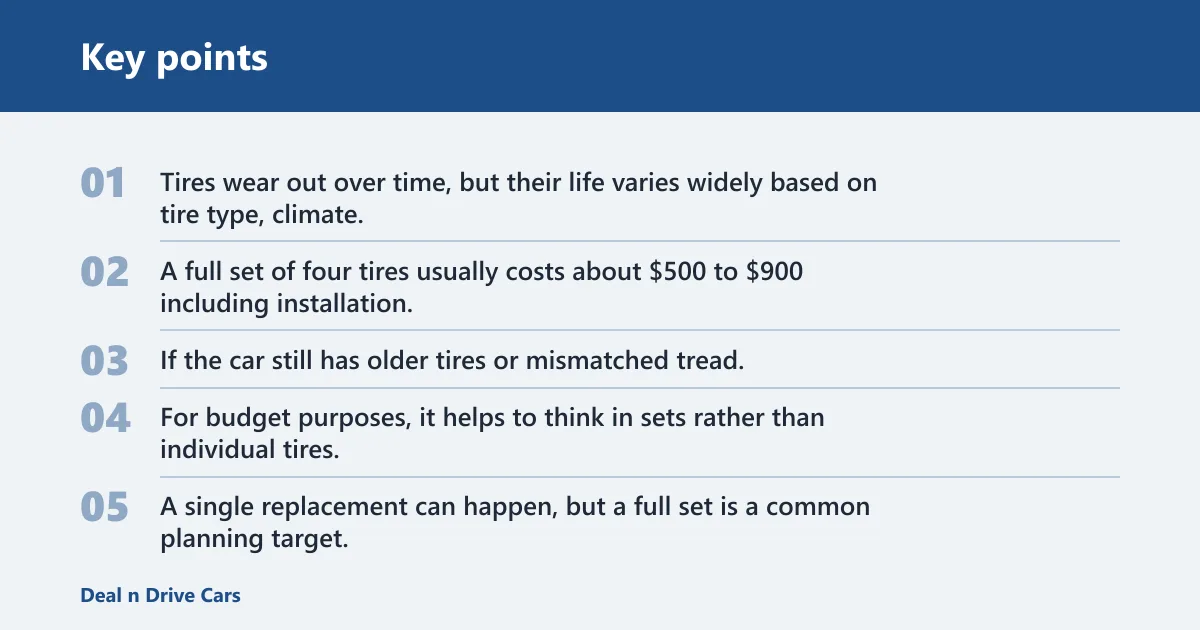
Tires wear out over time, but their life varies widely based on tire type, climate, storage, driving habits, and manufacturer guidance. A full set of four tires usually costs about $500 to $900 including installation. If the car still has older tires or mismatched tread, the tire fund should start growing immediately.
For budget purposes, it helps to think in sets rather than individual tires. A single replacement can happen, but a full set is a common planning target, especially on a used car that is already halfway through its tire life.
Brake service
Brake service can range widely depending on the work needed. Pads, rotors, calipers, and hydraulic issues can all affect the bill.
That spread is why brake work belongs in a separate fund. A used car with 40,000 miles left on its original brake hardware may still need money set aside before the warning noise starts.
Battery and other age-based items
Battery replacement, belts, hoses, and similar age-based parts are not always listed on a maintenance schedule in the same way as oil or tires, but they still age with time. Older used cars should carry a larger wear-item cushion for these parts.
How do mileage and age change the budget?
Mileage changes cost because it changes service frequency. Age changes cost because older parts fail more often and records are usually less complete. The same used-car budget does not fit a low-mileage weekend driver and a high-mileage commuter.
Low-mileage drivers
If you drive well under 15,000 miles a year, your annual maintenance budget can start below the AAA benchmark. But the repair reserve should not shrink too much, especially if the car is older or has sat long enough for rubber parts to age.
Suppose your 12-year-old sedan has 14,000 miles a year and needs occasional brake work, battery replacements, and fluid top-offs. The routine service budget may be modest, but tires, battery age, and brake condition still need attention. Low mileage does not erase age-related wear.
High-mileage commuters
If you drive above 15,000 miles a year, the 11-cent benchmark climbs fast. A 25,000-mile year points to a much larger budget than a 10,000-mile year, and service intervals will come around more often.
High-mileage drivers should also expect more tire rotations, earlier brake work, and faster tire wear. Set the monthly figure with that cadence in mind, not with a city-driver estimate.
Five- to 10-year-old used cars
A 5- to 10-year-old used car often needs a bigger first-year budget than a newer car with the same mileage. The age band is where missing records, overdue service, and wear-item replacement tend to converge.
A common first-timer mistake is treating the purchase price as the full cost of ownership. On an older used car, the first 12 months often include catch-up service, a repair reserve, and at least one wear item that the seller postponed.
What to do when records are missing
Missing records should push the budget higher, not lower. Start with the owner’s manual, then assume some items may be overdue. If the seller cannot document recent oil changes, brake service, or tire age, build in more room for catch-up work and repairs.
Start with overdue service
Look first at the items with clear intervals: oil, tires, brakes, cabin filter, and wiper blades. If the car is already past one of those service windows, count that work in your first-12-month budget.
Add a larger repair reserve
When prior-year repair costs exist, use them to size the reserve. If there are no records, the reserve should be larger than it would be for a well-documented car. That is especially true for vehicles with older cooling, suspension, or charging-system parts.
Suppose a buyer picks up a 7-year-old crossover with no maintenance folder and visible tire wear. The smart budget is not the same as a clean-history example with the same odometer reading. The missing records alone justify a larger repair reserve and a faster tire fund.
Frequently asked questions
How much should I budget for car maintenance per month?
For many used cars, a practical starting point is about $75 to $150 per month for routine maintenance. If the car is older, higher-mileage, or missing records, it can help to set aside about $50 to $100 per month as a repair reserve. The 11-cents-per-mile benchmark helps you adjust that number.
How much should I budget for car maintenance?
Use annual mileage first. Then split that amount into routine service, wear items, and a repair reserve so the budget matches the car’s age and service history.
What is a maintenance budget for a used car?
A used-car maintenance budget is money set aside for routine service, wear-item replacement, and unexpected repairs. It is not a single average number. A good budget starts with mileage, then shifts higher or lower based on the car’s age, records, and maintenance schedule.
How much should I save for used car maintenance each year?
A sensible starting point is 11 cents per mile for maintenance and repairs. At 15,000 miles, that is about $1,650 per year. If the car is older or has missing records, add more for repairs and wear items, especially tires and brakes.
What routine maintenance should be included in a used-car budget?
Include oil changes, cabin air filters, tire rotations, windshield wiper blades, and basic inspections. Oil changes can vary widely in price, cabin air filters can vary widely in price, tire rotations from $20 to $50, and wiper blades from $30 to $75.
How much does mileage change used car maintenance costs?
Mileage changes the budget because service repeats more often as miles go up. Higher mileage also speeds up tire, brake, and filter replacement cycles.
What repair costs should I expect beyond routine maintenance?
Set aside a separate repair reserve for problems that are not scheduled. That reserve should cover unexpected mechanical or electrical issues and can be based on prior-year repair costs when records exist. On an older used car, a larger reserve is safer than trying to guess low.