What Can Void an Auto Preapproval Before You Sign the Loan?
An auto preapproval can be voided before you sign if your credit changes, your income or job status changes, the lender finds new debt, or the car’s price, VIN, mileage, or title details no longer match the application. That can mean a higher rate, a smaller loan, or no financing at all at the closing table. This guide explains the common deal-breakers and how to keep your approval intact.
What auto preapproval really means
Auto preapproval is a conditional approval, not a final loan contract. The lender has reviewed the file far enough to quote terms, but it can still verify income, employment, credit, and the vehicle before funding. If something changes, the lender can re-rate the deal or withdraw the offer.
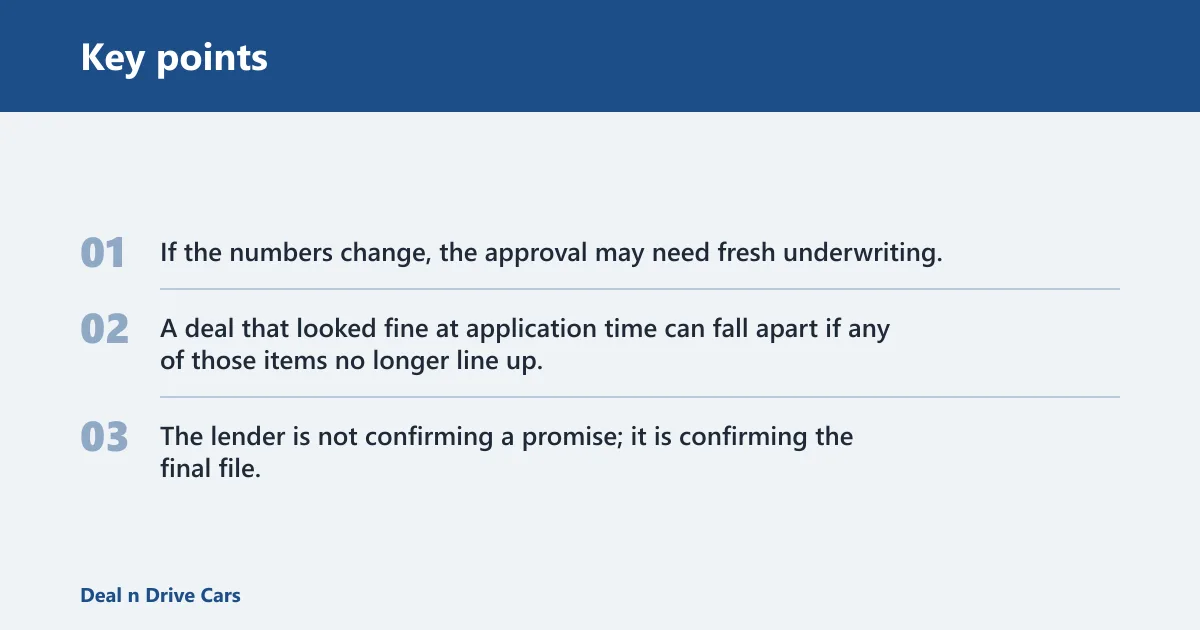
That last review matters. TILA disclosures are generally expected before you sign, and they should match the actual deal, including key terms such as APR, finance charge, amount financed, total of payments, total sale price, number of payments, and monthly payment. If the numbers change, the approval may need fresh underwriting.
What lenders still verify before signing
Before funding, a lender may re-check pay stubs, W-2s, bank statements, employment status, credit, and the exact vehicle being financed. A deal that looked fine at application time can fall apart if any of those items no longer line up. The lender is not confirming a promise; it is confirming the final file.
When a preapproval can expire or be withdrawn
A preapproval can expire if the documents go stale, the credit pull ages out, or the car details change enough to alter risk. It can also be withdrawn if the lender learns about new debt, a job loss, a lower down payment, or a trade-in payoff that no longer fits the structure.
What can void your auto preapproval before signing?
The most common trigger is a new fact that changes the lender’s view of risk. A job change, lower income, added debt, new credit pull, or a different vehicle can force the lender to re-underwrite the file. If the numbers no longer support the approval, the offer can be reduced or canceled.
Job change or lost income
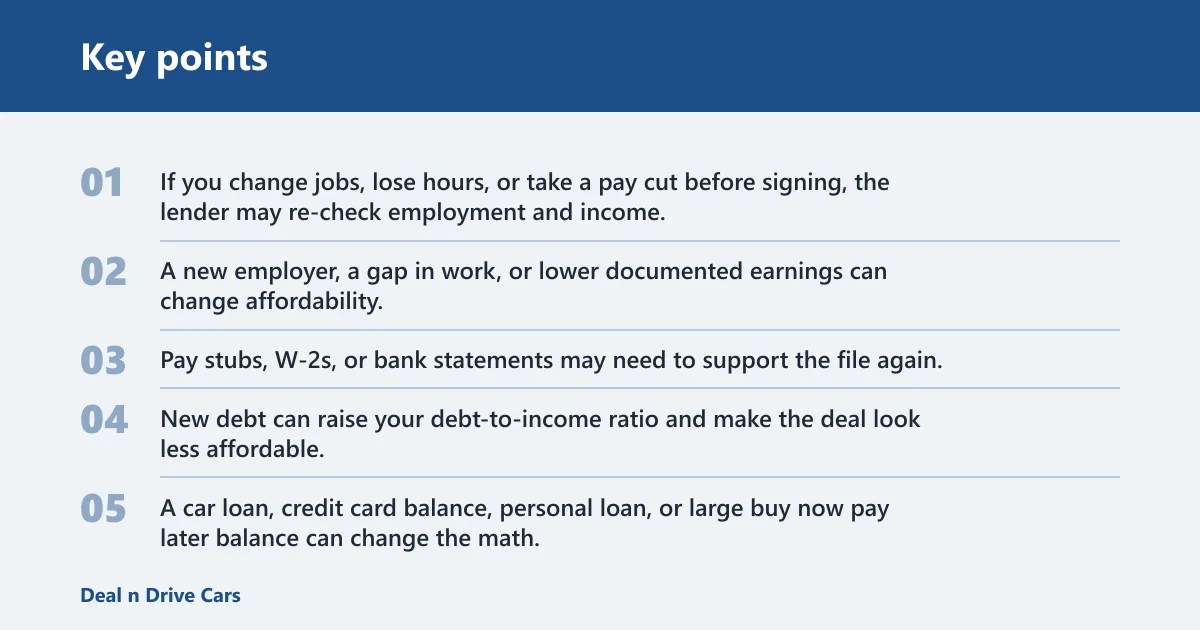
If you change jobs, lose hours, or take a pay cut before signing, the lender may re-check employment and income. A new employer, a gap in work, or lower documented earnings can change affordability. Pay stubs, W-2s, or bank statements may need to support the file again.
New debt or higher debt-to-income ratio
New debt can raise your debt-to-income ratio and make the deal look less affordable. A car loan, credit card balance, personal loan, or large buy now pay later balance can change the math. That can make the lender less willing to fund the same amount on the same terms.
Fresh hard inquiries or a lower score
A new hard inquiry can contribute to a lower score or trigger another review, especially if it happens outside the typical rate-shopping window. Keep loan-shopping credit inquiries within 14 to 45 days so they count as one inquiry. A dealer may reach out to about five potential lenders with your credit information.
Say your score was strong enough for a low-rate approval, then you apply for two store cards and a furniture account before signing. The new inquiries and balances may not kill the deal by themselves, but they can push the lender to re-price the loan or ask for more money down.
Changed vehicle price, VIN, mileage, or trim
Vehicle details can make or break the file. A preapproval may be tied to a specific price range, model, trim, mileage, age, condition, or VIN. If the dealer swaps in a different unit, adds equipment, or changes the sale price, the lender may need a fresh approval.
Picture a buyer approved for a $28,000 sedan, then choosing a $31,500 trim with more options. The higher amount financed can change the payment and the lender’s risk. A different VIN can also matter if the vehicle’s age, mileage, or condition no longer fits the original approval.
Can a lender cancel your preapproval after you pick a car?
Yes. Once you pick a car, the approval is still tied to the final vehicle and final numbers. If the car is different from the one listed on the approval, or if the deal changes at the desk, the lender can cancel the preapproval or require a new decision before funding.
Why a different car can require a new review
Auto underwriting is often vehicle-specific. A newer car, older car, higher-mileage unit, or different trim can move the loan into a different risk bucket. That can change the maximum amount financed, the rate, the required down payment, or the lender’s willingness to fund at all.
What happens if the dealer changes the deal
If the dealer changes the sale price, adds products, changes the trade allowance, or adjusts the payoff figure, the final contract may no longer match the preapproval. That can force the lender to re-underwrite the file. If the terms change enough, you may need a new approval or a new lender.
A common first-timer mistake is assuming the preapproved payment is fixed even after the contract adds gap coverage, a service contract, and a higher doc fee. Those changes increase the amount financed. The lender may decide the old approval no longer fits the new deal.
Auto preapproval checklist
Use this checklist before you sign anything. It separates changes that are often harmless from changes that can force a new approval. The fastest fix is usually the one that restores the file to what the lender already reviewed.
| Trigger | Why it can void the preapproval | Fastest fix |
|---|---|---|
| Job change | The lender may need to verify new employment or a stable income history before funding. | Send updated pay stubs and employer details right away. |
| Job loss or reduced hours | Lower income can change affordability and the debt-to-income ratio. | Ask whether a smaller loan or larger down payment can keep the deal alive. |
| New debt | Added monthly obligations can push debt-to-income too high. | Pay off or close the new obligation if possible, then recheck the file. |
| Added co-signer | A new co-signer changes the application and can require fresh underwriting. | Ask the lender to reprice the deal with the co-signer before signing. |
| Vehicle price change | A higher sale price can raise the amount financed beyond the approved structure. | Negotiate the price back down or increase the down payment. |
| VIN mismatch | The approval may be tied to one exact vehicle, not a similar one. | Correct the VIN on the lender file before the contract is sent. |
| Vehicle mileage change | Higher mileage can alter value and lender risk. | Confirm the odometer reading matches the application. |
| Vehicle age or trim change | A different year or trim can change collateral value and underwriting rules. | Requote the loan for the exact vehicle you want to buy. |
| Expired documents | Stale pay stubs, ID, or proof of address can stop funding. | Replace expired paperwork with current copies immediately. |
| Lower down payment | Less cash upfront increases the lender’s exposure and may weaken approval stability. | Restore the original down payment or shorten the amount financed. |
| Trade-in payoff change | A payoff that is higher than expected can change the final deal and the amount financed. | Get an updated payoff quote before the contract is written. |
| Undisclosed bankruptcy | A recent bankruptcy can change the lender’s decision and may require a full new review. | Disclose it before signing so the lender can re-underwrite accurately. |
How credit checks and score changes affect approval
Credit checks matter because they can change both the score and the lender’s view of the file. Multiple loan inquiries can hurt your score if they are not grouped within the shopping window. A softer search for rates is not the same as a final approval review, and the lender may still pull again before funding.
Most shoppers want to compare offers, and that is smart. Get quotes from several lenders within 14 to 45 days so they count as one inquiry under common scoring treatment. That helps limit score damage while you compare lenders and rates.
-
Check your reports first. You can get one free credit report every 12 months from each of the three major bureaus, and until the end of 2026, you can get an additional six free Equifax reports every 12 months. Review balances, collections, and old accounts before you apply.
-
Limit extra credit pulls. Avoid opening new credit before signing. A fresh hard inquiry may have a limited effect on its own, but several inquiries or new debt can affect the score enough to trigger another review.
-
Keep the application window tight. Finish shopping and choose a lender quickly. The longer the gap between preapproval and signing, the more likely your job, income, or credit picture will change.
What documents can make a preapproval stall?
Missing or stale paperwork can stop funding even when the rest of the deal looks fine. Lenders often need current proof of income, identity, and address. If the documents do not match the application, the file can stall until the lender gets clean, current records.
Pay stubs, W-2s, and bank statements
These documents help verify current income and employment. If pay stubs are outdated, bank statements do not show the deposits the lender expected, or a W-2 conflicts with the job listed on the application, the lender can pause the deal and ask for a full refresh.
Expired proof of address or ID
An expired driver license, an old utility bill, or a stale lease can slow closing. If the address or identity document no longer matches the application, the lender may need updated proof before it can fund. That is a simple fix, but it can still delay signing.
Mismatched income or employment records
If the job title, employer name, pay frequency, or income amount changes, the lender may treat the file as new. Even a small mismatch can matter if it changes documented affordability. Update the application before signing so the underwriter is not comparing conflicting records.
What should you review before you sign the loan contract?
Review the final contract against the preapproval line by line. TILA disclosures must be given before you sign, and they must show the APR, finance charges, amount financed, total of payments, total sale price, payment count, and monthly payment. If any number is different, ask what changed. (Consumerfinance)
APR, finance charge, and amount financed
The APR tells you the cost of credit, while the finance charge shows the dollar cost of borrowing. The amount financed should match the real loan after down payment, trade-in credit, and any rolled-in charges. If the numbers are off, the lender may have rewritten the deal.
Total of payments, payment count, and sale price
These figures show the full cost over the life of the loan. A higher sale price or extra products can push the total up even if the monthly payment looks close. Check the payment count too, since a longer term can raise the total cost without changing the sticker payment much.
Late fees and delivery format
Late fees should be easy to find before you sign. If paperwork is delivered electronically, it should be easy to access and save or print. Borrowers should decline signing a blank or partially filled-in form. That prevents last-minute changes after the numbers are supposed to be final.
Frequently asked questions
What can void an auto preapproval before I sign the loan?
A preapproval can sometimes be voided if credit, income, employment, or the vehicle changes. New debt, a lower score, a job loss, a different VIN, a higher price, or missing documents can all force the lender to re-check the file. If the new risk is too high, funding can be denied.
Can a lender cancel my auto preapproval after I choose a car?
Yes. The approval may be tied to a specific vehicle, price, mileage, and condition. If a different car is chosen, or if the dealer changes the deal, the lender may require a new review before funding. A final approval is only final after the paperwork matches the underwriting file.
Does changing jobs void auto loan preapproval?
It can. A new job may be fine if the lender can verify stable income, but a gap in work, probationary status, or lower pay can change the decision. The lender may ask for new pay stubs, W-2s, or bank statements before it funds the loan.
Can buying a more expensive car void my preapproval?
Yes, if the higher price changes the amount financed or the loan-to-value position. A more expensive trim, extra products, or a bigger sale price can move the deal outside the approved structure. The lender may approve a smaller amount, ask for more down, or send the file back.
Will a new hard inquiry void my auto preapproval?
Not always, but it can contribute to a lower score or trigger another review. Keep loan-shopping credit inquiries within 14 to 45 days so they count as one inquiry. If the new inquiry comes with new debt or a lower score, the lender may reprice or withdraw the offer.
Can missing documents make my preapproval expire?
Yes. Stale pay stubs, expired ID, old proof of address, or missing bank statements can stop funding until the lender gets current records. If the file sits too long, the approval can expire. Send updated documents quickly so the lender can confirm the final deal.
What should I check before I sign an auto loan contract?
Check the APR, finance charge, amount financed, total of payments, total sale price, payment count, and monthly payment against the preapproval. Make sure the VIN, price, down payment, and trade-in payoff are accurate. If anything changed, ask the lender or dealer to explain it before you sign.