Rainy Weather, Snow, or Extreme Heat Affect Used Car Buying
Delay a used-car inspection or test drive in heavy rain, snow, or extreme heat if conditions hide defects. Bad weather can mask leaks, reduce braking feedback, and make you miss warning signs that cost money later. This guide explains when to wait, when to proceed, and what to check if you must shop anyway.
How weather changes used-car timing

Weather should act as a timing filter, not the only reason to buy or wait. If you cannot see body lines, check tires, or feel safe on the road, move the visit to a better day or use online research to narrow the list.
Bad weather also changes buyer urgency, dealer lot traffic, and private-sale response time. Rain can lift US online spend by up to 4.4% on the wettest days, and the rain effect is about twice as strong at weekends, which means some shoppers shift away from in-person visits. On 35°C days, daytime card spending fell about 12.1% in Australian cities, while evening spending rose about 5% and spending over the following week was 2.4% higher. That pattern matters here: weather can shift timing more than it creates a new need to buy.
Why visibility and safety matter before you commit
A used-car inspection depends on clear sight lines and a safe test drive. Rain can make body damage harder to spot, snow can hide road grime and rust, and heat can make a long inspection tiring enough that you miss details.
Do not keep to a schedule at the expense of the inspection. If you cannot see the panel edges, inspect the underbody, or evaluate braking and steering in a controlled way, the weather is changing the quality of the decision.
How bad weather can change inventory and buyer urgency
Weather can also change what is available and how fast it moves. Demand may rise for some body styles and drivetrains, and that can tighten supply in a local market.
A week 11°C warmer than normal raised the share of convertibles sold by 8.5%, and 25 cm or more of snow raised the share of four-wheel-drive vehicles sold by about 6%. The snow effect was measured over the following two to three weeks. That is one reason the same weekend can lift a product in one city and sink it in another.
Should you delay a used-car buy in rain?
Yes, if the rain is heavy enough to blur paint, hide leaks, or make the lot unsafe. Light drizzle may still allow a careful inspection, but harder rain can hide body damage, rust, tire wear, and seepage around glass, seals, and trunk openings.
What rain can hide during an inspection
Rain changes what you can verify on body panels and paint. Reflections become harder to read, so dents, overspray, mismatched paint, and waviness in repaired panels can slip past you.
It also hides water trails around door seals, sunroof drains, and trunk corners. On the ground, wet pavement can blur the difference between normal moisture and a fresh leak.
When online shortlisting makes more sense
If rain makes a live visit low-value, use the time to narrow the field online. You can compare service records, ownership history, tire brand and date codes from photos, and listing photos taken in dry weather.
That is especially useful for private-sale meetings. A clear set of questions and photo requests can reduce the chance of wasting a trip in poor visibility.
-
Ask for dry-weather photos. Request fresh pictures of the body panels, wheel arches, dashboard, and the area under the hood. Dry surfaces make paint mismatch, fluid seepage, and tire wear easier to spot.
-
Request close-ups of wear points. Ask for tire tread, brake rotor faces if visible, lower door edges, and the trunk spare-tire well. These are the places rain can blur or hide damage.
-
Move the visit if needed. If the seller cannot offer better light or a dry bay, reschedule. A short delay is better than a rushed inspection that misses a leaking seal or rusty seam.
Say your target car is parked outside in a steady downpour with standing water under the sill. A quick walk-around will tell you almost nothing about the paint, but a next-day visit could reveal a dent above the rear wheel and fresh rust at a chipped edge.
Does snow make in-person shopping harder?
Yes. Snow can make test-drive routes less reliable, reduce traction, and hide undercarriage issues. It can also cut stock on the lot if sellers avoid moving cars or if buyers focus on vehicles that handle winter better.
How snow affects test-drive routes and traction checks
Snow can limit where you safely drive, brake, or turn. If the route is slushy, blocked, or untreated, you may not get a clean read on steering response, braking feel, or tire grip.
Snow also makes road salt damage harder to read. Salt residue can cover the underbody, exhaust hangers, brake lines, and suspension parts, so rust may be less visible until the car is in a lift or a dry bay.
Why winter conditions can raise interest in 4WD models
Snow often shifts attention toward four-wheel drive. That does not make 4WD the right choice for every buyer, but it does mean winter shopping can move inventory toward trucks, crossovers, and other traction-focused models.
Because 25 cm or more of snow raised the share of four-wheel-drive vehicles sold by about 6%, winter buyers may see fewer 2WD options in some areas. That can affect selection and the room you have to negotiate.
-
Check the route first. Before you leave, confirm that the roads, parking lot, and test-drive loop are plowed and salted. A safe route matters more than a full route.
-
Inspect the underside in daylight. Snow and slush make shadows and buildup worse, so ask for a well-lit inspection point. Look for crusted salt, scraped shields, and wet spots that may point to leaks.
-
Reassess drivetrain needs. If the area gets frequent snow, compare the car’s tires, ground clearance, and drivetrain with your driving needs. Do not assume 4WD fixes worn tires or poor winter rubber.
Suppose a sedan looks clean from the curb, but the rear wheel wells are packed with slush and the lot has no cleared route. In that case, you cannot judge ride noise, steering feel, or underbody condition with enough confidence to buy on the spot.
Can extreme heat distort a used-car check?
Yes. Extreme heat can stress engine cooling, air conditioning, tires, and battery health, while also making long inspections and test drives uncomfortable. If the cabin is sweltering and the engine is heat-soaked, it becomes harder to separate normal behavior from a problem.
What heat puts under pressure: cooling, A/C, tires, and battery
Hot weather is useful for one reason: it can expose cooling problems. A weak radiator fan, low coolant level, failing thermostat, or tired water pump may show up faster in traffic or at idle when the temperature climbs.
Heat also tells you a lot about the air conditioning system. If the vents never get cold at idle, or the compressor cycles oddly, the issue is easier to catch on a hot day. Tires and battery performance matter too, because heat can worsen tire pressure swings and shorten battery life.
Why morning or evening appointments can be smarter
If the forecast calls for high heat, choose the cooler part of the day. Morning or evening visits are easier on you and can reduce the chance that the cabin temperature skews your judgment.
On 35°C days, evening spending rose about 5%, which fits the practical pattern here: people often shift demanding errands later in the day. For a used-car visit, cooler hours can make a longer inspection more realistic.
-
Start with the engine cold. Ask whether the car has been sitting long enough to show a true cold start. A cold start can reveal rough idle, warning lights, belt noise, and coolant issues more clearly than a warm engine.
-
Run the A/C at idle. Let the car idle for several minutes with the air conditioning on full cool and medium fan speed. Watch for warm air, weak airflow, or temperature swings that suggest a fault.
-
Watch the temperature gauge. In hot weather, pay close attention to gauge movement during slow traffic and at idle. Any climb above normal is a reason to pause the deal and inspect further.
A common first-timer mistake is to check a car only after the cabin has been blasting cold air for ten minutes. That can hide weak A/C performance. A better read comes from the first few minutes after start-up, before the system has had much time to recover.
Weather timing checklist
This checklist separates what weather can hide from what it mainly affects. Use it to decide whether to buy now, delay, or switch to online shortlisting.
| Weather condition | What it can hide or distort during inspection/test drive | Proceed, delay, or switch to online shortlisting |
|---|---|---|
| Heavy rain | Body damage, leaks, rust spots, tire condition, and some paint mismatch; wet pavement can blur braking feel | Delay if visibility is poor; otherwise proceed only with a shorter, well-lit inspection |
| Light rain | Smaller leaks, door-seal seepage, and subtle panel flaws; outside photos become less useful | Proceed if you can inspect under cover; switch to online shortlisting if the lot is too wet |
| Snow or slush | Undercarriage rust, salt damage, tire wear, and route quality for braking or turning checks | Delay if roads are unsafe; proceed only if you can drive a cleared route |
| Deep snow | Test-drive safety, parking access, and underbody visibility | Delay or switch to online shortlisting |
| Extreme heat | Cooling-system stress, A/C performance, tire pressure changes, and battery weakness | Proceed in the cooler part of the day, or delay to morning/evening |
| Darkness after rain or snow | Reflections, panel flaws, tire tread, and fluid leaks | Delay if you cannot get strong lighting; use online shortlisting first |
When to proceed and when to wait
Proceed when weather still allows a clear inspection, a safe route, and enough time to check the basics. Wait when rain, snow, or heat would hide defects, interrupt the drive, or make the seller rush the meeting.
Same-day purchase versus delay
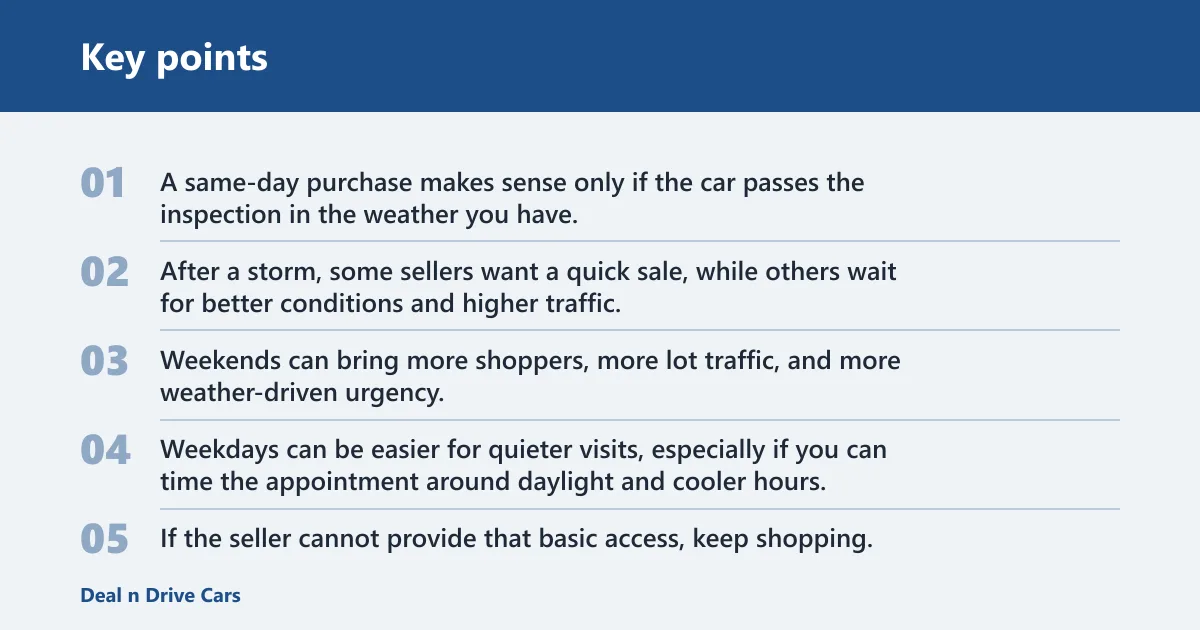
A same-day purchase makes sense only if the car passes the inspection in the weather you have. If the weather is working against visibility or safety, a short delay is usually cheaper than buying with unanswered questions.
Weather can also affect negotiation power. After a storm, some sellers want a quick sale, while others wait for better conditions and higher traffic. That can change how much room you have to negotiate, but it should not pressure you into a bad inspection.
Weekday versus weekend timing
Weekends can bring more shoppers, more lot traffic, and more weather-driven urgency. Because the rain effect is about twice as strong at weekends, a wet Saturday may push more people online and away from showrooms.
Weekdays can be easier for quieter visits, especially if you can time the appointment around daylight and cooler hours. That matters most when you need a long look at the body, tires, and underbody.
When bad weather still leaves enough light and traction to inspect safely
It is still okay to buy in bad weather when the lot is well lit, the car is dry enough to inspect, and the road route is safe. You should still check body panels and paint, tires and tread, underbody rust, engine temperature and fluids, and A/C operation.
If the seller cannot provide that basic access, keep shopping. Online research can reduce exposure to bad weather, and it can help you narrow the field until the conditions improve.
Frequently asked questions
Should I delay buying a used car if it’s raining hard?
Yes, if hard rain prevents a clear walk-around or test drive. Heavy rain can hide dents, leaks, rust, and tire condition, and it makes it harder to judge braking on wet pavement. If the car must be seen now, move the visit under cover and keep the inspection short.
Does snow make it harder to shop for a used car in person?
Usually yes. Snow can limit route choice, reduce traction, and cover underbody problems with slush and salt. It may also shift local demand toward four-wheel-drive vehicles, which can tighten selection. If roads are unsafe or the lot is not cleared, waiting is the safer choice.
Can extreme heat affect how well a used car inspection goes?
Yes. Heat can stress the cooling system, air conditioning, tires, and battery, and it can make a long visit uncomfortable enough to miss warning signs. A morning or evening appointment is often smarter because the car and the buyer are both easier to assess in cooler conditions.
Is it smarter to shop for a used car online during bad weather?
Often yes. Online research can narrow the list before you visit, which reduces time in rain, snow, or heat. It is especially useful when weather makes photos, lighting, or road conditions unreliable. Use it to screen the car first, then inspect in person when conditions improve.
How does weather change used car demand and selection?
Weather can shift urgency, inventory, and buyer attention. Rain can push more shopping online, snow can raise interest in four-wheel-drive models, and heat can move errands later in the day. Those changes can affect what is available locally and how much bargaining room you have.
What weather conditions make test drives and inspections less reliable?
Heavy rain, active snow, slush, darkness after storms, and extreme heat are the main trouble spots. They can hide body defects, weaken visibility, limit route options, and distort cooling or A/C checks. If the weather blocks a clean read on the car, delay the visit.