Auto Preapproval for a New Car vs a Used Car: What Changes?
Auto preapproval for a new car usually centers on MSRP and incentives, while used-car preapproval adds age, mileage, and book-value checks. Used loans also usually carry shorter terms and lower loan-to-value caps. A bad match can leave you approved for a car the dealer cannot finance, or for less money than you need. This guide explains what changes in underwriting, dealer limits, and paperwork between new-car and used-car preapproval.
| Decision factor | a new car | a used car | Winner |
|---|---|---|---|
| Model year | Usually easier to price when the car is current or nearly current model year; U.S. Bank ties pricing to model year and lists a lowest APR offer for a vehicle less than 1 year old. | Used-car preapproval is often grouped into newer used, older used, and very old inventory, and model year can affect eligibility, APR, and term limits. | a new car |
| Mileage | Typically low or zero, so mileage is rarely a pricing issue at preapproval. | Often a direct underwriting input; higher mileage can tighten approval, reduce term length, or push the car out of lender rules. | a new car |
| LTV sensitivity | Often more forgiving because collateral value is easier to estimate from MSRP and incentives. | Usually more sensitive because resale value varies more by age, mileage, and condition. | a new car |
| Term ceiling | Commonly allowed to run longer than used-car terms. | Often capped shorter by lender rules. | a new car |
| APR tendency | Often lower. | Often higher. | a new car |
| Dealer-network limits | May still require a participating dealer, depending on the lender. | May require the same dealer participation, plus extra vehicle checks before final approval. | tie |
| Required documents | Preapproval usually centers on identity, income, credit, and the vehicle quote. | Also needs used-car disclosures and a vehicle history review before final paperwork. | a new car |
| Red-flag scenarios | Dealer mismatch, nonparticipating dealer, or loan amount above the priced vehicle and fees. | High mileage, older model year, title brand, accident history, or a loan term that the lender will not extend. | a new car |
What changes when you get auto preapproval for a new car versus a used car?
Most of the preapproval process is the same: the lender still checks credit, income, debt, down payment, and the vehicle you want to buy. What changes is how closely the lender looks at model year, mileage, collateral value, and dealer rules. That makes used-car preapproval more vehicle-specific.
What stays the same in both preapprovals
Both versions set a borrowing range before you shop. U.S. Bank says pre-approval can be used to shop for a new or used car with confidence, and it also notes that down payment, loan-to-value percentage, and credit history affect pricing.
What lenders change for used vehicles
Used-car preapproval usually adds more scrutiny to the car itself. Lenders may ask for the exact year, mileage, trim, and sometimes a VIN earlier in the process, because the vehicle is part of the credit decision, not only the purchase contract.
Why lenders price new cars differently
A new car usually gives the lender cleaner collateral. The car has a known factory price structure, no prior ownership chain, and less uncertainty about wear, so lenders can more easily set an APR, loan amount, and term that fit their program.
Model year and collateral value
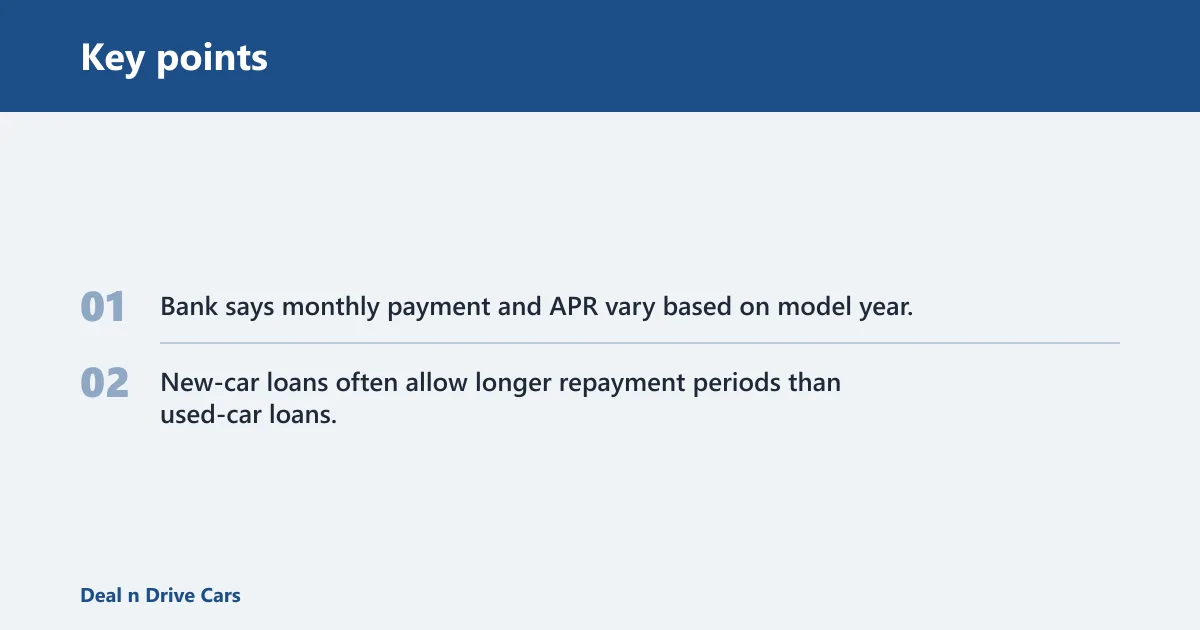
U.S. The same source says monthly payment and APR vary based on model year. That matters because a current-year or less-than-1-year-old vehicle can fall into a better pricing tier than older inventory, while a used car may move into a higher-rate bucket as the model year gets farther from new.
Why longer terms are more common
New-car loans often allow longer repayment periods than used-car loans. That gives a lower monthly payment for the same amount financed. It also means the lender is willing to stretch the risk because the car starts with stronger resale value and fewer age-related unknowns.
Why used-car preapproval is stricter
Used-car preapproval depends more heavily on the vehicle’s age, mileage, and condition. Lenders use those inputs to decide whether the car holds enough collateral value for the requested loan amount and term.
Mileage and vehicle age limits
Higher mileage can shrink the lender’s acceptable range even if your credit is strong. A common failure case is an older car with good appearance but too many miles for the lender’s term table, which can reduce the maximum term or end approval entirely.
Say your preapproval amount works for a 2023 sedan with 18,000 miles, but the same lender may refuse a 2018 sedan with 92,000 miles. The payment might still fit your budget, yet the car can fall outside the lender’s collateral rule because age and mileage changed the risk profile.
Loan-to-value caps and collateral rules
U.S. The same source lists loan-to-value percentage as a pricing factor. That means the lender may cap how much it will finance relative to the car’s value, and older used cars often face tighter caps because their value can move more quickly if the market softens or the condition is weaker than expected.
A larger down payment can help because it lowers the amount financed. That improves the loan-to-value ratio and may make a used car fit a lender’s program even when the same car would be declined with a smaller down payment.
Does a used-car preapproval cost more?
That is often the case. Equifax says used car loans are often higher-rate loans than new car loans, and new car loans often come with lower interest rates. The difference is not automatic, but vehicle age and lender collateral rules commonly push used-car pricing higher.
APR differences by vehicle age
Age is part of the price. A vehicle less than 1 year old may qualify for the lender’s lowest APR tier, while an older vehicle can move into a different rate band or a shorter term band. That is why two used cars with similar sticker prices can produce different preapproval quotes.
Suppose two borrowers have the same credit profile and the same income. If one is shopping for a nearly new crossover and the other is shopping for a 9-year-old compact SUV, the older SUV can receive a higher APR or a smaller maximum loan even before the dealership adds taxes, title, and fees.
How down payment changes the quote
Down payment matters in both cases, but it can matter more on a used car because the lender may be trying to keep the loan-to-value ratio inside a tighter limit. A larger upfront payment can reduce APR pressure, improve approval odds, or both.
Can you use the same preapproval at any dealer?
Not always. Some preapprovals work only at participating dealers, and the dealer still has to finish the financing terms before delivery. U.S. The same source says its pre-approval is only valid at a dealer it works with, so dealer participation is a real condition, not a minor detail.
Participating dealer networks
Check whether the lender requires a dealer in its network before you start shopping. If it does, a car that looks affordable online may still be unusable for the loan if the selling dealer cannot submit the deal through that lender.
When the dealer has to finalize terms
Even with preapproval, the dealer often finalizes the contract, verifies the exact vehicle, and confirms that the car meets the lender’s rules. That matters more with a used car because the final approval can depend on the VIN, mileage, title status, and disclosed condition.
-
Check the dealer list.
Before visiting, confirm whether the lender requires a participating dealer and whether that dealer handles both new and used inventory. This avoids a false match where the preapproval looks solid but cannot be used at checkout.
-
Match the exact vehicle.
Ask whether the preapproval is tied to a model year range, mileage ceiling, or price band. A used car can fail final review if it falls outside any one of those limits, even when your credit qualifies.
-
Confirm final paperwork.
Make sure the dealer can produce the lender’s required contract and disclosures before you put money down. That matters because a preapproval is not the same as funded financing.
What to verify before you apply
This is the fastest way to compare a new-car preapproval against a used-car preapproval without guessing. The lender’s quote depends on the car, and the car’s fit depends on the lender’s rules.
| What to verify | a new car | a used car | Before you apply |
|---|---|---|---|
| Model year | Confirm the exact model year and whether the lender treats it as current or nearly new. | Confirm the year plus any age cutoff that changes pricing or term length. | Ask the lender how it splits current-year, 1-year-old, and older vehicles. |
| Mileage | Usually not a major issue on new inventory. | Verify the odometer reading and whether it sits inside the lender’s mileage limit. | Get the mileage before you submit the application. |
| LTV sensitivity | Check whether the requested amount stays within the lender’s standard advance rate. | Check whether book value and sale price create a tighter cap. | Ask what down payment keeps the loan within the lender’s target LTV. |
| Term ceiling | Longer terms are more common. | Term may be shorter, especially on older units. | Request the longest term the lender will allow on that exact vehicle. |
| Dealer network | Confirm the dealer is in the lender’s network. | Confirm the dealer is in the network and can work the used vehicle through final approval. | Verify participation before you visit the lot. |
| Required documents | Bring income, ID, insurance, and purchase details. | Bring the same items plus used-car disclosures and history documents. | Ask the dealer which forms the lender wants before funding. |
| Red flags | Nonparticipating dealer or a price above the approved amount. | High mileage, title brand, accident history, odometer mismatch, or warranty mismatch. | Walk away until the car fits the lender’s rules. |
What documents matter for a used car?
Used-car paperwork matters more because the lender, the dealer, and the buyer all need the same vehicle story. 021 Auto Leasing says new and used auto loans share the same disclosure framework, but used vehicles also trigger the FTC Used Car Rule, which requires a Buyers Guide on the vehicle.
FTC Buyers Guide and warranty status
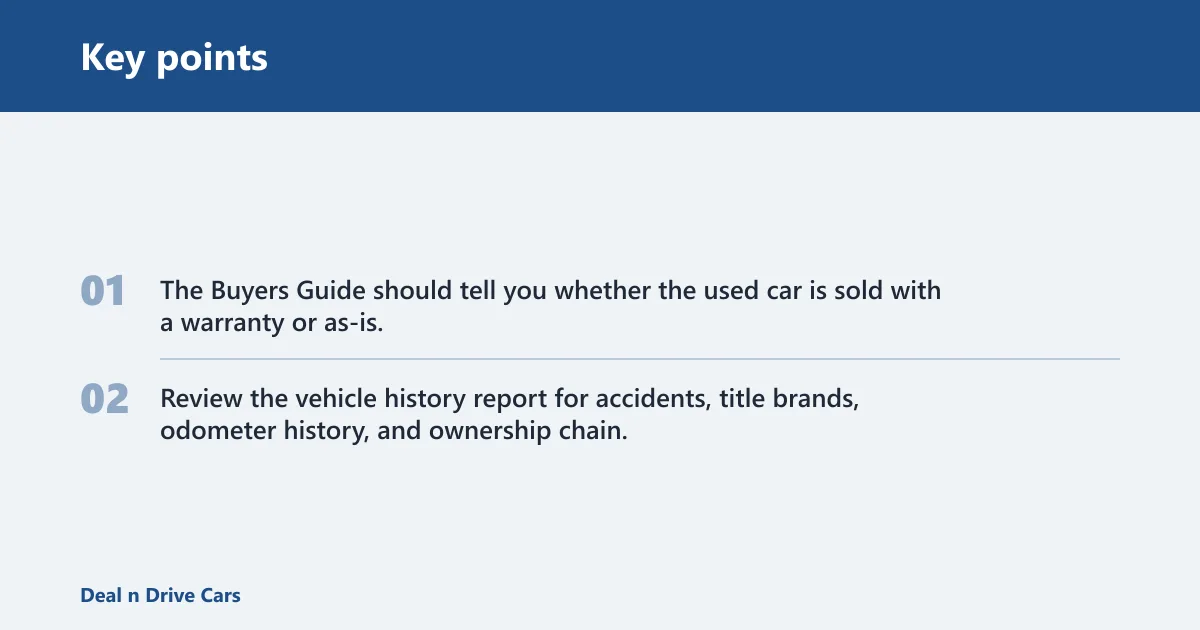
The Buyers Guide should tell you whether the used car is sold with a warranty or as-is. 021 Auto Leasing says the guide covers warranty status, and that makes it important to read alongside the financing offer, because a car with limited or no warranty can change how much risk you want to finance.
Vehicle history report details
Review the vehicle history report for accidents, title brands, odometer history, and ownership chain. Those items can explain why a lender applies stricter collateral rules or why a car that looks acceptable on the lot fails a preapproval condition at the last minute.
A common mistake is getting preapproved for a used car without checking whether the mileage, age, and vehicle history will change the lender’s terms. A branded title or inconsistent odometer history can undo a deal after the lender has already limited the term or reduced the approved amount.
Should you get preapproved before shopping?
Yes, especially if you are comparing a new car against a used car. Preapproval helps you set a ceiling before you shop, and it works best when you want to compare lender rules, dealer participation, and the amount you can finance without relying on a showroom quote.
When preapproval helps most
It helps most when you already know the kind of vehicle you want and want to see whether the lender treats a new car differently from a used one. U.S. The same source says pre-approval can be used to shop for a new or used car with confidence, which is useful when the vehicle itself changes the financing rules.
When to compare multiple offers
Compare more than one offer if you are looking at older used inventory, a vehicle with higher mileage, or a deal that depends on a small down payment. Those are the cases where lender rules vary the most, and one lender may allow the car while another may shorten the term or decline the deal.
Choose a new car if…
Choose a new car if you want the cleaner approval path, a better chance at a lower APR, and a longer possible term. It also fits better when you want fewer vehicle-specific surprises at final approval, especially if you want a lender that prices mostly off model year and credit profile.
Choose a used car if the price gap matters more than the financing terms and you are ready to check mileage, title history, warranty status, and lender limits before applying. That is the better fit when the vehicle is still inside the lender’s age and mileage rules and the down payment keeps LTV in range.
Frequently asked questions
Is it easier to get preapproved for a new car than a used car?
Usually, yes. The same source says it may be easier to secure a loan for a new car than a used car. Lenders often see the newer vehicle as easier collateral to value, so the approval path can be cleaner and the term options can be broader.
Do used car preapprovals usually have higher interest rates?
Often they do. The same source says used car loans are often higher-rate loans than new car loans, and the rate difference commonly tracks the car’s age, mileage, and resale uncertainty. The exact rate still depends on credit history, down payment, and lender rules.
Does auto preapproval for a used car require a shorter loan term?
Often, yes. 021 Auto Leasing says many lenders cap used-vehicle loan terms shorter than new-vehicle terms. Older or higher-mileage cars are more likely to hit those shorter caps because the lender wants the loan to end before the collateral ages too far.
What vehicle information do lenders care about more for a used car preapproval?
They care more about model year, mileage, title status, and vehicle history. Those details help the lender judge collateral value and decide whether the car fits its loan-to-value and term rules. A clean history report can matter as much as a strong credit file.
Can I use the same preapproval at a dealer for either a new or used car?
Only if the lender and dealer arrangement allows it. U.S. The same source says its pre-approval is only valid at a dealer it works with, and the final deal still has to fit the lender’s vehicle rules. A used car can fail that check even if the same dealer could sell a new one.
What happens if the used car is older or has higher mileage?
The lender may lower the approved amount, shorten the term, or decline the deal. Older or higher-mileage cars can trigger tighter loan-to-value rules and stricter collateral limits, so the financing can change even when the payment target looks manageable.
Should I get preapproved before shopping for a new or used car?
Yes. Preapproval helps you compare real financing terms before you fall in love with a specific car. It matters most when you are shopping used, because the exact vehicle can change approval, APR, and term length in ways that do not show up in a generic payment estimate.