How Do You Ask If a Used Car Price Is Negotiable?
Ask plainly: “Is there room to move on the price?” Then stop. If the answer is firm, you can still negotiate fees, financing, or walk away before you pay too much.
Research, ask with scripts, and handle replies
What you need first
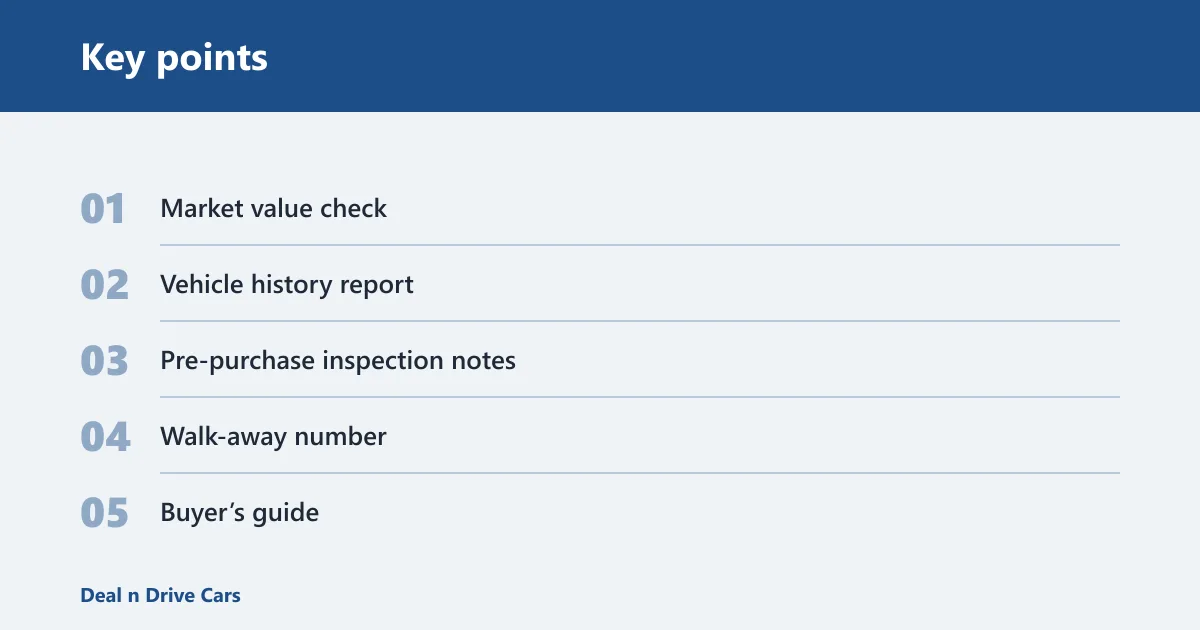
Set your price ceiling before you speak. Check pricing guides such as Kelley Blue Book and Edmunds, along with local listings, for a comparable vehicle’s year, trim, mileage, condition, and history. Pull the VIN-matched vehicle history report, scan the buyer’s guide, and decide your walk-away number before you ask about price.
- Market value check: Compare KBB, Edmunds, and local listings with the same year, trim, mileage, condition, and history.
- Vehicle history report: Match the VIN and look for accidents, title status, and ownership history.
- Pre-purchase inspection notes: Write down brakes, tires, fluids, and warning lights in dollar terms.
- Walk-away number: Decide your maximum acceptable total before any sales talk.
- Buyer’s guide: Look for as-is or warranty status on dealer cars.
Ask with these scripts
Use a short opener, then stop talking. A long pitch can sound pushy. A direct question keeps the door open and gives the seller space to answer without feeling cornered.
- Phone: “Before I come by, is there room to move on the price?”
- Text: “Is the listed price firm, or can it be negotiated?”
- Email: “I’m interested in the car. Please confirm whether the price is negotiable and send the out-the-door price in writing.”
- In person: “I like the car. Is the price fixed, or can we talk about it?”
How to respond when the seller answers
Do not treat every “no” as the end. Sellers often answer in stages. The right follow-up depends on whether they are refusing price, leaving room to talk, or inviting an offer.
| Opening script | Seller reply | Best follow-up line |
|---|---|---|
| “Is there room to move on the price?” | “Firm.” | “Understood. Can you send the out-the-door price and any added fees so I can decide?” |
| “Is the listed price firm, or can it be negotiated?” | “Maybe.” | “What number are you comfortable with if I’m ready to move forward today?” |
| “Can you confirm whether the price is negotiable?” | “Yes.” | “What is the best out-the-door number you can do, including taxes, registration, and doc fees?” |
- Ask in person: When you have inspected the car and want to discuss condition, buyer’s guide status, and final totals face to face.
- Ask by text: When you want a quick yes-or-no before spending time on a visit.
- Ask by email: When you want the price, fees, and out-the-door total in writing.
How do you negotiate the price of a used car?

Start with the out-the-door price, not the monthly payment. Keep financing and trade-in separate from the car’s price, then use market value, history, and inspection findings to make a specific counteroffer. That keeps the discussion tied to the car, not the payment structure.
Use the right numbers first
The out-the-door price is the best number to ask for in writing because it includes the vehicle price, taxes, registration, and doc fees. It excludes financing. That matters because dealers can earn more in finance-office profit than on the used car itself, so the real negotiation starts with the total you will actually pay.
That is one reason a low monthly payment can hide a higher total cost. Ask for the full breakdown: vehicle price, sales tax, title, registration, doc fee, dealer prep, certification charges, market adjustment, protection package, etch, nitrogen, wheel/tire coverage, and any add-ons or service contracts.
Use evidence, not pressure
Check Kelley Blue Book and Edmunds before you negotiate. Then compare the exact year, trim, mileage, condition, and history against local listings. If the car is overpriced, stale, or has visible defects, you have room to ask for a lower number without sounding aggressive.
Suppose a 2019 sedan shows worn tires and a history report with an accident entry. You do not need a speech. Say, “Based on the tires and the report, I need the price adjusted.” That ties the offer to facts, not emotion.
Use defects as dollar-based leverage
A pre-purchase inspection turns general concerns into repair numbers. Brakes, tires, fluids, and warning lights are easier to discuss when the mechanic names the work. Worn tires are a negotiable repair item, and a sold-as-is sale changes repair risk after signing, so get the details before you agree. The FTC’s Used Car Rule buyer’s guide explains whether a vehicle is sold “as is” or with warranty coverage, which is why that form matters before you negotiate.
Picture a dealer car with front tires near replacement and a warning light on the cluster. Instead of asking for “a discount,” ask for the cost of the tires and diagnosis to come off the price or for the dealer to fix the issue in writing. If they will not adjust the total, ask them to itemize the fee lines so you can compare the real number against other offers.
Separate the deal pieces
Do not let the discussion drift into one blended payment. Ask for the vehicle price, then the out-the-door figure, then any financing terms, then the trade-in if you have one. If the seller keeps steering you back to the monthly payment, return to the total.
- Ask for the out-the-door price in writing.
- Compare it to your market check and inspection notes.
- Make one clear counteroffer based on that gap.
- If needed, ask for itemized fees and add-ons.
- Recheck your walk-away number before saying yes.
Common mistakes
Most mistakes come from asking too early or asking the wrong way. If you lead with the monthly payment, you may miss fees. If you skip the written numbers, you cannot compare offers cleanly. If you ignore the title history or buyer’s guide, you can end up paying more than the car deserves. For dealer cars, the buyer’s guide is the official place to confirm whether the vehicle is sold as-is or with warranty coverage, so it belongs in your checklist before you agree to anything.
- Leading with payment: Ask for the out-the-door number first.
- Skipping history checks: Verify accidents, title status, and ownership history by VIN.
- Ignoring fees and add-ons: Ask for itemized doc fees, protection packages, and dealer extras.
- Not setting a limit: Decide your walk-away number before the first call or text.
What should I say when asking if the price is firm?
Keep it short and calm: “Is that your best price, or is there room to move?” If the answer is firm, ask for the out-the-door number in writing and decide whether the car still fits your budget. That keeps the exchange polite and useful.
Dealer negotiation
With a dealer, separate the car price from financing and trade-in. Ask for itemized fees and add-ons so you can see where the total changes. The buyer’s guide matters here, because it shows whether the car is sold as is or with a warranty, which changes what you should ask for in writing. For a dealership, use the dealer-specific tactics in the dealer car article when you need a structure for fees, add-ons, and the final total.
Private seller negotiation
Private seller negotiation is usually simpler than a dealer deal structure. Cash can help, but it does not guarantee a lower price. Still ask whether the price is firm or negotiable, then use your market check, history report, and inspection notes to support the offer.
How to respond to dealer or private-seller answers
Use the seller’s answer to decide the next move. If the seller says the price is firm, switch to the full total and fee breakdown. If the seller says maybe, ask what number would close the deal today. If the seller says yes, move immediately to the out-the-door number and itemized fees.
| Opening script | Seller reply | Best follow-up line |
|---|---|---|
| “Before I drive over, is there room to move on the price?” | “Firm.” | “Thanks. Please send the out-the-door price so I can review the total.” |
| “Is the listed price firm, or can it be negotiated?” | “Maybe.” | “What would you take if I came in with financing ready?” |
| “Can you confirm whether the price is negotiable and send the out-the-door total?” | “Yes.” | “Please send the breakdown for price, taxes, registration, doc fees, and any add-ons.” |
When to ask
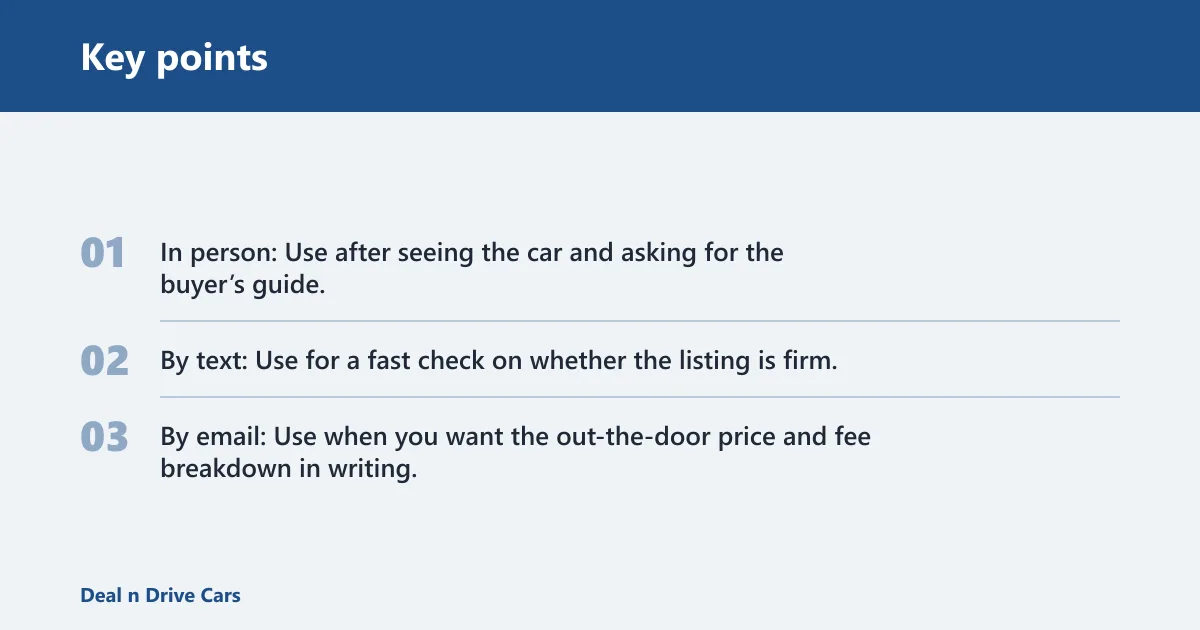
Ask by text when you want a quick yes-or-no before visiting. Ask by email when you want written numbers. Ask in person if the car is already in front of you and you are ready to discuss the out-the-door total. For a dealer, ask for the written total before agreeing verbally.
- In person: Use after seeing the car and asking for the buyer’s guide.
- By text: Use for a fast check on whether the listing is firm.
- By email: Use when you want the out-the-door price and fee breakdown in writing.
Walk-away number
Set your maximum acceptable total before you talk price. That number keeps you from drifting past your limit when the seller says “maybe” or adds fees at the end. If the total goes over your ceiling, leave. A deal that is too expensive is still too expensive.
Can you negotiate a used car price?
Yes, you often can, but not every seller will move. The strongest support comes from market value, history, inspection findings, and a clean out-the-door comparison. If the seller will not budge on price, you can still ask about fees, add-ons, or financing terms.
Common first-timer mistake: a buyer asks only, “What’s your best monthly payment?” and never gets the total. That approach hides the car price, taxes, registration, and doc fees. Start with the total, then work backward if needed.
Are used car prices negotiable?
Sometimes. Used car prices do not have a magic percentage discount, so the room to negotiate depends on the car’s market value, condition, title history, and how long it has been listed. A clean car at a fair price may move little. A stale listing with defects may move more.
How to negotiate buying a used car
Use a short process: verify the car’s value, inspect the history and condition, ask for the out-the-door price, then make a single counteroffer tied to facts. If the seller pushes back, keep the discussion on the total and the repairs, not on how much you want the car.
- Check KBB, Edmunds, and local listings for the exact match.
- Review the VIN-matched vehicle history report.
- Read the buyer’s guide if it is a dealer car.
- Ask for the out-the-door price in writing.
- Offer a number that reflects market data and repair costs.
How to counter after inspection
After an inspection, make the counteroffer specific: “The tires, brakes, and diagnosis add up to about $1,200, so I can do $___ out the door.” If you do not want to name the exact repair math, keep it simpler: “Based on the inspection, I need the price adjusted to reflect the work that still needs to be done.” That keeps the offer tied to documented condition rather than vague pressure.
What to do if a seller refuses out-the-door pricing
If a seller will not give the out-the-door price, ask once more for a written breakdown of the vehicle price, taxes, registration, doc fee, and any add-ons. If they still refuse, treat that as a warning sign. You cannot compare offers or control your total without the full number, so be ready to walk.
Frequently asked questions
How do you ask if a used car price is negotiable?
Say, “Is there room to move on the price?” That line is short, polite, and clear. If the answer is yes, ask for the out-the-door number in writing. If the answer is firm, you can decide whether the car still fits your walk-away number.
Is it better to ask for the out-the-door price first?
Yes. The out-the-door price includes the vehicle price, taxes, registration, and doc fees, which is the number that affects your real cost. Asking for it first keeps the conversation away from a misleading monthly payment and helps you compare offers cleanly.
What if the dealer says the price is not negotiable?
Ask for the out-the-door price in writing, then review the fees, add-ons, financing terms, and buyer’s guide. If the total still beats your walk-away number, move on. If it does not, there is no reason to force a bad deal.