What Is a Vehicle History Report, and What Does It Show?
A vehicle history report gathers title, odometer, accident, theft, recall, and registration records tied to a VIN from insurers, DMVs, police, shops, and auctions, and it is only as complete as those sources. Missing records can hide flood damage, title branding, or odometer rollback. This guide explains what the report shows, how to read it, and how to judge gaps before you buy.
This guide is part of our Vehicle history report: how to read one before you buy series.
What is a vehicle history report?

A vehicle history report is a VIN-based record summary for one specific vehicle. It pulls together title events, ownership changes, mileage entries, damage notes, theft records, recalls, and other database hits so you can see whether the car’s paper trail makes sense.
The key word is summary. The report does not inspect the car, verify every repair, or prove the vehicle is problem-free. It only reports what participating sources have already recorded.
Why buyers check one before purchase
Used-car buyers use these reports to spot problems that are hard to see in a quick walkaround. A mileage jump, a salvage brand, or an old theft record can change a deal fast.
They are also useful for checking whether the seller’s story matches the paperwork. If a seller says the car has “one careful owner,” but the report shows six owners across three states, that mismatch deserves a closer look.
What does a vehicle history report show?
A typical report can show title history, ownership changes, odometer readings, accident or damage entries, salvage or rebuilt branding, service or inspection records, open recalls, and sometimes lien or theft records. The exact mix depends on the provider and the data sources it can access.
Title and ownership history
Ownership history may show how many previous owners the vehicle has had, where it was registered, and sometimes whether it was used commercially or personally. Title history can also reveal transfers between states, which matter because title records are not always standardized.
That matters because a car can look “clean” in one state file and still have a branded title elsewhere if records did not transfer cleanly. State databases, auction records, and insurer data do not always line up on the same day.
Odometer readings and mileage gaps
Odometer history is a mileage trail over time. If the readings move upward in a normal pattern, that supports the car’s stated mileage. If a later entry is lower than an earlier one, or if a long gap appears, confidence drops.
A gap does not prove fraud. It does mean the report has less evidence to support the odometer reading shown on the dash.
Accident, damage, and theft entries
Accident records often come from insurance claims, salvage auctions, police reports, or inspection records. They can show that damage was reported, but they often do not show how severe the damage was or whether every part was repaired properly.
Suppose a report lists “rear damage” from an insurance claim. That entry does not tell you whether the bumper cover was scratched, the trunk floor was bent, or the frame was repaired. The report flags the event; it does not grade the repair.
Recall and lien records
Recall status may show open safety recalls issued by the manufacturer. That is separate from maintenance and separate from body or mechanical repairs. A car can have a recall for an airbag module and still have no maintenance gaps in the report.
Lien records may show that a lender still has a legal claim on the vehicle. That matters because a lender should release the lien before title transfer. If the lien status is unclear, the paperwork needs more checking.
How the report is built from different sources
A vehicle history report is a patchwork of records from many places. One field may come from a DMV title file, another from an insurance claim, another from an auction sheet, and another from a manufacturer recall database. That mix is why source quality matters as much as the data itself.
DMV and title records
DMV and title records usually feed ownership counts, title brands, registration states, and lien information. These records are the backbone of the report, but they can lag when a car moves across state lines or when a branded title is not updated everywhere at once.
Insurance and claim data
Insurance data often supplies accident and damage entries. These records can be useful when a claim was filed, but private cash repairs and unfiled accidents may never enter the system.
Auction and inspection records
Auction records can reveal damage disclosures, salvage status, or condition notes made before sale. Inspection records may add odometer readings or visible damage notes. Both are useful, but both are snapshot-based; they do not explain every repair choice made after the sale.
Service, police, and recall databases
Service records may show oil changes, timing belt work, or other maintenance entries if a shop reports them. Police and theft databases may show a theft recovery or recovery date. Manufacturer recall databases show open safety recalls and recall completion status when available.
Vehicle history report coverage table
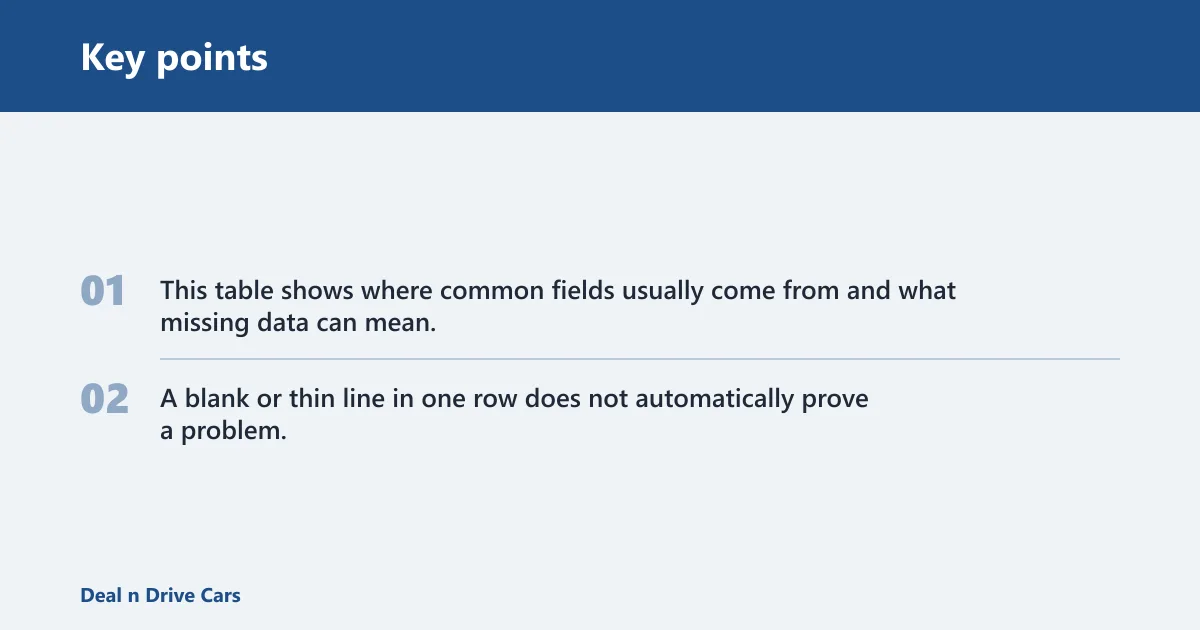
This table shows where common fields usually come from and what missing data can mean. A blank or thin line in one row does not automatically prove a problem, but it does lower confidence in that part of the report.
| Report field | Likely data origin | What missing data means |
|---|---|---|
| Title history | DMV title records, state title databases | No title events in the report, or a transfer gap that may hide a brand or ownership change |
| Ownership history | DMV registration files, title transfers | The car may have moved between states, changed hands privately, or had incomplete registration reporting |
| Odometer readings | DMV mileage entries, inspections, auctions, service visits | Gaps reduce confidence in the mileage trail and make rollback or entry errors harder to spot |
| Accident or damage entries | Insurance claims, auction disclosures, police reports, inspection notes | No entry does not prove no crash; unreported repairs or private-body work may never appear |
| Salvage, rebuilt, flood, lemon, junk brands | DMV title branding, auction records, insurer loss files | Brand may be missing, delayed, or named differently by state, so the report may not reflect the current title status fully |
| Service and inspection records | Repair shops, dealer service systems, state inspections | Gaps are common, especially for self-serviced cars or shops that do not report data |
| Open recalls | Manufacturer recall databases | No open recall entry means none was listed at the time of the report, not that the car has no repair needs |
| Lien or theft records | DMV, police/theft databases, lender filings | A missing record can mean no event was reported, or the relevant database was not updated yet |
Can a vehicle history report miss problems?
A vehicle history report can miss problems when repairs were handled privately, a crash was never claimed, records did not cross state lines, or the car is old enough that its paper trail is thin. A clean report is useful, but it is not proof of a problem-free car.
Private-party repairs and unreported crashes
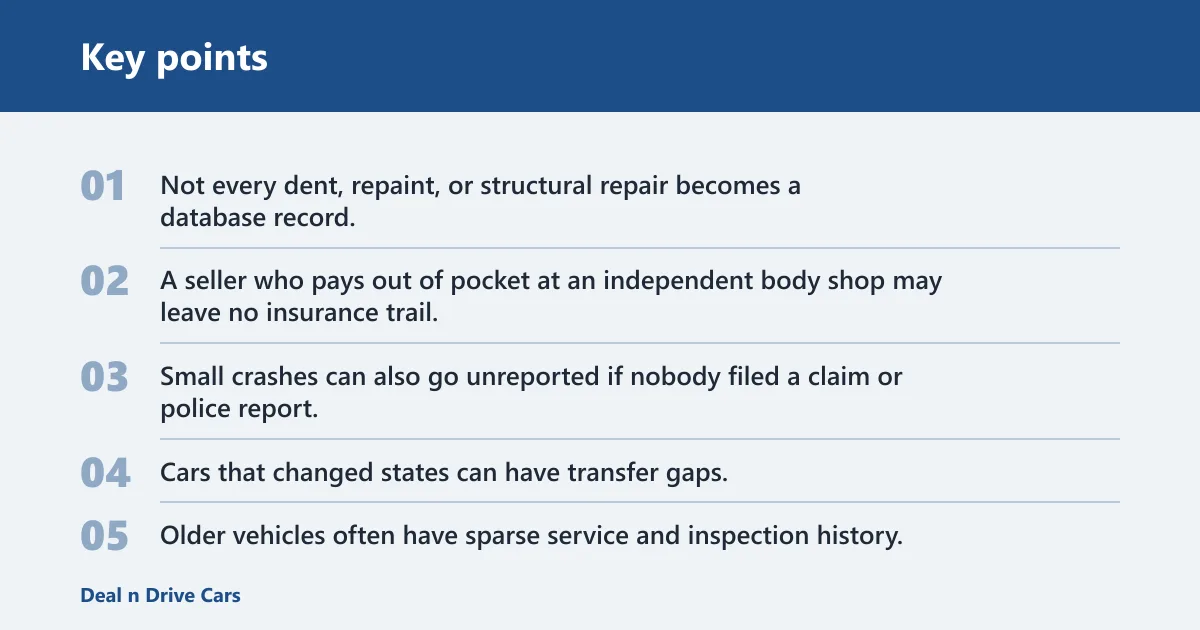
Not every dent, repaint, or structural repair becomes a database record. A seller who pays out of pocket at an independent body shop may leave no insurance trail. Small crashes can also go unreported if nobody filed a claim or police report.
Out-of-state moves and sparse older records
Cars that changed states can have transfer gaps. Older vehicles often have sparse service and inspection history, especially if earlier records were paper-based or never shared with the reporting provider.
A common first-timer mistake is to see one clean title line and stop there. If the car is 15 years old and has lived in four states, the thin record is part of the story.
Why clean reports still need a physical inspection
Panel gaps, overspray, uneven paint texture, and mismatched wear can reveal issues that never reached the database. If the report is clean but the hood does not sit flush, the report should not overrule the car’s condition.
Picture a sedan with a spotless report and a front fender that shades slightly differently in sunlight. That does not prove major damage, but it does justify a closer inspection and a paint-depth check from a qualified shop.
How do I read a vehicle history report before buying a used car?
Start by checking that the VIN on the report matches the VIN on the car. Then compare the report line by line with the vehicle’s condition, the seller’s claims, and the title documents. Use the report to ask better questions, not to replace a pre-purchase inspection.
- Match the 17-character VIN on the report to the dashboard plate and door-jamb label.
- Check title history for salvage, rebuilt, flood, lemon, or junk branding.
- Scan odometer entries for jumps, drops, or long gaps.
- Review accident entries and ask for repair invoices, photos, or insurance paperwork.
- Look for state-to-state moves that may explain missing records.
- Check open recalls and confirm whether they were fixed.
- Compare the report with visible wear, paint condition, tire wear, and panel alignment.
What to do when the report and car disagree
If the report is clean but the car shows obvious wear, repainting, or uneven panel gaps, treat the mismatch as a warning sign. If the report shows a damage event but the seller claims “minor cosmetic only,” ask what records support that claim.
Use the report as one input alongside a visual inspection and, when the deal matters, a pre-purchase inspection from a qualified mechanic or body shop.
What does a clean vehicle history report mean?
A clean vehicle history report means the databases checked did not show title brands, major accident entries, theft records, or mileage problems at the time of the search. It does not prove the car has never been wrecked, flooded, or repaired outside the record system.
What clean can and cannot prove
Clean can support a sale. It can show that the title path looks normal, the mileage trail has no obvious conflict, and no open recall or theft flag appears in the report. It cannot prove hidden frame damage, unreported flood exposure, or sloppy repairs.
When a clean report should still raise questions
If the car has fresh undercoating, cloudy headlamps, a strong mold smell, or paint that does not match panel to panel, a clean report should not end the inspection. Those signs can point to problems that the databases never saw.
Clean paperwork is useful. Clean condition is better. You want both.
Frequently asked questions
Does a vehicle history report show accidents?
Often, yes, but only if the crash reached a reporting source such as an insurer, auction, police file, or inspection record. The entry usually shows that damage was reported; it may not tell you how severe the damage was or whether the repair quality was good.
Can a vehicle history report show title problems?
Yes. It may show salvage, rebuilt, flood, lemon, or junk branding, along with title transfers and state changes. Title wording can vary by state, so a close read matters. A clean-looking title line does not always mean every prior brand was captured.