What Is the Fastest Way to Buy a Used Car Without Rushing?
The quickest safe way to buy a used car is to line up financing first, arrange an inspection as soon as possible, and decide with a fixed checklist, often within a few days. Skip those steps and you risk hidden mechanical issues, title problems, or overpaying under pressure. This guide shows how to compress the process without cutting the checks that matter.
What is the fastest safe way to buy a used car?
The fastest safe way is to move the slow parts ahead of time: financing, inspection booking, history checks, and paperwork prep. That lets you turn the actual shopping and decision into a same-day or next-day process without making the purchase itself careless.
Speed means compressing the process, not skipping it
Shopping speed and purchase speed are not the same thing. You can look at cars online in an hour, but the safe purchase clock includes a history report, a test drive, an inspection, and payment or loan paperwork. Skip those steps and you may save minutes, then pay for it later.
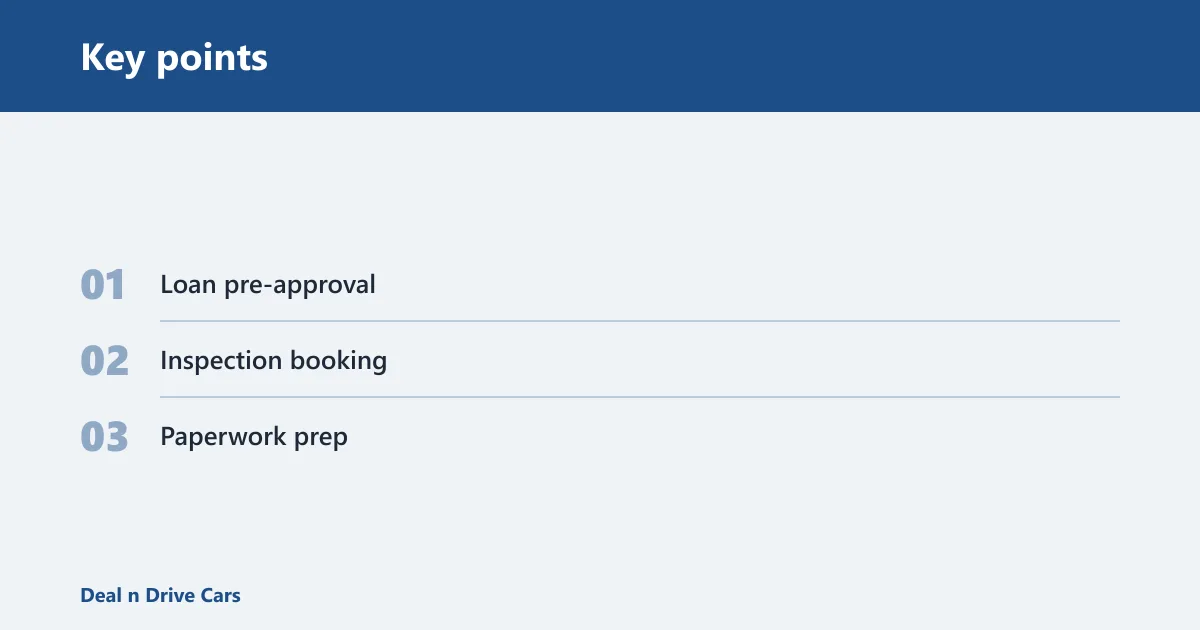
The three steps that save the most time
- Loan pre-approval: Set your exact top price before you meet any seller.
- Inspection booking: Reserve an independent mechanic slot before you commit.
- Paperwork prep: Bring ID, insurance details, and payment method or lender documents.
When same-day buying is possible and when it is a bad idea
Same-day buying can be possible when the car is local, the title appears straightforward, the seller is available, an inspection slot is open, and financing is already lined up. It is a bad idea when the seller pressures for a deposit, the title is missing, the history report is stale, or the car cannot be inspected before money changes hands.
How long should you budget before you buy?
A relatively safe shopping window is often about one to three days if financing is ready and the car can be inspected quickly. One day can work for a cash buyer or a straightforward dealer sale, but the risk rises if any step still needs to be arranged.
What can happen in one day, three days, and a week
In one day, you can inspect, test drive, and close only if the car and paperwork line up cleanly. In about three days, there may be enough time for a history report, a mechanic appointment, and a lender review. A week gives the most time to compare cars, walk away, and wait overnight before signing.
Where extra time helps most
Extra time helps most when the car is older, modified, or priced below similar listings. It also helps when you need a loan, a trade-in appraisal, or a private seller to meet on a narrow schedule. Those delays are normal. They are not signs that you missed a deal.
| Timeline | Financing ready? | History report checked? | Inspection booked? | Test drive done? | Best use case |
|---|---|---|---|---|---|
| 7 days out | Yes | Yes | Yes | Yes | Best balance of speed and caution |
| 3 days out | Yes | Yes | Usually yes | Yes | Fast, still workable for most buyers |
| 1 day out | Usually yes | Yes | Maybe | Yes | Only for organized buyers and clean deals |
| Purchase day | Yes | Yes | Yes, if possible | Yes | Same-day close after checks pass |
When should you get financing before shopping for a used car?
Get financing before shopping whenever you might use a loan. A pre-approval or firm quote sets a hard budget ceiling, shortens the dealership process, and helps you avoid cars that look affordable until payment terms are added. It also reduces the chance of losing a car while waiting for lender review.
Rate quote validity and how it affects speed
Pre-approvals usually come with a rate quote or approval window, often measured in days or weeks by the lender. That matters because it gives a time box for shopping. If the quote expires, the timeline can stretch while the lender rechecks income, identity, or credit.
Documents that slow buyers down at the dealership
Have your ID, proof of income, proof of address, insurance information, and any trade-in title or payoff details ready. Missing documents turn a quick sale into a waiting game. For financed deals, the dealership’s finance office still has to prepare loan forms, registration, and tax paperwork.
What should you check before you say yes?
Before you say yes, check the history report, get a pre-purchase inspection if you can, and test drive the car on roads that reveal problems. Photos can hide brake wear, fluid leaks, suspension noise, electrical faults, and warning lights that only show up once the car is moving or warming up.
Vehicle history report checks
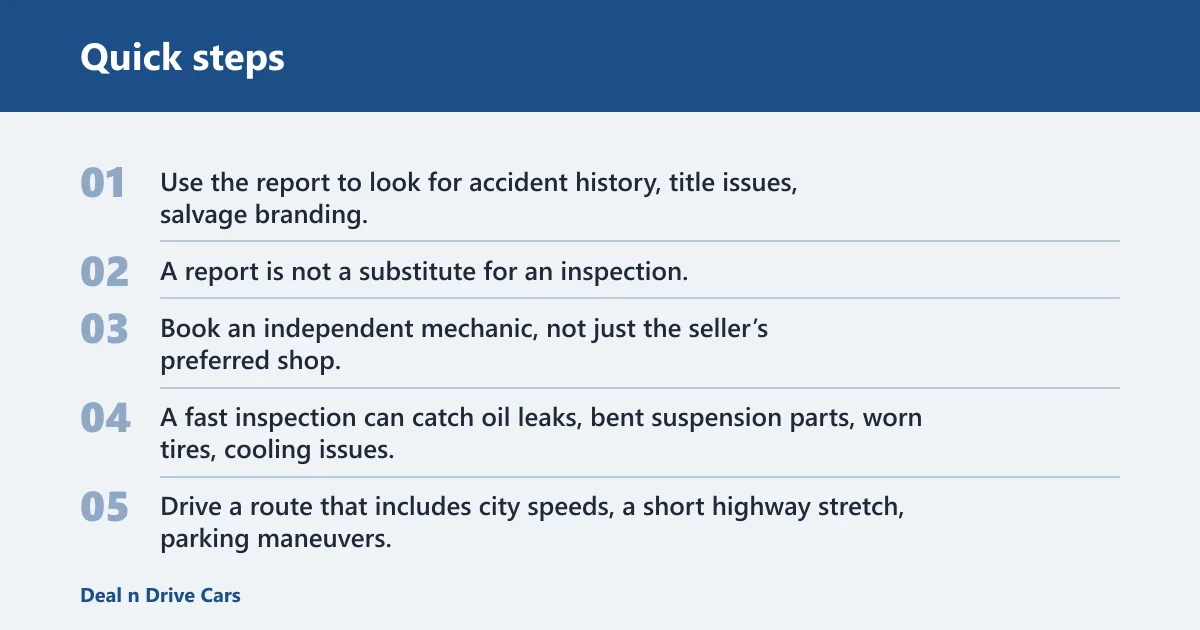
Use the report to look for accident history, title issues, salvage branding, flood exposure, and odometer problems. Check the report refresh date too. A report is not a substitute for an inspection, because it cannot tell you whether the brakes are thin, the tires are uneven, or the transmission shifts poorly.
How to book a pre-purchase inspection quickly
Book an independent mechanic, not just the seller’s preferred shop, and ask for the earliest same-day or next-day slot. A fast inspection can catch oil leaks, bent suspension parts, worn tires, cooling issues, and signs of past collision repair that photos cannot confirm.
Test-drive basics that should not be skipped
Start with a cold engine if possible. Drive a route that includes city speeds, a short highway stretch, parking maneuvers, and a few stop-and-go sections. Watch for warning lights, vibration under braking, steering pull, clunks over bumps, and any hesitation during acceleration.
Say your seller offers a clean-looking compact SUV with 82,000 miles and a fresh wash, but the steering wheel shimmies at 55 mph and the engine light flashes once at idle. That is exactly the kind of issue a rushed photo review misses and a short road loop can expose.
How fast can a dealership finish the sale?
A dealership can sometimes finish a used-car sale in about a day if the trade-in, lender approval, title status, registration, and tax paperwork move through quickly. The finance and insurance office often sets the pace, not the sales desk or the test drive.
F&I steps that add time
The F&I process may include lender contract review, warranty or service contract decisions, trade-in valuation, odometer disclosures, tax calculations, registration forms, and delivery checks. If any document is missing or the lender requests a correction, the handoff can slip from hours to the next business day.
What needs to be complete before you can drive home
You usually need a signed purchase agreement, completed loan documents if financing, proof of insurance, and any state-required registration or temporary tag paperwork. Some dealers can release the car the same day; others hold delivery until the paperwork is finalized and funds are confirmed.
Does paying cash make it faster?
Cash usually removes lender approval, interest-rate shopping, and loan document signing, so the purchase can move faster. It does not remove title transfer, bill of sale paperwork, identity checks, or the need to verify that payment clears in a safe way the seller accepts.
Why title and paperwork still take time
Even with cash, the seller still has to sign over the title correctly, and the buyer still has to handle registration and tax steps. If the title is not on hand or the seller’s name does not match the paperwork, the deal slows down immediately.
Bank transfer timing and payment safety
Large transfers can take time to post, especially outside banking hours. For a dealer purchase, ask how they accept payment and when they release the car. For a private-party sale, avoid carrying large cash amounts unless the meeting location, title status, and receipt process are all arranged in advance.
What changes for a private-party sale?
Private-party sales can be faster than dealer sales when the seller has the title ready and meets at a flexible time. They can also be slower if the seller is hard to reach, the title is lost, or the meeting requires extra coordination. Payment safety matters more here than in a showroom.
Seller availability and meeting logistics
You need the seller available for a test drive, a possible inspection, and the title transfer. That often means arranging a meeting window, a safe location, and a backup plan if the car needs to be seen by a mechanic before payment.
Title transfer and payment safety
Do not hand over money until the title details match the seller and the agreed sale terms are written down. If the title is not clear, the fastest decision is often to walk away. A quick purchase is not worth sorting out ownership problems later.
A common first-timer mistake is seeing a private-sale hatchback on a Friday night, sending a deposit without inspecting it, and learning on Saturday morning that the title is still in a lender’s name. The deal looked fast. The paperwork was not.
How does the timeline change by day?
The timeline changes most by what is already complete before you start shopping. A seven-day plan can fit financing, history checks, inspection booking, and a calm yes-or-no decision. A same-day plan only works when almost every gate is already open.
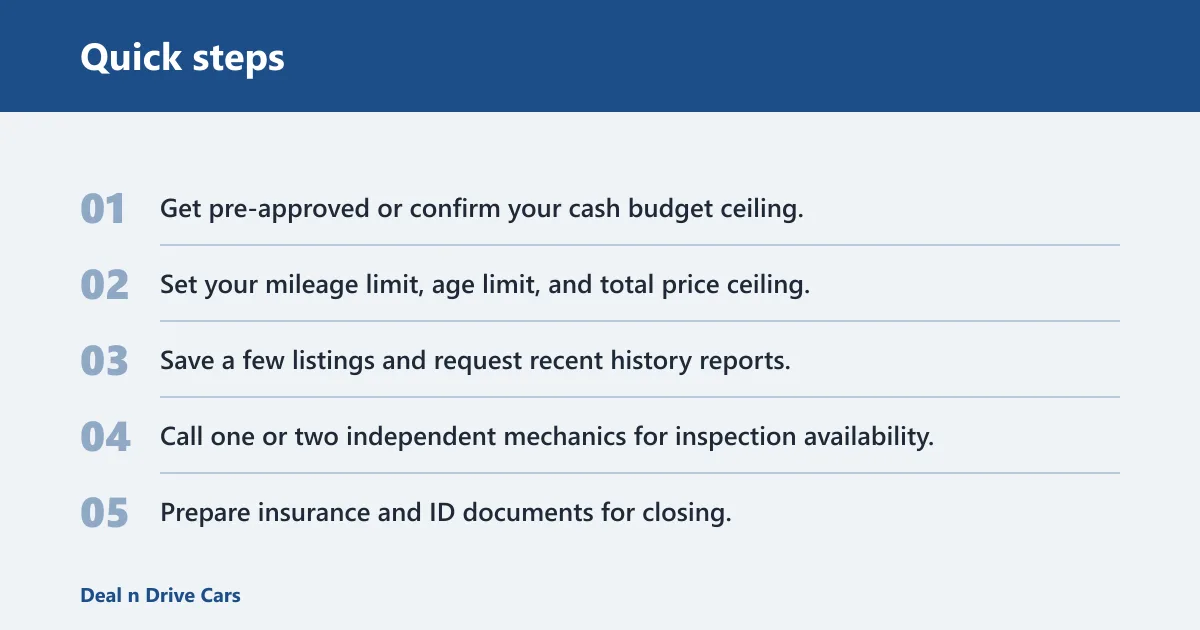
Seven days out
- Get pre-approved or confirm your cash budget ceiling.
- Set your mileage limit, age limit, and total price ceiling.
- Save a few listings and request recent history reports.
- Call one or two independent mechanics for inspection availability.
- Prepare insurance and ID documents for closing.
Three days out
- Filter to cars with clean history and realistic pricing.
- Confirm the inspection time before you visit the car.
- Ask the seller or dealer what paperwork is needed for release.
- Arrange a test drive route that includes highway speed and parking.
One day out
- Recheck the history report date and title status.
- Confirm the inspection slot and who is paying for it.
- Prepare a yes/no list for mileage, condition, and price.
- Plan the overnight pause if the car is only a maybe.
Purchase day
- Do the cold-start check and test drive.
- Review the inspection result, history report, and title.
- Confirm final price, fees, and delivery timing.
- Sign only if every gate is green.
Choose the overnight pause when anything is borderline: a warning light, a vague title answer, a rushed seller, or a price that seems low for the condition. Wait one night if needed. Urgency is justified only when the paperwork is clean, the inspection passes, and the car fits the budget without stretching it.
Frequently asked questions
How can I buy a used car quickly without regretting it?
Buy quickly by deciding your budget first, getting pre-approved if you need a loan, checking the history report, booking an inspection, and test driving before payment. The speed comes from preparation. The regret usually comes from skipping the one step that would have exposed a problem.
Can I buy a used car in one day?
Yes, a one-day purchase can happen, especially with cash or a well-prepared dealer deal. It is still risky if the inspection cannot happen, the title is not ready, or the lender has not issued a firm approval. One day is a speed target, not the default plan.
How long should I spend shopping for a used car?
Spend enough time to compare several cars and avoid reacting to pressure. A minimum safe window is usually a few days, and a week is better if you need financing or want to inspect more than one vehicle. The goal is not endless shopping. It is a controlled decision.
How soon can I drive a used car home after buying it?
Sometimes you can drive it home the same day, but only after the sale agreement, payment, title paperwork, insurance, and any required registration steps are complete. Dealer releases depend on F&I timing. Private-party sales depend on how fast the title is signed and verified.