How Does Vehicle Condition Affect Trade-In Value?
Condition can cut a trade-in by hundreds or thousands of dollars; dealers usually price cosmetic flaws lightly, mechanical problems heavily, and title or missing-service-record issues the most. Ignore those issues and you can leave real money on the table or get an online estimate that drops sharply at inspection. This guide breaks down how dealers price body damage, worn tyres, mechanical faults, and paperwork problems, and what repairs are worth doing first.
What dealers mean by vehicle condition
Dealers usually look at three things: appearance, mechanical health, and paperwork. Those factors sit beside mileage, age, make, model, fuel type, and current demand, so condition rarely acts alone.
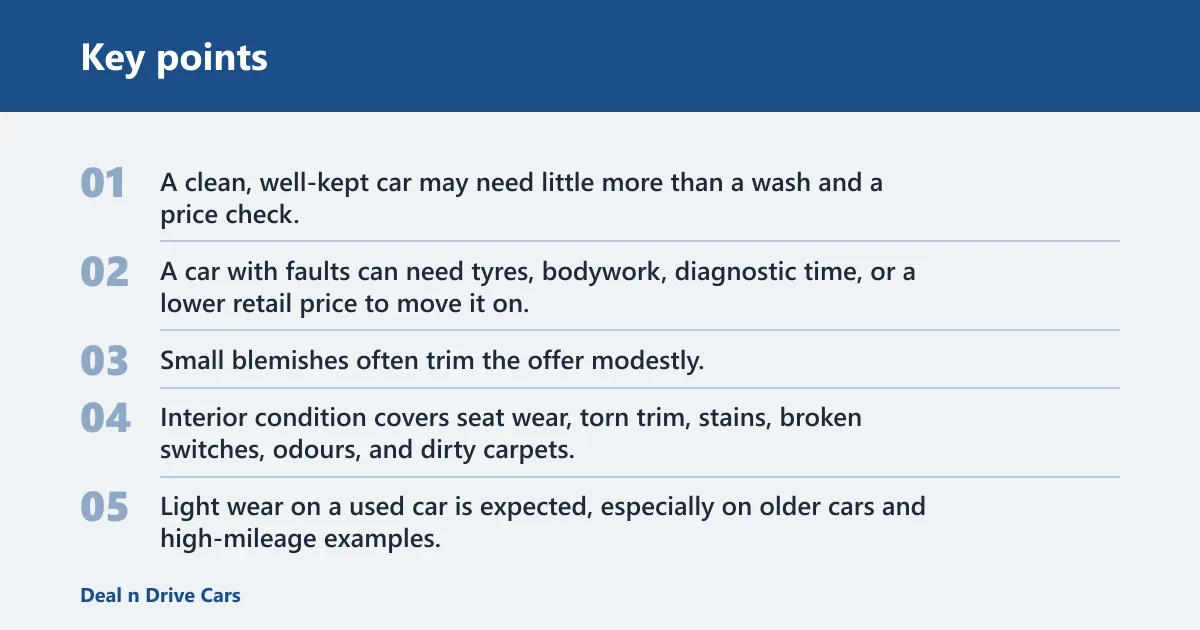
Vehicle condition changes trade-in value because it changes the dealer’s reconditioning bill and the resale risk they take on. A clean, well-kept car may need little more than a wash and a price check. A car with faults can need tyres, bodywork, diagnostic time, or a lower retail price to move it on.
Exterior wear and damage
Exterior condition includes scratches, dents, cracked lamps, chipped paint, scuffed wheels, and panel gaps from past repairs. Small blemishes often trim the offer modestly. Body damage that needs paint, panel repair, or part replacement usually costs more because the dealer must pay a body shop before retailing the car.
Interior wear and cleanliness
Interior condition covers seat wear, torn trim, stains, broken switches, odours, and dirty carpets. Light wear on a used car is expected, especially on older cars and high-mileage examples. Strong smells, smoke residue, and broken trim are costlier because they make the car harder to present and can put buyers off.
Mechanical condition and warning lights
Mechanical health has the biggest effect when a fault is obvious or expensive to diagnose. Warning lights, leaks, rough running, clutch slip, brake wear, and suspension noise can all pull the offer down sharply. Dealers price in the repair bill and the chance of finding more than one issue after inspection.
How condition changes trade-in value
Trade-in value is the dealer offer amount after appraisal, and it is usually lower than a private-sale figure because the dealer usually needs room for retail prep, profit, and risk. Live market data is used for instant estimated sale prices, and the estimate reflects what the vehicle could realistically sell for today. Thousands of verified dealers compete to buy the vehicle, so demand and appraisal condition both matter.
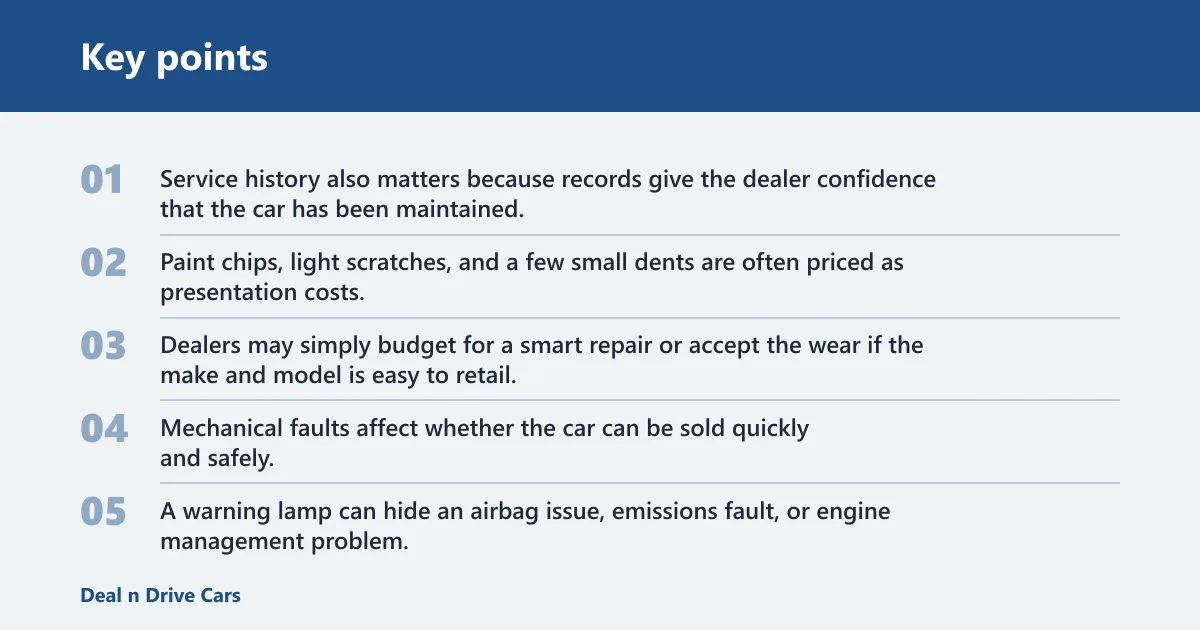
Condition penalties are not flat. A small scuff might cost a little, while a warning light can trigger a much larger deduction because the dealer has to diagnose the fault before it can set a firm resale price. Service history also matters because records give the dealer confidence that the car has been maintained.
Why cosmetic issues usually reduce offers less than faults
Paint chips, light scratches, and a few small dents are often priced as presentation costs. They matter, but they rarely change the mechanical value of the car. Dealers may simply budget for a smart repair or accept the wear if the make and model is easy to retail.
Why mechanical problems usually cost more
Mechanical faults affect whether the car can be sold quickly and safely. A warning lamp can hide an airbag issue, emissions fault, or engine management problem. Even when the repair sounds minor, dealers often apply a larger discount because the final bill can rise after diagnosis.
How paperwork gaps affect dealer confidence
Missing service records, a lost logbook, or unclear accident history can lower confidence even if the car looks tidy. Dealers use paperwork to judge maintenance and ownership trail. If records are incomplete, they may assume more risk and reduce the offer to cover it.
Say your hatchback has two about 20 cm door dents, a full service file, and no warning lights. The dealer may price the dents as a reconditioning item and leave the rest of the value close to market. Now change only one variable: the engine light comes on during the appraisal. The offer can drop much harder because the repair is no longer cosmetic.
What condition issues hurt value most?
The biggest losses usually come from faults that signal repair cost, safety risk, or uncertainty. Scratches and dents hurt value, but tyres, brakes, warning lights, leaks, and missing service records usually hurt more because they force the dealer to spend money before resale. Accident repairs can also matter if the finish, fit, or history raises doubts.
Scratches, dents, and paint damage
Minor scratches and small dents usually reduce value less than mechanical issues, especially on older cars. Wider paint damage, a creased panel, or a damaged bumper moves the car into body-shop territory. If the repair is only cosmetic and the quote is high, leaving it alone may make more sense than paying for it first.
Tyres, brakes, and wheel damage
Tyres and brakes sit near the top of the trade-in penalty list because they are easy for a dealer to inspect and expensive to ignore. A tyre close to the wear limit, mismatched tyres, bent wheels, or a brake warning light can cut the offer fast. Those items affect safety and may force immediate spend before the car can be retailed.
Warning lights, leaks, and missed servicing
Warning lights often cost the most because they can cover several possible faults. Oil leaks, coolant loss, rough idle, gearbox hesitation, and overdue servicing also matter because they point to mechanical risk. If the dealer cannot trust the car’s health, it will usually protect itself with a lower number.
Condition penalty checklist
This checklist shows how dealers often treat common issues. The exact deduction varies by make and model, age, mileage, fuel type, and local demand, but the pattern is useful for deciding whether to repair, disclose, or leave the car as it is.
| Issue type | Likely dealer impact | Repair, disclose, or leave as-is? |
|---|---|---|
| Exterior damage: light scratches, small dents, stone chips | Usually a small to moderate deduction for cosmetic reconditioning | Disclose; repair only if the quote is low and the car is nearly new |
| Exterior damage: cracked bumper, creased panel, paint mismatch | Moderate to heavy deduction because body-shop work is likely | Get a repair quote first; fix only if the uplift exceeds the repair cost |
| Interior wear: worn seats, stains, broken trim, odours | Small to moderate deduction, higher if the smell is smoke-related | Clean thoroughly; repair only cheap, obvious faults |
| Tyres/brakes: worn tyres, low tread, brake warning, noisy brakes | Moderate to heavy deduction because safety items are expensive and visible | Repair if the tyres are below legal tread or the brakes are clearly due |
| Warning lights: engine, airbag, ABS, emissions | Heavy deduction because diagnosis and repair risk are unclear | Disclose; diagnose if the fault is simple and the fix is inexpensive |
| Service history gaps: missing invoices or long service gap | Moderate deduction from lower dealer confidence | Gather every record you have; disclose the gap honestly |
| Accident repairs: previous panel repairs, structural work, poor finish | Moderate to heavy deduction depending on extent and quality | Disclose; repair only visible finish issues that are cheap to correct |
| Cleanliness: dirty cabin, pet hair, clutter, bad smell | Small deduction, but it can shape the dealer’s first impression | Clean first; almost always worth doing |
Mileage, age, and condition: what matters more?
Mileage and condition work together, not in isolation. Higher mileage usually reduces value, but condition can matter more on a lower-mileage car with obvious faults. On an older car, normal wear is expected, so clean maintenance records and a healthy drivetrain can help hold value better than cosmetic perfection.
Older cars and visible wear
Older cars depreciate differently because dealers expect some ageing. Light seat wear or a few marks may be accepted on a ten-year-old car, while the same marks can feel out of place on a two-year-old car. That means age changes how harshly the car is judged.
High-mileage cars with full service history
A high-mileage car with complete service history can still trade well if it drives properly and the wear matches the mileage. Records tell the dealer the car has been maintained, which can soften the penalty. It will not erase age or mileage, but it can make the offer more stable.
Nearly new cars with damage or faults
Nearly new cars are judged more tightly. A small dent, scuffed alloy, or dashboard warning light can stand out more because the vehicle should still look and feel fresh. On these cars, condition can outweigh mileage for some buyers, especially if the make and model is in strong demand.
Picture a three-year-old diesel SUV with about 18,000 miles, full history, and one rear bumper scrape. The penalty may stay limited because the mileage is low and the service file is strong. If the mileage is changed to about 95,000, the same scrape can matter less than the odometer because the dealer may expect more age-related wear.
Can you trade in a damaged car?
Yes, you can usually trade in a damaged car, but the offer will reflect the repair bill, the risk of hidden faults, and the car’s resale appeal. Body damage, accident repairs, warning lights, and mechanical faults do not automatically rule out a trade-in. They usually change the price more than the fact of the trade itself.
Body damage and accident repairs
Minor body damage can often be traded in with only a moderate penalty. Larger accident repairs, repaired panels with poor colour match, or visible structural history are more serious because they raise questions about future resale. Dealers may use the damage history to justify a lower offer even if the car drives well.
Warning lights and mechanical faults
A car with a warning light can still be traded, but it will often be valued as a problem vehicle. If the fault is simple and cheap, such as a sensor issue, a repair before trade-in can help. If the fault is unclear or expensive, leaving it for the dealer may be the cleaner choice.
When to repair and when to leave it
Repair the car first when the fix is cheap, visible, and likely to lift the offer by more than the repair cost. Leave it alone when the issue is cosmetic, the quote is high, or the dealer would still mark down the car for age, mileage, or demand. The best decision is the one that leaves you ahead after costs, not the one that makes the car look perfect.
-
Get a quick repair quote.
Compare the likely uplift with the invoice before you spend. If a body repair costs more than the trade-in increase, it is usually better to disclose the damage and let the dealer price it. -
Check tyres and warning lights.
Look for tread, sidewall damage, brake warnings, and dashboard lamps before appraisal day. These items are easy for a dealer to spot and often carry heavier deductions than scratches. -
Collect service records.
Gather invoices, stamps, and the V5C logbook before you request offers. A complete file does not erase wear, but it supports confidence and reduces questions. -
Clean the car properly.
Vacuum the cabin, clear the boot, wash the exterior, and remove odours. Clean presentation will not fix mechanical problems, but it helps the car make a better first impression and can prevent avoidable presentation deductions.
Frequently asked questions
How does vehicle condition affect trade-in value?
Condition affects trade-in value by changing the dealer’s reconditioning cost and resale risk. Small cosmetic flaws usually cause lighter deductions, while warning lights, tyre wear, brake issues, and missing records can cut the offer more sharply. Dealers also weigh mileage, age, make, model, fuel type, and current demand at the same time.
What condition issues lower a car’s trade-in value the most?
The biggest hits usually come from mechanical faults, warning lights, tyre and brake wear, and poor service history. Body damage and interior wear matter too, but they often cost less than unresolved engine, emissions, or safety issues. Accident repairs can also reduce confidence if the finish or history looks uncertain.
Does mileage or condition matter more on a trade-in?
Both matter, but their weight changes with the car. High mileage lowers value across the board, yet a low-mileage car with faults can still take a big deduction. On older vehicles, dealers often expect some wear, so a full service history and clean mechanical condition can matter more than spotless paint.
How do dealers assess a car’s condition for trade-in?
Dealers usually check the exterior, interior, tyres, wheels, warning lights, service history, and paperwork, then compare the car with current market data and demand. The opening valuation may begin with registration and mileage, but the final number changes after inspection because the dealer prices the real condition in front of it.
Will scratches and dents reduce my trade-in value?
Yes, but usually less than mechanical faults or paperwork problems. Light scratches and small dents often lead to a modest cosmetic deduction. Larger dents, cracked paint, or bumper damage can cost more because the dealer may need body-shop work before the car can be sold at retail.
Should I fix my car before trading it in?
Fix the car only when the repair cost is lower than the likely trade-in uplift. Cheap, visible items such as cleaning, simple trim fixes, or low-cost cosmetic repair can be worth doing. Expensive bodywork, uncertain mechanical faults, and older wear often make more sense to leave for the dealer to price in.