How to Arrange a Pre Purchase Inspection with a Private Seller
Ask the seller for a pre-purchase inspection at a neutral shop, book it yourself, and pay for it; if they refuse full access, treat that as a warning and walk away. Miss this step and you can buy hidden engine, frame, or flood damage that costs far more than the car. This guide shows the exact texts, timing, payment, and backup plan for arranging the inspection with a private seller.
Before you book
Start with the listing details, the VIN, and the seller’s location before you ask for any inspection. Private-seller vehicles can be viewed at the seller’s home or workplace, and a pre-purchase inspection should be done before you buy it. Basic checks cannot replace a pre-purchase vehicle inspection.
Check these items first
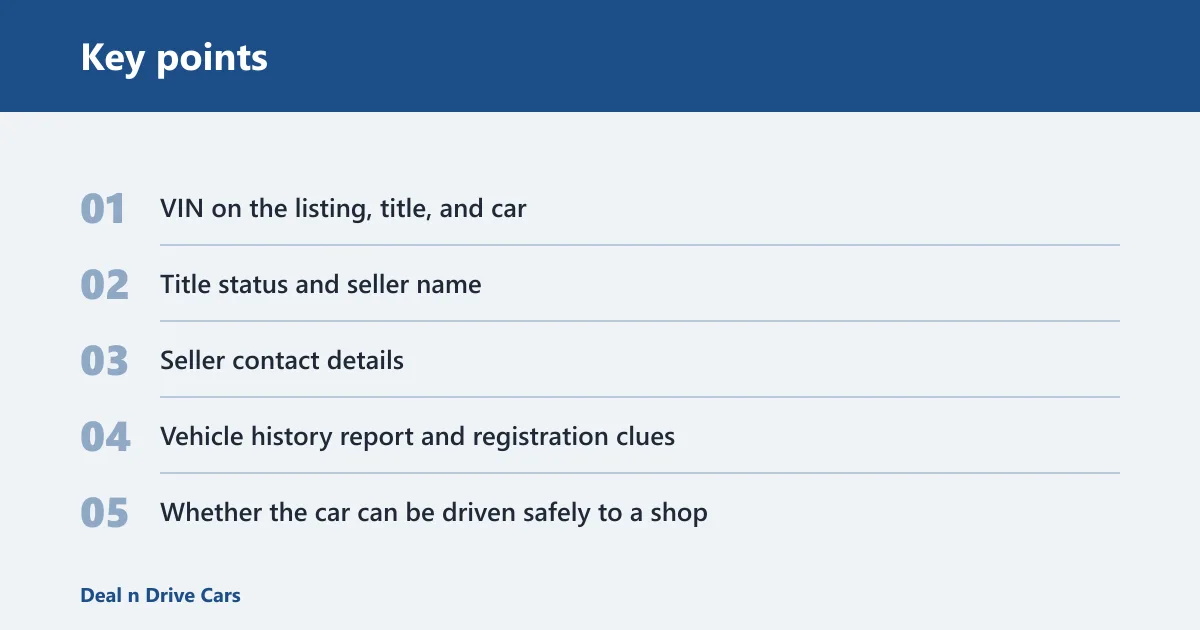
- VIN on the listing, title, and car
- Title status and seller name
- Seller contact details
- Vehicle history report and registration clues
- Whether the car can be driven safely to a shop
- Seller availability at home, work, or another lot
What you’ll need
- VIN, model, mileage, and listing link
- Seller address or workplace location
- Shop address, if you want a shop-based inspection
- Backup times in case the seller cannot meet at the first slot
- Payment method for the inspector or shop
- Inspector contact details, if you are booking directly
How do you ask the seller?
Use direct, polite wording that asks for an independent mechanic or mobile inspector before payment. Keep it normal and specific. Say when you want it done, who pays, and that you are ready to work around the seller’s schedule.
Use a short message
Send something like: “Hi, I’m interested in the car. Before buying, book an independent pre-purchase inspection and test drive, at my expense. Would you be open to a mobile inspector at your place, or to me taking it to a shop?”
Include timing and payment
Ask for a time window, the car’s availability, and whether the seller can be present. Say you will book and pay the inspector yourself. That keeps the request straightforward and lowers the chance of sounding suspicious.
Step 1: screen the listing
- Match the VIN, photos, mileage, and trim details to the car in front of you.
- Ask why the seller is selling, whether there are warning lights, and what repairs have already been done.
- Check the title status and ask who holds the title now.
- Confirm the seller can make the car available for inspection before you set a time.
A vehicle history report helps with records research, but it does not replace a physical inspection. It can show past events. It cannot tell you whether the brakes, steering, suspension, tires, body, paint, rust, underbody, electrical systems, or diagnostics are in good shape today.
Step 2: book the inspection
Book after your first screening call or message exchange, not before it. Set the inspection before any deposit or final payment. Give the seller enough notice to move the car, clear access around it, and be present if needed.
Where should the inspection happen?
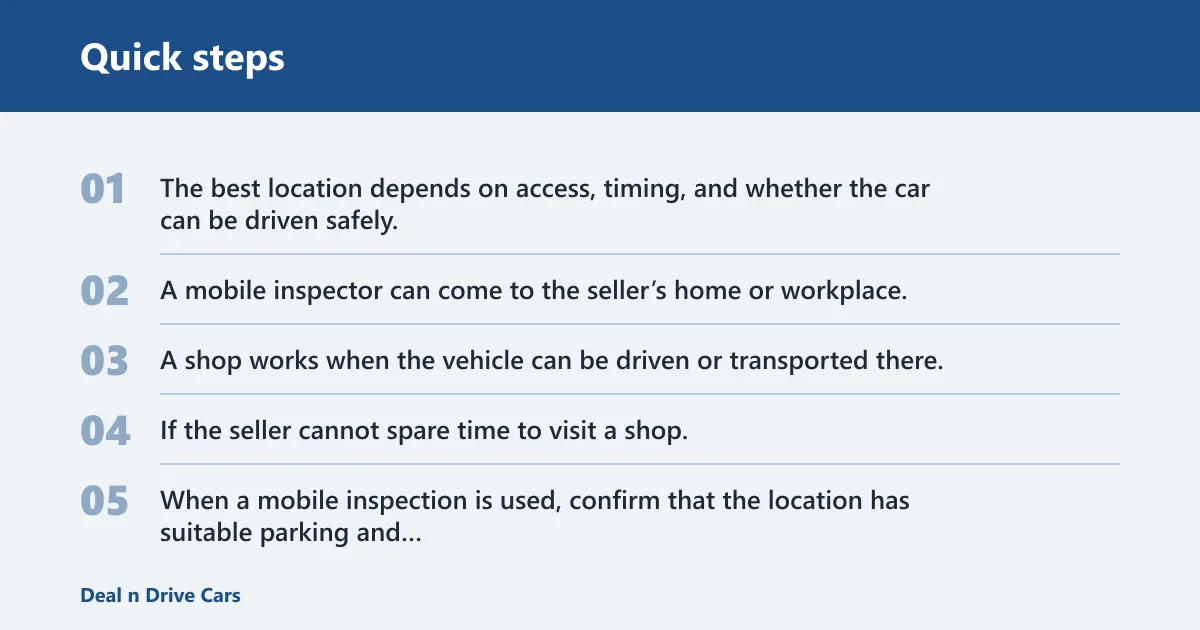
The best location depends on access, timing, and whether the car can be driven safely. A mobile inspector can come to the seller’s home or workplace. A shop works when the vehicle can be driven or transported there. If the seller cannot spare time to visit a shop, a mobile inspection is the cleaner option.
When a mobile inspection is used, confirm that the location has suitable parking and access. AA mobile inspections in some markets can go to the dealer’s or seller’s location, and AA says the inspection time is approximately 75-90 minutes. AA says the inspection site needs suitable access and space around the vehicle, though exact requirements can vary by service and location.
| situation | exact message to send | buyer fallback if the seller says no |
|---|---|---|
| Mobile inspection at seller’s home | “Book an independent mobile inspection at your home address before buying. I’ll cover the cost and can work around your schedule. Does [day/time] work?” | Offer a second time window or ask whether a workplace visit is easier. If the seller still will not allow any inspection at their location, move on. |
| Taking the car to a shop | “I’d like to take the car to my chosen mechanic for a pre-purchase inspection before payment. If you can meet there, I’ll book the slot and pay the inspection fee.” | If the seller will not release the car, ask for a mobile inspector instead. If they refuse both, treat that as a no. |
| Mobile inspector when the seller is unavailable | “If you can’t be there, I can arrange a mobile inspector to visit while you’re at work or away. I only need the car accessible and parked in a suitable space.” | Offer a different hour, or choose another car. Do not send a deposit to hold the slot. |
Step 3: prepare for the inspection
- Confirm who meets whom, where the keys will be, and who will drive the car for the test.
- Tell the seller whether the inspector needs the hood open, the car cold, or extra room around the vehicle.
- Set the test drive plan where legal and safe, with startup, braking, steering, transmission behavior, and varied speeds if possible.
- Add EV battery health testing if the car is electric or a hybrid, and ask about charger or cable availability.
- For EVs and hybrids, ask about any charging faults, warning lights, or degraded range concerns before the visit.
AA offers an optional EV/hybrid main battery test for an added fee, and AA says the main battery in EVs and hybrids is expensive to replace. That extra step matters when battery health affects the price more than cosmetic wear does.
Step 4: review the report
Read the report against the listing and the history records. A good report should cover the body, paint, rust, underbody, brakes, steering, suspension, tires and wheels, electrical systems, diagnostics, and a short test drive where safe and legal. The same source says its inspection includes a 100+ point visual check and emails an independent report the same day.
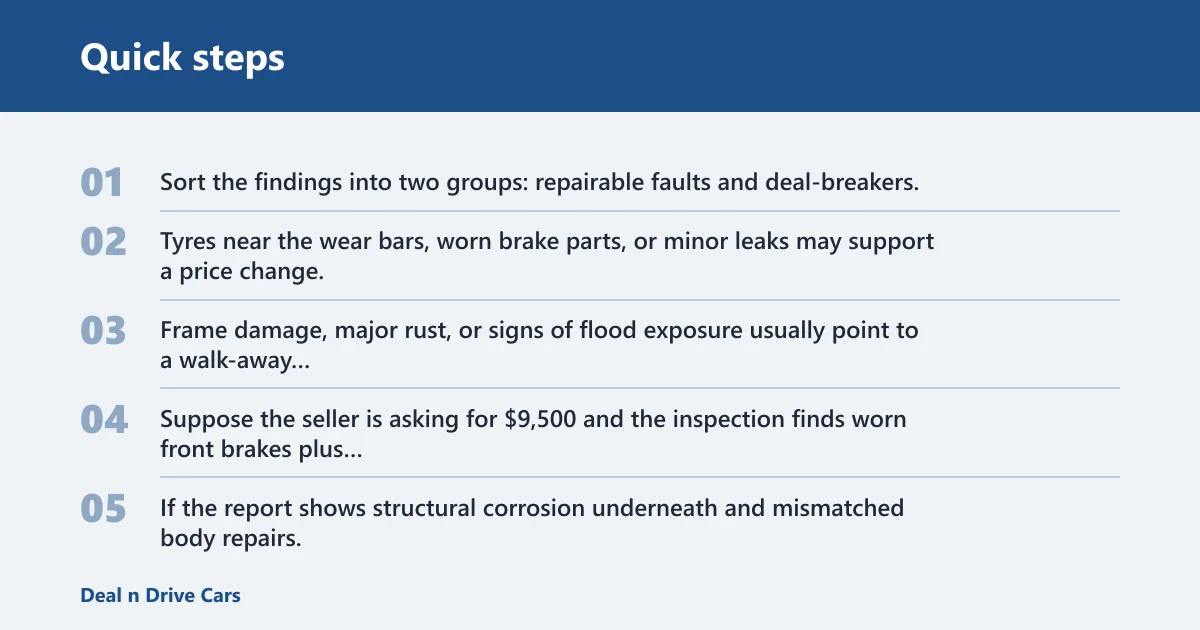
Sort the findings into two groups: repairable faults and deal-breakers. Tyres near the wear bars, worn brake parts, or minor leaks may support a price change. Frame damage, major rust, or signs of flood exposure usually point to a walk-away decision.
Suppose the seller is asking for $9,500 and the inspection finds worn front brakes plus a leaking shock absorber. That is a negotiation point. If the report shows structural corrosion underneath and mismatched body repairs, the safer move is to stop there.
Who pays for a pre-purchase inspection?
The buyer usually pays. That is the normal setup because the inspection protects the buyer’s decision, not the seller’s. Tell the seller this up front so they know you are not asking them to absorb the cost or manage the booking.
AA’s listed pricing is $199 for members and $229 for non-members. Those figures help set expectations when you are comparing a mobile visit with a shop visit or another provider.
What if the seller says no?
If the seller will not allow any independent inspection, treat that as a warning and walk away. If they are uneasy about a shop visit, offer a mobile inspector at their location first. If they say the car is already sold, stop chasing it and move to the next listing.
Try one fallback, then stop
- Offer a mobile inspection at the seller’s home or workplace.
- Offer a different time, especially if access or parking is the issue.
- Ask whether the car can be brought to a shop with the seller’s coordination.
- If none of that works, end the deal.
Common mistakes
- Paying a deposit before inspection access is agreed.
- Relying on a vehicle history report instead of a physical check.
- Booking without confirming who will meet the inspector.
- Assuming the seller will deliver the car to a shop without agreeing on transport first.
- Skipping EV battery checks on a hybrid or electric car.
A common first-timer mistake is to ask for “a quick look” after money changes hands. That weakens your position. Book the inspection first, then decide whether to proceed.
Picture a sedan parked at the seller’s workplace in a lot with no spare space around it. A mobile inspector may still work if the car has room to open doors and move around it. If the lot is too tight, the fallback is a shop-based inspection or a different vehicle.
Frequently asked questions
How do you ask a private seller for a pre-purchase inspection?
Send a short message that names the inspection, says you will pay for it, and asks for either a mobile inspector or a shop visit before purchase. Keep the wording calm and specific. Ask for a day and time instead of a vague promise.
Can you take a private seller’s car to your own mechanic?
Yes, if the seller agrees and the car can be driven or transported safely. Book the slot yourself, confirm who will hold the keys, and make sure the inspection happens before payment. If the seller will not release the car, switch to a mobile inspector.
What if the seller refuses an inspection?
Treat refusal as a strong warning. Ask once whether a mobile inspector is acceptable, then stop if the answer is still no. A seller who will not allow any independent inspection makes it harder for you to verify the car’s condition before you buy it.
Where should the inspection happen: seller’s place or a shop?
Use the seller’s home or workplace when a mobile inspector can get to the car easily. Use a shop when the vehicle can be driven safely and the seller can coordinate transport. Choose the location that makes the inspection possible before money changes hands.
How much notice should you give a private seller?
Give enough notice for the seller to park the car in an accessible spot and make time for the appointment. A same-day booking can work if both sides are free, but one to two days is often easier.