How to Estimate Car Insurance Cost Before You Buy a Used Car
Start with the car’s year, make, model, trim, and body style, then add your driver profile, ZIP code, mileage, and coverage choices. That gives you a workable pre-buy range before you have a VIN. The estimate stays approximate until the full vehicle and driver data are entered.
What you’ll need before you estimate insurance
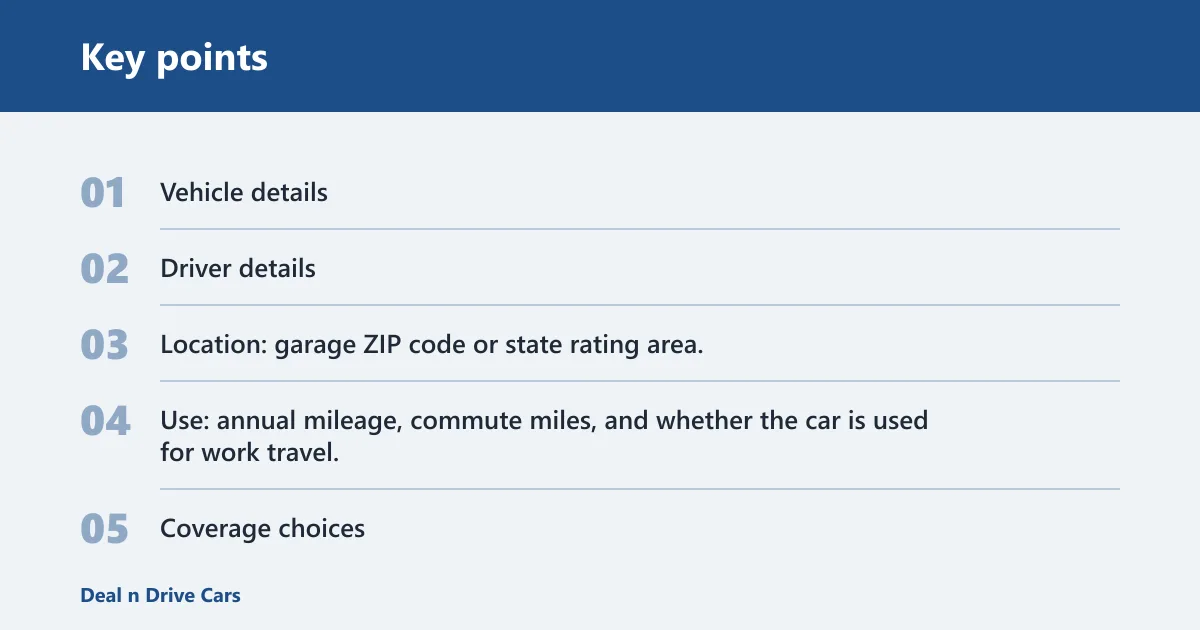
- Vehicle details: year, make, model, trim, body style, and any major equipment differences.
- Driver details: age, years licensed, driving record, and credit-based insurance score where allowed.
- Location: garage ZIP code or state rating area.
- Use: annual mileage, commute miles, and whether the car is used for work travel.
- Coverage choices: liability only or full coverage, plus deductibles and add-ons.
- Quote paths: online quote tool, agent quote, and carrier comparison estimate.
Year, make, model, trim, and body style
Insurers rate a used car by exact version, not by the badge on the trunk. Trim can change equipment, repair cost, and sometimes theft exposure. Body style matters too; a sedan, hatchback, coupe, SUV, and pickup can fall into different rating classes even when they share the same model name.
Driver profile details to gather
Your age, driving history, and experience can move the estimate more than many shoppers expect. A younger driver, a recent ticket, or a recent crash can shift the quote materially. Where permitted, a credit-based insurance score can also affect pricing, so use a realistic profile instead of a best-case guess.
ZIP code, annual mileage, and commute use
Garaging location can change the quote because crime, weather, repair costs, and local claim patterns differ by area. Annual mileage matters too; insurers often price low-mileage use differently from daily commuting. If you drive around that many miles a year, do not enter a much lower number just to make the estimate look better.
Coverage choices to decide first
Set liability-only versus full coverage before you compare cars. Liability-only is usually cheaper, while full coverage adds collision and comprehensive and can raise the premium significantly. For older used cars, full coverage may cost close to what the car is worth, so decide on coverage before you choose the car.
How can I estimate car insurance cost before I buy a used car?
Build a low, mid, and high premium range using the exact year, make, model, trim, ZIP code, and driver profile you expect after purchase. Run liability-only and full coverage separately, then adjust for deductible, mileage, and any financing requirements. Compare at least two quote paths, such as an online quote tool and an agent quote, before you narrow the car list.
Step-by-step estimate range
- List the exact year, make, model, trim, and body style for each car you are considering.
- Choose liability-only and full coverage as separate estimate tracks.
- Set a deductible you could pay tomorrow without stress.
- Enter your real age, driving history, ZIP code, and annual mileage.
- Compare the online quote tool, an agent quote, and a carrier comparison estimate.
- Use the lowest, middle, and highest results to form a pre-buy range.
- Recheck the numbers once you get the VIN from the seller.
Use a range, not a single number
A range is more honest before purchase because the vehicle details are incomplete and the VIN may still be missing. A low estimate can come from a clean record and suburban ZIP code. A high estimate can reflect a young driver, urban garaging, low credit-based insurance score where allowed, or a financed car that needs full coverage.
Try a simple stress test
Say your first estimate is for a compact car in a suburban ZIP code. Now raise the deductible to a level you can actually afford, switch from liability-only to full coverage, and test the same car in a dense city ZIP code. That spread tells you whether the car still fits the budget.
Can you estimate insurance without a VIN?
Yes. You can build a usable estimate without a VIN by using the exact trim and body style, then treating the result as a range instead of a final quote. The VIN is the most accurate vehicle identifier, but it is often unavailable before purchase and usually needed for firm pricing.
How to work around a missing VIN
Use the seller’s listing, window sticker, build sheet, or the vehicle history report to confirm trim and body style. Do not rely on the base model if the car is an uptrim with different equipment. Add the VIN later so the carrier can tighten the estimate and catch equipment differences.
What the VIN changes
The VIN can reveal exact equipment, engine, and body configuration. That matters because the same model name can cover more than one rating class. Two used cars that look alike on a listing page can price differently once the VIN is entered into an insurance quote tool.
Step-by-step pre-buy estimate workflow
Use this workflow before you request a formal quote. It gives you a practical screen for used cars that are likely to be affordable to insure, while still leaving room for a VIN-based final price later.
- List the exact vehicle. Write down year, make, model, trim, body style, and whether it is front-wheel drive, all-wheel drive, or four-wheel drive if that changes the listing.
- Set your coverage track. Compare liability-only and full coverage separately, because the price gap can be large, especially on older cars.
- Choose a deductible. Pick collision and comprehensive deductibles you can pay out of pocket if the car needs repair.
- Enter driver and location data. Use your real age, driving record, ZIP code, and annual mileage.
- Run three estimate paths. Use an online quote tool, an agent quote, and a carrier comparison estimate.
- Recheck after you get the VIN. Update the quote with the exact vehicle identification number before you buy.
Older used cars need a different test
For an older sedan, full coverage can cost enough that liability-only may make more sense. A practical check is to compare annual full coverage cost against the car’s actual market value and repair risk. If the premium is high relative to the car’s worth, the estimate should steer you away from full coverage or away from the car.
Which used cars are likely cheaper to insure?
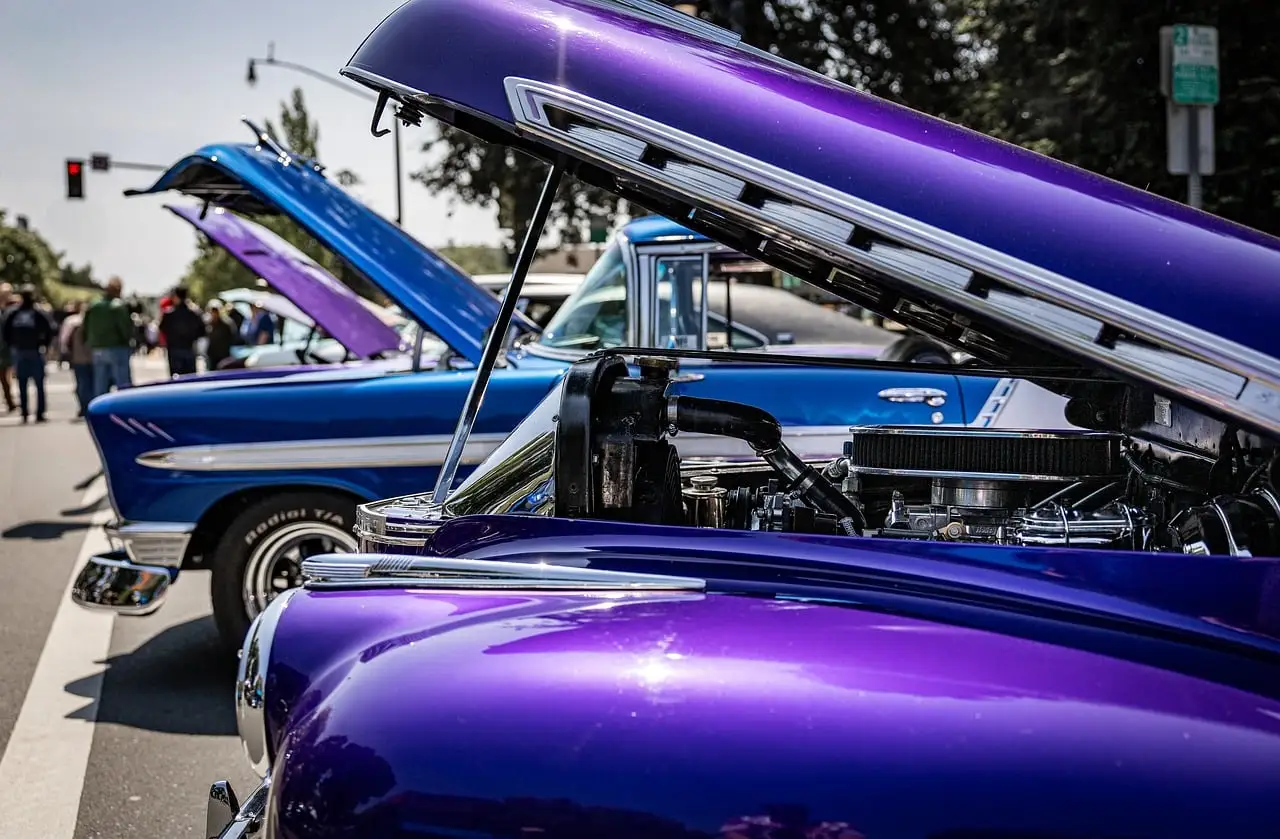
Lower-risk body styles, modest trims, and cars with lower repair costs are often cheaper to insure, but the exact result still depends on driver and location. Sedans and some smaller crossovers often price differently from performance trims, large SUVs, or vehicles with expensive parts. Age can help or hurt depending on coverage.
Body style can move price
A hatchback may price differently from a coupe on the same platform. A pickup with high repair costs or a sporty trim with more powerful equipment can raise the estimate. That is why the exact body style belongs in the estimate before you make an offer.
Trim and repair cost matter
Higher trims often bring larger wheels, advanced cameras, or other equipment that costs more to replace. Those parts can push both collision and comprehensive pricing higher. A base trim and a loaded trim from the same model year should not be treated as the same insurance risk.
Older cars are not always cheaper
Older cars can be cheaper on liability-only, but not always on full coverage. If the car is inexpensive, the coverage premium may be out of line with the vehicle value. If the car has rare parts or a high-theft profile, age alone will not guarantee a low estimate.
| Used-car example | Likely insurance effect | Why it matters |
|---|---|---|
| 2016 Toyota Corolla LE | Often moderate | Modest trim and common parts can keep repair cost manageable. |
| 2018 Honda Civic Si | Often higher | Performance trim can move the rating class and raise the premium. |
| 2015 Ford Escape SE AWD | Varies by ZIP | Body style and all-wheel-drive equipment can change repair cost and claim risk. |
| 2013 BMW 3 Series | Often higher | Parts, labor, and trim level can increase both collision and comprehensive cost. |
Common mistakes when estimating insurance before buying
Most bad estimates come from missing details, not from the quote tool itself. Use the wrong trim, ignore ZIP code, or guess at mileage, and the number can be off by enough to change the buying decision. Financing requirements can also change what you actually need to buy.
- Wrong trim or body style: Verify the exact version, not just the model name.
- Ignoring liability vs full coverage: Compare both, especially for older used cars.
- Fake-low mileage: Use a realistic annual figure based on commute and weekend driving.
- Skipping ZIP code: Garage location can move the quote materially.
- Forgetting state minimums: Coverage rules and minimum limits vary by state.
- Missing lender requirements: Financed cars may need collision, comprehensive, and sometimes gap coverage.
Financing changes the estimate
If you finance the car, the lender may require full coverage and sometimes gap coverage. That can raise the estimate enough to change which cars fit your budget. A cheap purchase price does not help if the required insurance pushes the monthly total past your limit.
Suppose the car is in a dense urban ZIP code
Suppose the car looks affordable in a suburban estimate, but the actual garage address is a downtown ZIP code with higher theft and repair costs. The quote can jump even if the car is unchanged. That is why the ZIP code belongs in the first pass, not after the purchase.
What should I do if I can’t get an exact quote yet?
Use the closest valid estimate you can build, then tighten it after you have the VIN, the full driver profile, and the exact garaging address. If the online quote tool blocks you before purchase, a dealer’s finance office or an independent agent can often help you screen coverage choices without pretending the result is final.
Escalation ladder
- Check the seller listing for the exact trim and body style.
- Run a carrier comparison estimate with your real ZIP code and mileage.
- Ask an agent for a pre-buy range using liability-only and full coverage.
- Get the VIN and rerun the quote before you sign anything.
Prevention
Keep a short list of two or three acceptable cars, each with its own insurance range. That makes it easier to drop a high-cost option before you spend time on a test drive or negotiate a price.
Frequently asked questions
What information do I need to get an insurance estimate on a used car?
You need the vehicle year, make, model, trim, and body style, plus your age, driving record, ZIP code, annual mileage, and likely coverage choice. If the car is financed, include lender-required coverage and any add-ons such as rental reimbursement or gap coverage.
Which used cars are cheapest to insure before I buy?
Commonly lower-cost choices are modest-trim cars with lower repair costs and non-sport body styles, but location and driver profile still matter. A base sedan in a suburban ZIP code may price very differently from the same model in a dense city or with a performance trim.
How much will liability vs full coverage change the quote?
Full coverage is usually more expensive because it includes collision and comprehensive along with liability. The gap can be large on older cars, where the higher premium may exceed the car’s value. Run both versions before you decide which car fits the budget.
What deductible should I assume when estimating insurance cost?
Use a deductible you can pay out of pocket without borrowing. Higher deductibles usually lower the premium, but only if you can cover the repair bill after a claim. For an estimate, pick one figure and keep it consistent across every car you compare.
How do state and driver factors affect a used car insurance estimate?
State minimums, rating rules, and location can change the estimate, and so can age, experience, driving record, and credit-based insurance score where allowed. A young driver in an urban ZIP code can pay far more than an older driver with a clean record in a lower-risk area.