How to Privately Sell a Car With a Loan on It Safely
You can privately sell a car with a loan still on it by getting the lender’s payoff amount, using the buyer’s funds to pay the loan at closing, and releasing the title only after the lien is cleared. Skip that order and the buyer may be left without a clean title while you remain tied to the old debt. This guide covers the exact closing steps, timing, title release, and what to do if the sale price is less than the payoff.
Can you privately sell a car with a loan on it?

Yes, but only if the lender’s lien is satisfied as part of the sale. The lienholder has a legal claim on the title, so the car can change hands, but the title cannot transfer cleanly until the payoff is complete and the lender releases its interest.
What the lien means for your sale
If the loan is still open, the lender’s name usually appears on the title record or on the paper title itself. That means the seller does not have full title control yet. A buyer can agree to purchase the car, but the closing must be built around the payoff amount and lien release.
Negative equity means the loan payoff is higher than the car’s value. That matters because the sale price may not cover the debt, and a private sale can stall unless you bring cash, delay closing, or set up another payoff path.
Get the payoff quote before you list the car
Ask the lender for a lender-specific payoff quote before you meet a buyer. A payoff quote usually includes the amount due on a given date, any per-diem interest, and a period when it is valid. That window matters because the amount changes every day the loan remains open.
Do not use the regular loan balance from the monthly statement as a closing figure. The payoff amount is what matters for the sale, and it can be higher than the statement balance because of interest, fees, or timing.
How to request the quote
- Call the lender or log in to the loan portal and request a payoff quote for a target closing date.
- Confirm whether the payoff includes per-diem interest and when it expires.
- Ask how the lien release is issued after payoff: paper title update, electronic release, or mailed satisfaction letter.
- Verify where the funds must be sent and what payment types the lender accepts.
Suppose the payoff quote is valid through Friday and the sale closes the following Monday. The per-diem interest can add enough to create a shortfall. That is why the quote and the closing date need to match closely.
📊 Average new-car loan length is about 70 months today. Source: The growing problem of ‘permanent car loans’: Why the math of car….
How do I pay off my loan before selling a car privately?
The cleanest method is to request a current payoff quote, collect the buyer’s money at closing, send the payoff to the lender exactly as instructed, and wait for the lien release before treating the sale as complete. The order matters because the lender controls title release.
Payoff timing and closing order
For a private sale, a careful sequence is: verify the payoff, agree on price, collect funds, send the payoff, confirm receipt, then complete the title transfer steps required where you live. If the lender allows only certified funds or a wire, use that method exactly as written in the payoff instructions.
A common first-timer mistake is using a cashier’s check without confirming the lender’s cutoff time. Some lenders post payments only on business days, which can leave the payoff short for one extra day of interest.
What documents to collect
- Bill of sale with sale price, VIN, odometer reading, and both parties’ identities
- Current payoff quote
- Lien release or payoff confirmation from the lender
- Title paperwork required by your state
- Government ID for buyer and seller
- Any DMV transfer or release-of-liability forms
How do you close the sale when the lender still holds the title?
Closing depends on title type. With a paper title, the lender may hold the physical title or require payoff before it mails a signed release. With an electronic title, the lender usually updates the record after the loan is paid and the state or DMV system shows the lien as released.
Who pays whom at closing
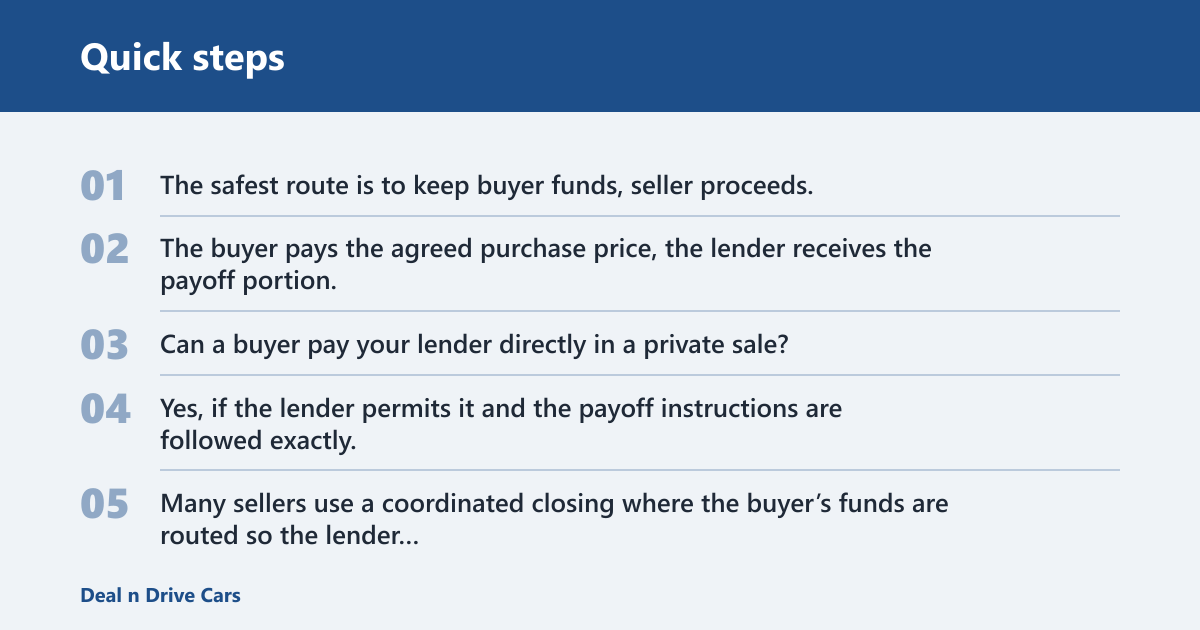
The safest route is to keep buyer funds, seller proceeds, and lender payoff separate rather than treating them as one lump sum. The buyer pays the agreed purchase price, the lender receives the payoff portion, and the seller receives any remaining amount only after the payoff is secured.
Can a buyer pay your lender directly in a private sale? Yes, if the lender permits it and the payoff instructions are followed exactly. Many sellers use a coordinated closing where the buyer’s funds are routed so the lender gets paid first and the seller receives any remainder only after the lien is cleared.
Paper title vs electronic title
Paper-title states may require the lender to mail the signed title or lien release after payoff. Electronic-title states often rely on an electronic satisfaction filing, which can take time to appear in the DMV system. In either case, do not assume the title is free for transfer until the release is confirmed.
| Scenario | Who pays whom | When the lien release happens | Documents to collect | Failure mode to avoid |
|---|---|---|---|---|
| Sale price above payoff | Buyer pays lender the payoff amount; buyer pays seller the surplus | After the lender receives and posts the payoff, then issues the release | Bill of sale, payoff quote, proof of payment, lien release, title forms | Paying the seller first and leaving the loan open |
| Sale price equal to payoff | Buyer pays lender the full payoff amount | After payoff clears and the lien is satisfied | Bill of sale, payoff quote, payment receipt, lien release, DMV forms | Using an expired payoff quote with extra per-diem interest due |
| Sale price below payoff | Buyer pays lender the sale proceeds; seller pays the shortfall to the lender | Only after the lender receives the full payoff amount | Bill of sale, payoff quote, shortfall receipt, lien release, state forms | Trying to transfer the car before the shortfall is covered |
What if the sale price is less than the loan payoff?

If the sale price is lower than the payoff, there is negative equity and the deal will not cleanly close unless someone covers the gap. That shortfall can be paid by the seller at closing, by a buyer-funded structure that still satisfies the lender, or through a delayed closing that gives the seller time to raise cash.
Seller cash, buyer financing, or delay
The simplest fix is for the seller to bring cash to closing and pay the difference directly to the lender. If the buyer is financing the purchase, their lender may fund the sale only if the lien can be cleared immediately. Otherwise, the sale may need to wait until the shortfall is covered.
About one in four underwater trade-ins carry more than $10,000 in negative equity. That makes the gap too large to ignore in a private sale, especially when the payoff quote has a short validity window and interest keeps ticking.
Why this blocks a clean transfer
A lender will not release the lien until the payoff is satisfied in full. If the buyer hands over the purchase price but the lender still has money due, the title remains tied to the loan. That leaves the buyer exposed and the seller still responsible for the debt.
How do I handle the title and DMV transfer after payoff?
After payoff, the lender should issue a lien release or update the title record, and you then complete the DMV transfer steps your state requires. Filing deadlines vary by state, and many states also require a release-of-liability filing after the sale so the seller is no longer tied to parking tickets, tolls, or later disputes.
What to keep after closing
- Signed bill of sale
- Copy of the payoff quote
- Proof the lender received the payoff
- Paper lien release or electronic release confirmation
- Copy of the title transfer form
- Release-of-liability filing receipt, if your state uses one
State rules still matter
Some states want the title assignment completed within a set number of days, while others focus on notice forms filed after the sale. If the car crosses state lines, check both states’ transfer and title-reassignment rules before closing. The lender’s lien release does not replace DMV paperwork.
How can you reduce fraud and payment risk in a liened private sale?
Use verified lender contact details, confirm the payoff quote directly with the lender, and do not rely on screenshots from a stranger. Fraud risk rises when a buyer or middleman sends fake payoff instructions, rushes the closing, or asks for funds to move outside the lender’s verified process.
Payment methods and timing risk
Cashier’s checks can be delayed by bank verification, and wires can be difficult to reverse once sent. That is why a coordinated closing with lender confirmation is safer than handing over the keys and hoping the payment clears later. Hold the vehicle and title paperwork until the lender confirms receipt.
Can you buy a car from a private seller that still has a loan? Yes, but only if the seller’s lender is paid and the lien release process is documented. The buyer should not accept a vague promise that the title will arrive later without some proof of the payoff terms and release timing.
Proof of payoff and release
Ask for the lender’s payment receipt or confirmation number the same day funds are sent. Then wait for the lien release, mailed title, or electronic satisfaction update your state recognizes. If the lender says the release takes several business days, build that delay into the closing plan.
How do long loan terms make private sales harder?
Long loan terms make it more likely that the car is still underwater when you try to sell it. Average new-car loan length is about 70 months today, and about one in four new-vehicle borrowers now takes an 84-month-or-longer loan. Longer terms slow equity building and can keep the payoff above the car’s value for years.
Why depreciation matters
Average new-vehicle transaction prices rose 31% since 2019, while a typical new car loses nearly half its original value by four years. The average trade-in age for vehicles with negative equity is four years, which shows how often depreciation and long financing terms meet at resale time.
How the debt can follow the next car
Negative equity can create a cycle of carrying debt into the next vehicle. Long loan terms such as 72, 78, and 84 months are common enough to be discussed as standard, but they can leave less room to sell privately without bringing cash to close the gap.
Frequently asked questions
Can you privately sell a car with a loan on it?
Yes, if the lender’s payoff is satisfied and the lien is released as part of the sale. The buyer does not get a clean title until that happens, so the closing must be built around the payoff quote, payment timing, and DMV transfer rules.
How do I pay off my loan before selling a car privately?
Request a lender-specific payoff quote, confirm the per-diem interest and validity window, and use the buyer’s funds or your own money to pay the lender at closing. Keep proof of payment, then wait for the lien release before treating the transfer as finished.
What if I owe more than my car is worth when I sell it?
You have negative equity, which can block a clean private sale unless the shortfall is covered. The usual fix is seller cash at closing, but buyer financing or a delayed closing can work if the lender still receives the full payoff amount.
Can a buyer pay my lender directly in a private sale?
Yes, many private sales do that when the lender allows it. The buyer’s money should go to the lender under the payoff instructions, not to the seller first, and the seller should wait for proof that the lien has been cleared.
How do I handle the title if my lender still has a lien?
Assume the title is not ready for free transfer until the lender releases the lien. Paper titles and electronic titles work differently, but both require a verified payoff and a release record before the DMV transfer can be completed cleanly.
How do I complete a safe private sale when the payoff is still outstanding?
Use a verified payoff quote, confirmed lender payment instructions, and a closing sequence that pays the lender first. Collect the bill of sale, proof of payoff, lien release, and state transfer forms, then file any release-of-liability notice required by your state.