Is an instant cash offer really guaranteed for a car?
An instant cash offer is only guaranteed if your car matches every stated condition and the title, paperwork, and inspection all verify it; one mismatch can lower or void the price. Miss a requirement, and you can lose time, see a lower offer, or face a failed sale at pickup. This guide explains what “guaranteed” covers, what it does not, and the checks that matter before you accept.
Why Online Estimates Change After Inspection
An instant cash offer is usually a pre-inspection estimate based on the details entered online, not a final locked price. It can be treated as firm only inside a validity window and only if the vehicle still matches the description when the buyer inspects it and checks the title.
Online estimate versus final offer
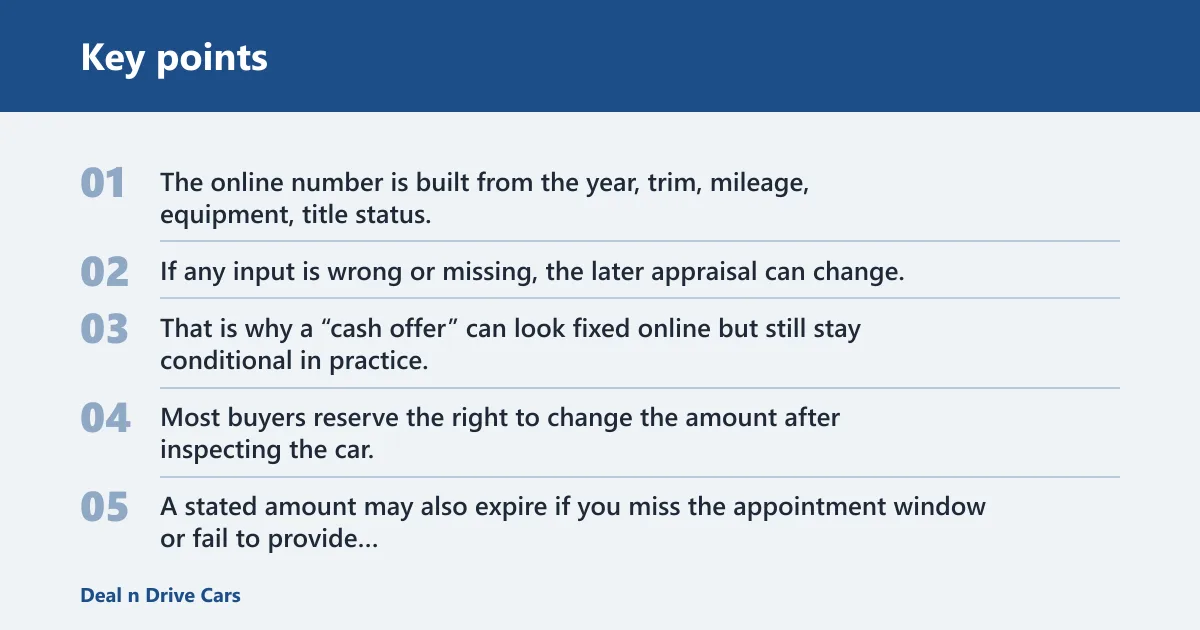
The online number is built from the year, trim, mileage, equipment, title status, and condition details you enter. If any input is wrong or missing, the later appraisal can change. That is why a “cash offer” can look fixed online but still stay conditional in practice.
Why terms can change before payment
Most buyers reserve the right to change the amount after inspecting the car, verifying the VIN, and reviewing payoff paperwork. A stated amount may also expire if you miss the appointment window or fail to provide required documents on time. Price shifts in the market can add pressure too.
How validity windows work
Many offers include a time limit in days, often tied to the inspection appointment and document deadlines. If the offer lapses, the buyer may reprice the car using current market data. That matters when values move or when you delay pickup for a week or two.
Is an instant cash offer for a car really guaranteed?
Only sometimes. A true guarantee means the buyer has committed to the price after confirming the car, title, and paperwork match the online submission. In most cases, the offer is conditional until inspection and verification are complete, so the word “guaranteed” has narrow limits.
When the offer is effectively locked in
The price is closest to locked in when the seller disclosed accurate mileage, condition, title status, and equipment; the VIN matches; and no new damage appears before the inspection. If the buyer’s written terms say the offer is valid for a set period, within set conditions, that is the strongest form of protection.
What still has to check out
Even a strong online quote still depends on physical inspection, odometer reading, title review, and identity verification. If the car has warning lights, accident damage, or a title issue that was not disclosed, the final payout can change. “Guaranteed” does not usually mean “no questions asked.”
Where sellers misread the word guaranteed
Many sellers assume the online number survives every later check. It usually does not. The better test is simple: ask what must remain true for the offer to stay valid, what documents are required, and what inspection findings can change the number. If those terms are vague, the offer is not truly fixed.
What can change the offer after inspection?
Inspection can lower the payout when the car’s real condition, mileage, or title status does not match the online submission. Buyers also adjust for missing equipment and costs they will need to spend before reselling the car. The difference is often modest, but it can be larger on older or rougher vehicles.
Mileage and odometer differences
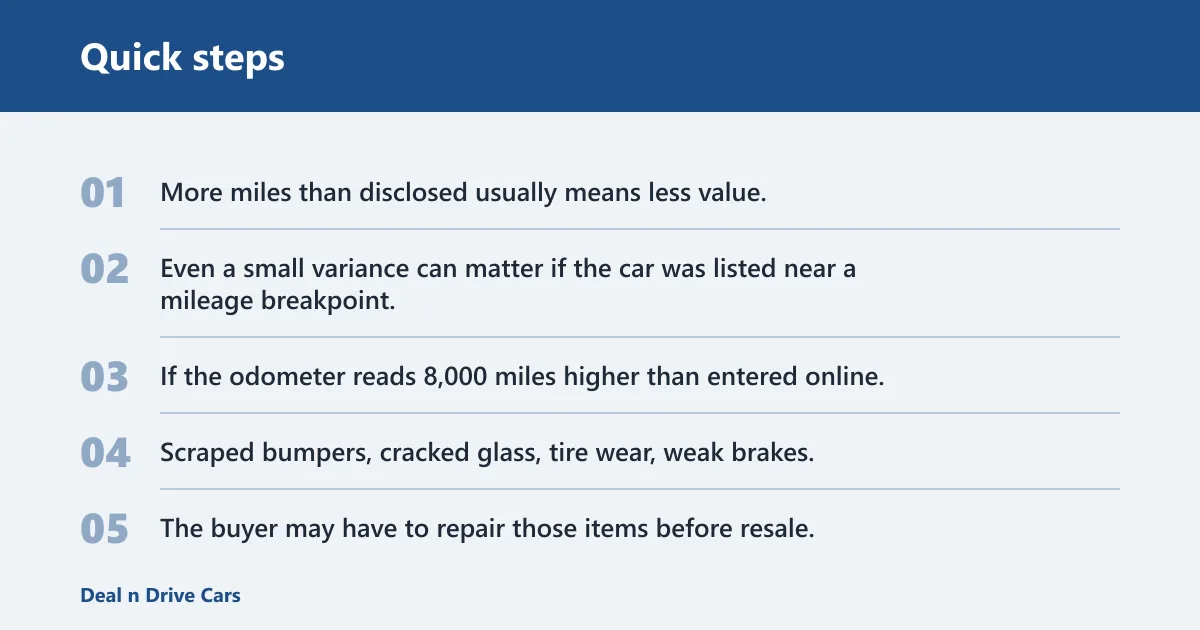
More miles than disclosed usually means less value. Even a small variance can matter if the car was listed near a mileage breakpoint. If the odometer reads 8,000 miles higher than entered online, the buyer may reprice it because the car will likely bring less at auction or retail.
Body damage, warning lights, and wear
Scraped bumpers, cracked glass, tire wear, weak brakes, and dashboard warning lights are common reasons for a lower offer. The buyer may have to repair those items before resale. A lit check-engine lamp often leads to a sharper adjustment because it points to diagnosis time and possible mechanical repair.
Missing keys, accessories, or trim mismatches
Two keys may have been disclosed online, but only one arrives at inspection. The buyer can deduct replacement cost. The same applies to floor mats, charging cables, cargo covers, wheels, or trim packages that were listed online but are absent or different in person.
Reconditioning costs and accident history
Reconditioning covers cleaning, reconditioning, repairs, and any work needed to make the car saleable. Prior accident damage, frame repair, or undeclared paintwork can lower the offer because the buyer must absorb the risk and the repair bill. A common first-timer mistake is assuming “fixed” means “worth full price.”
How title status affects the final payout
Title status can change the payout as much as condition. A clean title is simpler, while a lien, payoff delay, or ownership mismatch can slow the sale or reduce the amount you receive at closing. The buyer must know who owns the car and who gets paid first.
Clean title versus lien payoff
A clean title usually speeds the transaction because there is no lender to satisfy. If a lien exists, the buyer must confirm the payoff amount and send funds to the lender before releasing any leftover equity to you. If the payoff figure is higher than expected, the net payout can shrink fast.
Negative equity and lender payoff timing
Negative equity means you owe more than the car is worth. You can still get an instant cash offer, but the final payout may be zero to you, or you may need to bring money to close the sale. Timing matters because some lenders may need payoff instructions, account verification, and a few business days to clear the title. (consumer.ftc.gov)
Owner verification and title matching
The name on the title or lender records must match the seller’s identity, or the buyer may pause the sale. If a spouse, estate, or company owns the car, extra documents may be needed. Title and VIN mismatches are especially common blockers because they prevent a clean transfer.
Do you need to bring the car in after the online offer?
Usually yes, because the buyer still needs to inspect the car, verify the VIN, and confirm the title and seller identity. The online offer is often the starting point, not the finish line. If the appointment slips past the validity period, the quote can be reissued or reduced.
What the inspection is checking
The inspection confirms condition, odometer reading, body damage, warning lights, tires, brakes, and title or VIN matching. The buyer is trying to confirm whether the car matches the disclosure form. If the car arrives with new damage or undisclosed issues, the final amount can change.
When paperwork must be completed
Paperwork usually has to be completed at or before pickup. That can include title signing, lender payoff forms, identification, and registration details. If the seller cannot produce required documents, the buyer may postpone the sale or let the offer expire.
How timing affects offer expiration
Inspection appointment timing matters because most offers have a deadline. A delay of a few days may not matter for one car, but it can matter if market values shift or the paperwork window closes. If the appointment is missed, the original number may no longer be available.
When an instant cash offer is truly locked in
An instant cash offer is generally locked in only when the online disclosure matches the car, the inspection supports that condition, and the title and payoff information are in order enough to close. Below is a practical checklist that shows what was known online, what inspection can verify, and what can still change the payout.
When an instant cash offer is truly locked in
| What was disclosed online | What inspection can verify | What can still change the final payout |
|---|---|---|
| Year, trim, VIN, mileage, and listed equipment | VIN plate, odometer reading, trim badges, factory options | Mileage variance, trim or options mismatch |
| Accident history and body condition | Paint matching, panel gaps, frame clues, visible damage | Undisclosed collision repair, new dents, glass damage |
| Warning lights, tire wear, brake condition | Dashboard lights, tread depth, pad wear, test-start checks | Mechanical issues, worn tires, brake replacement costs |
| Keys, accessories, and add-ons | Spare keys, charging cables, mats, covers, wheels | Missing keys or accessories, aftermarket parts not listed |
| Title status and payoff details | Title name, lienholder, payoff amount, owner ID | Negative equity, payoff timing, title mismatch, missing title |
A quick scenario to make it concrete
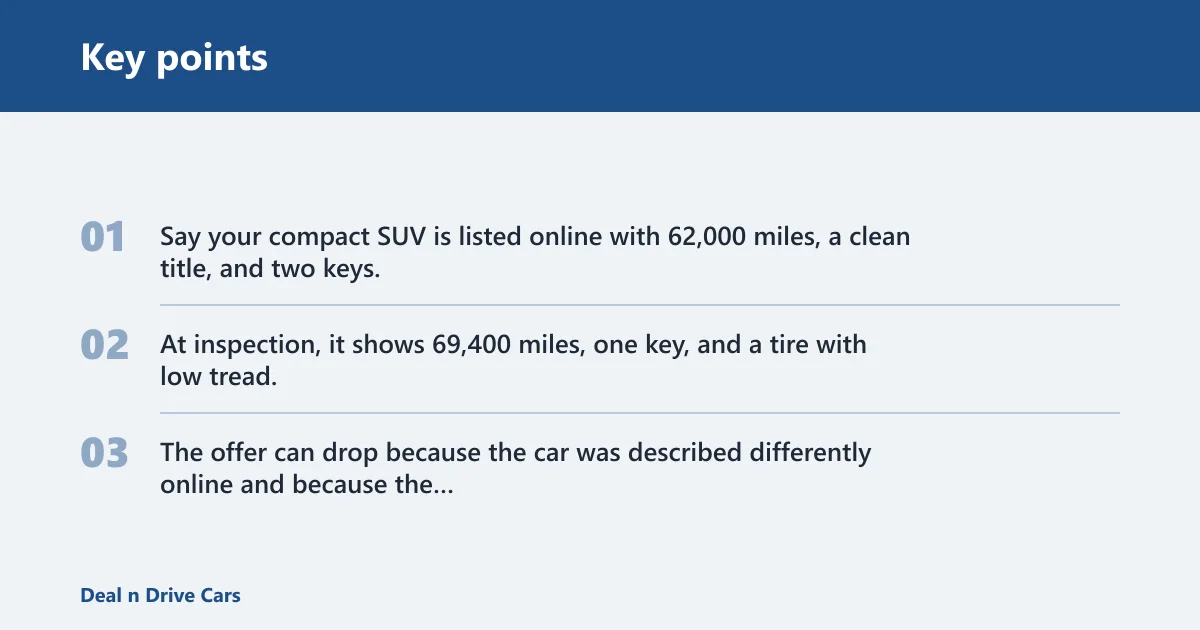
Say your compact SUV is listed online with 62,000 miles, a clean title, and two keys. At inspection, it shows 69,400 miles, one key, and a tire with low tread. The offer can drop because the car was described differently online and because the buyer now faces replacement and reconditioning costs.
What paperwork and disclosures you should prepare
Bring the title if you have it, registration, government ID, and any lender payoff information. Maintenance records, accident disclosure, and notes about modifications also help. Clear paperwork makes the inspection easier and reduces the chance of a last-minute price change or delay.
Paperwork checklist
- Vehicle title or lienholder information
- Registration
- Government-issued photo ID
- Payoff statement or lender account number, if financed
- Service records, if available
- Any documents showing ownership changes or name corrections
Disclosure checklist buyers expect
- Maintenance records that support the car’s condition
- Accident disclosure, even if repairs were completed
- Modifications such as wheels, suspension, tint, or tuning
- Warning lights on the dash
- Tire wear and brake wear
How to protect the offer before inspection
Use the exact VIN, enter the current mileage, and disclose known damage, modifications, and title status. Take photos of the odometer, dashboard lights, tires, and any cosmetic damage before the appointment. If the buyer later questions condition, that photo set helps show what was disclosed up front.
Frequently asked questions
How accurate is a cash offer before inspection?
It is usually accurate only within the facts you entered online. The closer your disclosure is to the car’s real condition, the smaller the gap should be after inspection. If mileage, trim, or title status is off, the offer can move materially once the buyer verifies the vehicle.
What paperwork do I need for an instant cash offer?
Most sellers need the title or payoff details, registration, and a government-issued ID. If the car has a lien, bring lender information and any payoff statement. Some buyers also ask for service records, especially if the car has recent maintenance or prior repair work.
Can I still get an instant cash offer if I owe money on the car?
Yes. A lien does not usually block an offer, but it does affect how the sale closes. The buyer must confirm the payoff amount and lender details. If you owe more than the car is worth, you may need to cover the difference to complete the transaction.
Why did my online cash offer drop in person?
The most common reasons are higher mileage, undisclosed damage, warning lights, missing keys, or options that do not match the online entry. The buyer may also reduce the price for reconditioning or payoff complications. A drop often means the car did not match the assumptions behind the online quote.
Does an instant cash offer expire?
Yes, many do. The validity period may be only a few days, and it can end sooner if an inspection or document deadline is missed. If the offer expires, the buyer may re-evaluate the car based on current market data and the latest condition report.
How fast do you get paid after accepting a cash offer?
Payment is often quick after final acceptance and verification, but the exact timing depends on title status and lender payoff steps. If the title is clean, the close can sometimes be same day or soon after pickup. If a lien exists, lender processing may slow the release of funds.