What Do You Need for an Instant Cash Offer on a Car?
You usually need the car’s VIN, exact mileage, trim, condition, photos, and basic title status to get an instant cash offer; to close the sale, you also need the title or payoff details, ID, and any lender or lien paperwork. Missing or hidden details can shrink the offer, delay payment, or stop the sale at signing. This guide separates the documents and photos needed for a quote from what you need later to finish the deal without surprises.
This guide is part of our Instant cash offer for your car: how it works series.
What an instant cash offer needs
An online cash offer usually starts with basic vehicle data and a few photos. The quote stage is built for speed, so the buyer needs enough detail to identify the exact car and judge its condition. Final payout can require more paperwork, especially if the car has a loan or the title is not ready.
What the quote stage usually asks
Expect to enter the year, make, model, trim, VIN, and current mileage. Those details identify the exact version of the car, not just the badge on the hood. A 2.0T sedan and a base sedan can price differently even if they look similar from the outside.
Most quote forms also ask about condition, damage, warning lights, and whether the car has aftermarket parts or modifications. Some systems ask for registration state and plate details to help confirm the vehicle identity. Photos often narrow the gap between a rough estimate and a tighter offer.
What can wait until payout?
Paperwork that proves ownership and clears the transfer often waits until the sale is accepted. That often includes the title, lender payoff details if there is a loan, and identity verification at closing. If the car is financed, the quote may stay preliminary until the lienholder amount is confirmed.
In some cash-offer programs, the request is free, there is no commitment before closing, cancellation is allowed before closing, and sellers may get two written offers within a few business days. Even then, the final amount can still depend on what the documents and photos show.
Cash offer checklist table
| Needed for quote vs. needed for payout | Common failure points and fixes |
|---|---|
| Needed for quote: year, make, model, trim, VIN, current mileage, basic condition details | VIN typo, wrong trim, or stale mileage can distort the first number. Copy the VIN from the dash or door label and enter the latest odometer reading. |
| Helpful for quote: registration state, plate or tag details, photo set, notes on modifications, warning lights, cosmetic damage | Incomplete photos often trigger follow-up requests. Include front, rear, both sides, interior, dashboard, odometer, VIN, and damage photos. |
| Needed for payout: vehicle title or title status, seller ID, name match, lien release or lender payoff data, closing paperwork | Name mismatches, missing lien info, or an unavailable title can delay signing. Resolve exact owner name and lienholder details before appointment day. |
| Needed for payout in loan cases: lender name, payoff amount, account number if requested, instructions for sending funds | Payoff quotes expire. Ask the lender for a current payoff amount that includes the date the buyer plans to fund the deal. |
| Often reviewed before final price: mechanical condition, cosmetic damage, warning lights, aftermarket parts, rebuilt or salvage history | Hidden issues found later can change the offer. Disclose them early so the first number is closer to the closing number. |
Do you need the title?
You often need the title to finish the sale, but not always to request the first offer. A clean title proves ownership and lets the buyer verify that no lien remains, or that any lien has already been handled. If the title is electronic or held by a lender, the process usually shifts to payoff and release steps instead of a paper handoff.
Clear title basics
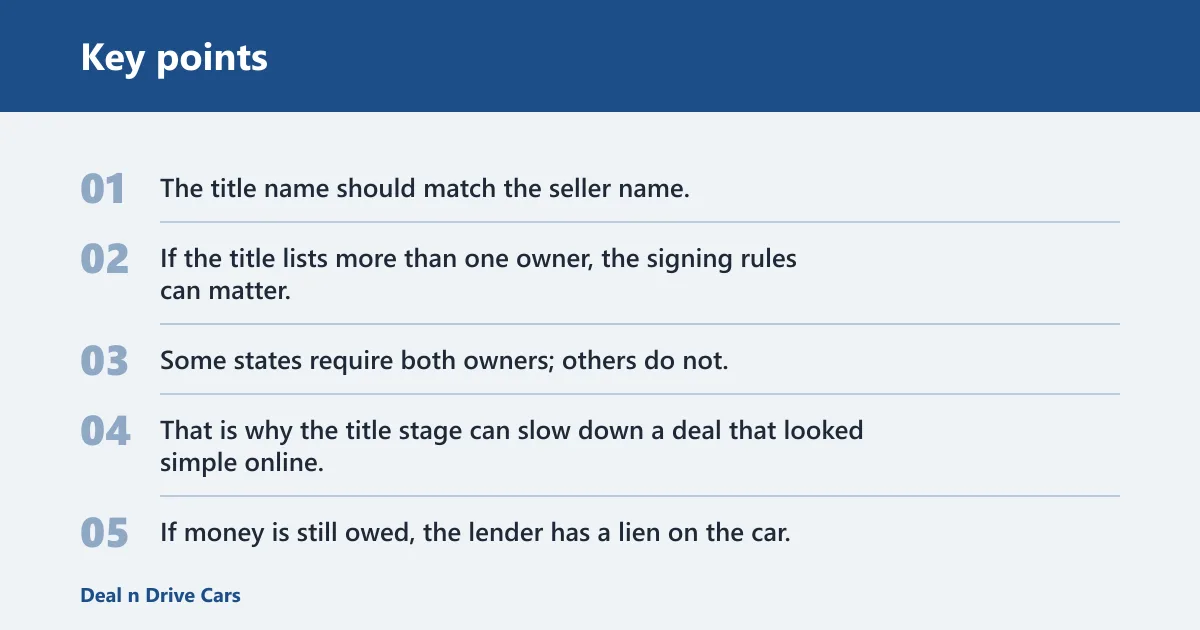
The title name should match the seller name, or the seller should be able to prove legal authority to transfer the car. If the title lists more than one owner, the signing rules can matter. Some states require both owners; others do not. That is why the title stage can slow down a deal that looked simple online.
When a lien changes the process
If money is still owed, the lender has a lien on the car. The buyer needs the payoff amount, lender name, and any account details needed to request a payoff statement. The payout is often split so the lender is paid first and the seller receives any remaining equity.
Say your sedan is worth $14,000 and the payoff is $9,600. The net before fees or taxes tied to the transfer would be about $4,400. If the payoff is higher than the offer, you may need to bring money to closing or roll the balance into another arrangement.
Electronic title vs. paper title
Some states use electronic titles, so there may be no paper document in your hand. That does not block a sale by itself. It changes how the buyer verifies ownership and how the lien release or transfer is completed. Out-of-state registration can add another layer if the title record and current registration do not line up cleanly.
Inherited cars and rebuilt-title cars need extra attention. An inherited car may require probate or a transfer affidavit, depending on the state. A rebuilt title can still be sellable, but the history should be disclosed because it can affect value and buyer acceptance.
What car details affect the offer?
The offer amount changes with the exact car, not just the model name. VIN, mileage, trim, condition, and disclosed damage all affect pricing. The buyer uses that data to decide whether the car is a clean retail candidate, a wholesale unit, or one that needs repairs before resale.
VIN, mileage, and trim
The VIN is the 17-character identifier that decodes trim and equipment. It must match the car being offered. Mileage should be current and accurate because it materially affects valuation. A car with about 42,000 miles can price very differently from the same car with about 112,000 miles. (Nhtsa)
Condition, damage, and warning lights
Mechanical problems, cosmetic damage, warning lights, and modifications can all move the offer. A check-engine light, a cracked windshield, missing trim, or lowered suspension should be disclosed. Hidden issues often show up at verification and can change the price after the first quote.
Picture a compact SUV with a clean interior but a dashboard airbag light on. If that warning light is not listed up front, the first offer may look better than the final one. Once the issue is visible in photos or inspection, the price can be revised.
Photos that affect pricing
A useful photo set includes the front, rear, both sides, interior, dashboard, mileage, VIN, and any damage. Good lighting matters. Blurry or partial images can trigger rework because the buyer cannot confirm condition, options, or identity from incomplete photos.
- Take the VIN photo from the dash or door-jamb label.
- Take a clear odometer photo with the mileage visible.
- Photograph front, rear, both sides, and any damage.
- Photograph the interior, seats, and dashboard warning lights.
- Include modifications, missing parts, or worn areas that could change value.
What if you still owe money?
You can still get an instant cash offer if the car has a loan. The key extra inputs are the lender name, payoff amount, and any account details needed to verify the balance. The sale only closes cleanly when the buyer knows exactly how much must be paid to release the lien.
Payoff amount and lender info
Ask the lender for a current payoff quote, not just the regular monthly balance. The payoff amount can include interest through a specific date, so it may change if closing slips. If the lender needs a request form or a secure phone verification, gather that early.
Negative equity
Negative equity means the payoff is higher than the offer. That does not always stop the sale, but it does change the math. The difference has to be covered somehow, either by the seller at closing or through another approved arrangement.
A common first-timer mistake is bringing the VIN and photos but waiting until the last minute to call the lender. That delay can add days if the payoff statement takes time or if the buyer needs the exact lien release instructions.
How payoff affects net proceeds
The buyer usually sends the lender the payoff amount first, then pays the seller any remaining balance. If the title is held electronically, the lender may need to confirm release after funds clear. That is why payoff details can matter more than the cosmetic condition when the car is financed.
What happens after you submit the offer?
After submission, the buyer may verify the details with submitted photos, a document review, or an in-person inspection. The preliminary number is based on the information you entered. The final number can change if the car’s condition, title status, or mileage does not match what was entered.
Review or inspection
Some offers are verified from submitted details first, then confirmed later. Others require an inspection before the buyer stands behind the price. If the inspection shows mismatched trim, undisclosed body damage, or a different odometer reading, the quote can be revised.
Why the amount can change
The most common reason for a price change is inaccurate or incomplete information. Wrong trim, a missing photo of a dent, or an older mileage entry can all shift the value. Title issues can also stop payment even when the offer itself looked fine.
What to correct before accepting
Check the VIN, mileage, title status, and photo set before you accept anything. Correcting those items early is easier than reopening the file after a problem appears. If the car has a loan, confirm the payoff number matches the date you expect to close.
How long does an offer last?
Instant cash offers usually have an expiration window, and the amount can change if the car details change before acceptance. Some programs give you time to review the number, while others require a fresh submission if the vehicle condition, mileage, or title status changes. If the offer lapses, you may need to resubmit updated information.
Expiration windows
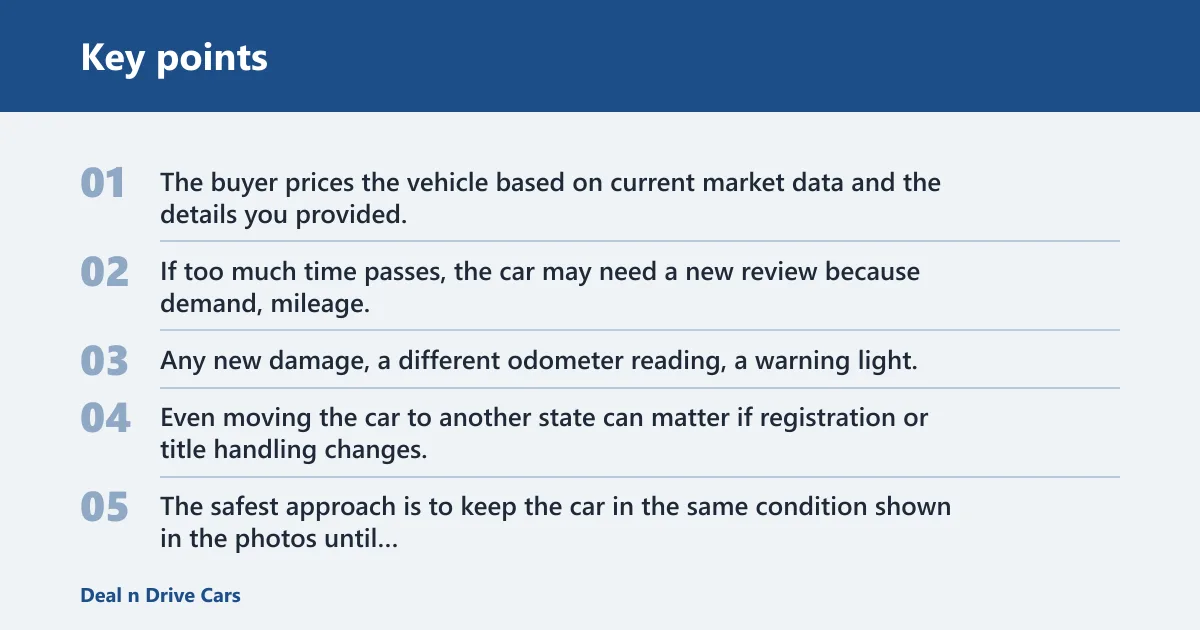
An offer is not a permanent quote. The buyer prices the vehicle based on current market data and the details you provided. If too much time passes, the car may need a new review because demand, mileage, or condition may no longer match the original assumptions.
What can change before acceptance?
Any new damage, a different odometer reading, a warning light, or a title issue can change the amount. Even moving the car to another state can matter if registration or title handling changes. The safest approach is to keep the car in the same condition shown in the photos until closing.
When to resubmit details
Resubmit if the car gets repaired, damaged, driven significantly more miles, or re-registered in another state before the sale closes. That keeps the offer aligned with the actual vehicle. A stale quote is one of the fastest ways to create friction at payout.
Some cash-offer programs also set a decision window for the seller. In one common setup, the buyer provides two written offers within a few business days, the seller gets about 5 days to decide, and the closing date can be 21 to 60 days out. That structure is meant to give time for review without freezing the process indefinitely.
Frequently asked questions
What documents do I need for an instant cash offer on my car?
For the quote, you usually need the VIN, mileage, basic vehicle details, and photos that show condition. To close, you also need the title or lien details, seller ID, and any lender payoff paperwork. If the title is electronic or out of state, expect extra verification steps.
Do I need my car’s title to get an instant cash offer?
Not always for the first quote. But you usually need title or ownership proof to complete the sale. If the car has a lien, the lender payoff details may stand in for the paper title until the lien is released. Name matching matters either way.
Can I get an instant cash offer if I still owe money on the car?
Yes. The buyer needs the lender name, payoff amount, and sometimes account details so the lien can be cleared at closing. If the payoff is higher than the offer, the sale can still proceed if you cover the difference or the buyer allows another approved settlement method.
What information about my car affects the cash offer amount?
VIN, mileage, trim, condition, damage, warning lights, and modifications all affect the price. The offer can also move if the title status, registration state, or disclosed history changes the buyer’s risk. Accurate photos help keep the first number closer to the final number.
Do I need to clean or repair my car before getting an instant cash offer?
Basic cleaning can help the photos show the car clearly, but it is usually not required. Small repairs rarely pay back dollar-for-dollar in a cash offer. Disclose damage and warning lights instead of hiding them, because hidden issues are a common cause of offer changes later.
Will the offer change after an inspection?
It can. Inspection confirms whether the photos, mileage, title status, and condition details were accurate. If the car matches the submission, the offer may stay the same. If it does not, the buyer can revise the price or ask for missing documents before moving ahead.
How fast do you get paid after accepting a cash offer?
Payment timing depends on how quickly the title, ID, and payoff details clear. Once everything matches, payout is often released at signing or shortly after the lien release is confirmed. If the title or lender paperwork is incomplete, payment usually waits until that issue is resolved.
Are there fees to request an instant cash offer?
Requesting a quote is usually free to start. That does not mean every closing is fee-free, because taxes, registration transfers, or payoff-related charges can still apply depending on the deal structure and location. Read the closing sheet carefully before you accept.
Do I have to bring my car in after an online cash offer?
Sometimes. Some offers are verified from submitted photos and documents, while others need an in-person inspection or handoff before final payment. If the buyer asks for a physical review, bring the title documents, ID, and any lender payoff paperwork along with the car.