Car maintenance budget template: what to include and track
A car maintenance budget template can include three buckets: scheduled maintenance, wear-item replacements, and emergency repairs, with a monthly set-aside based on the yearly total divided by 12. Skip that split, and you either overpay for routine work or come up short when a used car needs parts. This guide shows what to list, how to estimate each bucket, and how to turn it into a reusable budget.
What should be in a car maintenance budget template?
A usable template separates predictable service from wear and from repairs. Put routine maintenance in one bucket, parts that age out in another, and a repair reserve for failures that do not follow a set schedule. Fuel, insurance, and registration belong in the wider ownership budget, not in maintenance.
The three buckets
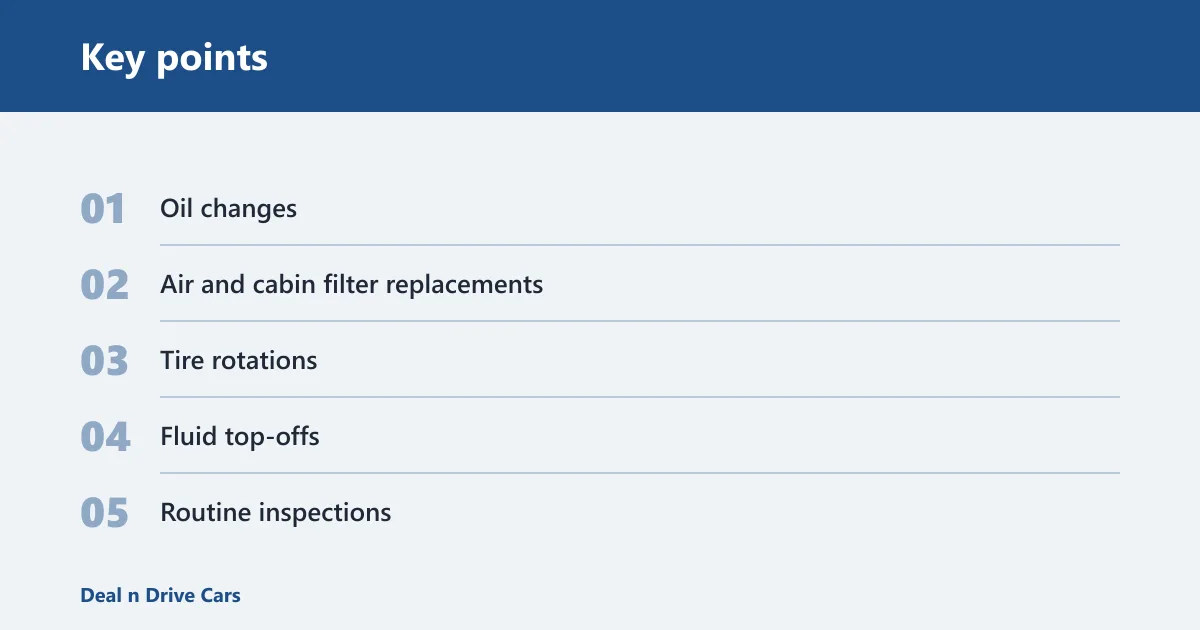
- Scheduled maintenance: oil changes, filter replacements, tire rotations, fluid top-offs, and routine inspections.
- Wear-item replacements: brake pads, tires, battery, wiper blades, belts, and hoses.
- Emergency repairs: diagnostics, towing, unexpected breakdowns, and one-off major repairs.
What to exclude
The template often includes fuel costs, repair bills, and insurance payments in a broader vehicle expense tracker, but those items should not be mixed into the maintenance total. Registration fees also sit outside maintenance even though they belong in an annual vehicle budget. Mix them together, and your monthly figure stops being useful.
Which costs belong in every used-car budget
At minimum, track the date, mileage, description, amount, and service provider for each entry. The vehicle expense tracker includes oil changes, tires, and routine inspections, and the car service record includes service provider details. Those fields let you see what was done, when it was done, and what is due next.
Say your sedan is due for an oil change every 5,000 miles and a tire rotation every 6,000 miles. The budget should show those as planned costs, not emergencies. A flat tire is a repair or wear-item event; a routine rotation is scheduled maintenance.
How do you separate maintenance costs from repair costs?
Separate them by timing and predictability. Routine service follows a schedule, wear items follow mileage and age, and repairs appear when something fails. That split matters because a car can be “fine” and still need money set aside for the next service interval or the next battery.
Routine service costs to track on a schedule
Use current mileage and service mileage together. If an oil change is due every 5,000 miles and the odometer now reads 62,400, the next target is 67,400. That is interval-based budgeting, and it turns mileage tracking into a calendar you can fund.
Track these as maintenance:
- Oil changes
- Air and cabin filter replacements
- Tire rotations
- Fluid top-offs
- Routine inspections
Wear-item replacements that are predictable but irregular
These items do not fail on a tidy schedule, yet they are not surprises in the same way a dead alternator is. Brake pads, tires, battery, wiper blades, belts, and hoses wear out with mileage, heat, age, and driving style. Budget for them as sinking funds, not as “if” items.
Repair reserve items that belong in a sinking fund
The emergency fund is for diagnostics, towing, one-off major repairs, and unexpected breakdowns. This bucket catches costs that do not map neatly to an interval. If the budget is too low, this is the first place the owner notices the gap, usually after the warning light, the tow, or the inspection estimate.
A common first-timer mistake is to set aside money only for oil changes, then treat everything else as unexpected. That leaves no room for a battery, a set of tires, or a sensor diagnosis, so the monthly plan falls apart the moment one higher-cost item appears.
How much should you budget each month for car maintenance?
Start with the yearly total for scheduled maintenance, wear items, and repair reserve, then divide that total by 12. That gives a monthly sinking amount that smooths out upcoming expenses. If you drive more miles, or if the car is older, the monthly figure should rise because interval-based spending arrives faster.
Convert annual totals to a monthly set-aside
- List the items expected in the next 12 months.
- Add their estimated costs.
- Divide the total by 12.
- Set that amount aside every month, even in light-service months.
How mileage changes the monthly number
Mileage changes both service timing and wear. A car driven more miles each year will generally reach oil changes, tire rotations, brake checks, and tire replacement sooner than the same model driven less. Older vehicles can cost $0.15 per mile or higher, so cost per mile becomes a useful check on whether the monthly budget is realistic.
Older vehicles can cost $0.15 per mile or higher. Newer vehicles typically need routine service only. That difference is one reason the same monthly budget does not fit every used car.
When a higher reserve makes sense for older used cars
As a car moves from the 0-5 year band into 5-10 years, the budget shifts from mostly scheduled service to more wear-item spending. In the 10+ year band, the reserve for repairs should be higher still because failure risk climbs and parts can stack up in the same month.
What changes by age, mileage, and vehicle type?
Age and mileage change both the size of each bucket and the order in which costs arrive. A five-year-old sedan sits in a different cost tier than a ten-year-old truck. Sedans often stay lighter on tires and brakes, while trucks and SUVs usually face higher costs for larger tires, more fluid capacity, and heavier wear.
0-5 years versus 5-10 years versus 10+ years
- 0-5 years: mostly routine service, with a modest reserve for wear items.
- 5-10 years: routine service plus a more visible budget for brakes, tires, battery, and hoses.
- 10+ years: all of the above, plus a larger repair reserve and tighter mileage tracking.
Sedan, truck, and SUV cost differences
A sedan often has lower tire and brake costs than a truck or SUV, but the exact amount still depends on tire size, braking system wear, and mileage. Trucks and SUVs usually need more expensive tires and may need front-end work sooner if they are used for towing or heavy loads.
Hybrid and electric items to budget differently
Hybrids still need brake service, tires, fluids where applicable, and a repair reserve, but they may see different wear patterns because regenerative braking can reduce pad wear. Electric vehicles still need tires, cabin filters, suspension checks, and a reserve for electronics or cooling-system work, even if oil changes are not part of the plan.
Use this spreadsheet structure for your tracker
A practical tracker uses one row per event and enough fields to show what happened, where it happened, and what it cost. Entries can include date and mileage, and the service provider belongs in the car service record. Add category, due interval, and notes if you want the sheet to forecast the next visit.
Core fields
- Date
- Mileage
- Description
- Amount
- Service provider
Useful extras
- Category to split maintenance, wear items, and repairs
- Due interval to show miles or months until the next service
- Notes for symptom details, part numbers, or recommendations
How to use current mileage and service mileage together
Keep two mileage numbers in view: the current odometer reading and the last service mileage for that item. If the last brake service happened at 48,000 miles and the car now shows 56,500, the spreadsheet can flag the next check sooner. That is more useful than a list of old receipts.
| Category | Due interval | Estimated cost | Monthly set-aside | Notes |
|---|---|---|---|---|
| Scheduled maintenance | Every 5,000 miles or 6 months | $80 | $13 | Oil change and filter replacement |
| Scheduled maintenance | Every 7,500 miles | $40 | $7 | Tire rotation and fluid top-offs |
| Wear-item replacement | Every 25,000-40,000 miles | $450 | $38 | Brake pads and related hardware |
| Wear-item replacement | Every 3-5 years | $900 | $25 | Set of tires |
| Wear-item replacement | Every 3-5 years | $180 | $5 | Battery |
| Emergency repairs | Any time | $600 | $50 | Diagnostics, towing, and small surprise repairs |
Example maintenance budget table for a used car
This example shows how to turn yearly costs into monthly set-asides. It keeps maintenance, wear items, and repairs separate so the numbers stay readable. Fuel, insurance, and registration are left out of the maintenance total because they belong in the ownership budget.
The yearly template includes routine servicing and registration fees, but only routine servicing belongs in the maintenance bucket here. Registration can sit in a separate annual ownership line. Fuel and insurance belong elsewhere too, even though the broader vehicle expense tracker often includes them.
What belongs in the table and what does not
- Include: oil changes, filters, tire rotations, brake pads, tires, battery, belts, hoses, towing reserve.
- Exclude: fuel, insurance, registration, loan payment, parking, and tolls.
Suppose a midsize SUV needs two oil changes, one tire rotation, one battery reserve, and a repair fund for the year. Those items belong in the table because they are maintenance or repair costs. The monthly total should not absorb gasoline or insurance premiums.
Sample budgets for low-, mid-, and high-mileage cars
These sample budgets show how mileage shifts the mix of costs. Low-mileage cars lean toward scheduled service. High-mileage cars need more money in wear items and emergency repairs. That is the point of the template: the same car type can have very different monthly needs at different mileage bands.
Low-mileage used car example
A low-mileage used car, such as a 4-year-old sedan with 32,000 miles, may need mostly scheduled servicing and a modest repair reserve. A reasonable yearly maintenance budget might include oil changes, filter replacements, one tire rotation, and a small amount for battery aging. Monthly set-aside: about $40 to $70, depending on service interval and reserve target.
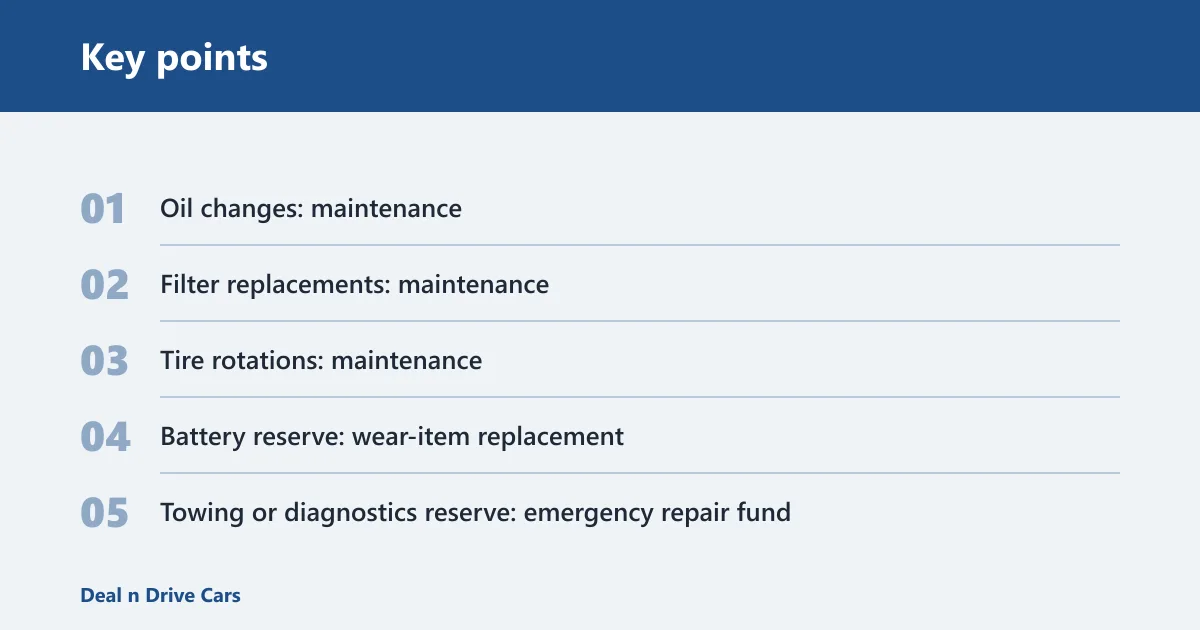
- Oil changes: maintenance
- Filter replacements: maintenance
- Tire rotations: maintenance
- Battery reserve: wear-item replacement
- Towing or diagnostics reserve: emergency repair fund
Mid-mileage used car example
A mid-mileage car, such as an 8-year-old compact SUV with 78,000 miles, usually needs more than routine service. Add brake pads, tire replacement planning, and a larger emergency reserve. Monthly set-aside: about $90 to $160, because wear-item replacement starts to matter as much as oil changes.
- Oil changes and filters: maintenance
- Tire rotation and alignment checks: maintenance
- Brake pads: wear-item replacement
- Tires: wear-item replacement
- Unexpected repairs: emergency reserve
High-mileage used car example
A high-mileage vehicle, such as a 12-year-old truck with 145,000 miles, needs a larger cushion. Belts, hoses, brakes, tires, battery, and diagnostics can land close together. Monthly set-aside: often $150 or more, especially if the truck is used for towing or long trips. Older vehicles can cost $0.15 per mile or higher, so a lower number may be too thin.
- Scheduled service: maintenance
- Brake work, tires, battery, belts, hoses: wear-item replacements
- Major repairs, towing, diagnostics: emergency repair reserve
Picture a 10-year-old hybrid with 90,000 miles and a warning light that appears after a short commute. The budget should already have room for diagnostics and a repair reserve, because a scan, sensor, or cooling issue can arrive without warning. That is what separates a working budget from a wish list.
Frequently asked questions
What maintenance costs should I track separately from repairs?
Track routine service separately from repairs. Oil changes, filter replacements, tire rotations, fluid top-offs, and routine inspections are scheduled maintenance. Brake pads, tires, battery, belts, and hoses are wear-item replacements. Diagnostics, towing, and one-off breakdowns belong in the repair reserve.
Should fuel, insurance, and registration be in a maintenance budget template?
No. Fuel and insurance often appear in a broader vehicle expense tracker, and registration is part of annual ownership costs, but they should sit outside the maintenance bucket. Keeping them separate stops the maintenance number from being inflated by costs that do not affect service planning.
How do I budget for tires, brakes, and oil changes?
Budget oil changes as scheduled maintenance by mileage or months, then set aside separate amounts for tires and brakes as wear items. Divide each yearly estimate by 12. That way, a set of tires or a brake job is already partly funded when it arrives.
How much should I save for unexpected car repairs?
Save enough to cover diagnostics, towing, and a meaningful repair bill without derailing the budget. Older cars and higher-mileage vehicles need a larger reserve because failures are more likely. If the reserve is too small, the first missed items are usually tires, brakes, or a needed repair visit.
How do age and mileage change maintenance costs?
Age and mileage push costs upward and change their mix. A car in the 0-5 year band usually needs routine service only, while 5-10 years brings more wear items. At 10+ years, the repair reserve should rise, and cost per mile can climb fast for older vehicles.
What’s a good car maintenance budget for an older used car?
An older used car usually needs a larger monthly set-aside than a newer one because wear items and repairs are more likely to appear close together. A practical budget often starts around the higher end of routine-service planning and adds a strong repair reserve. High-mileage trucks and SUVs generally need even more room.